



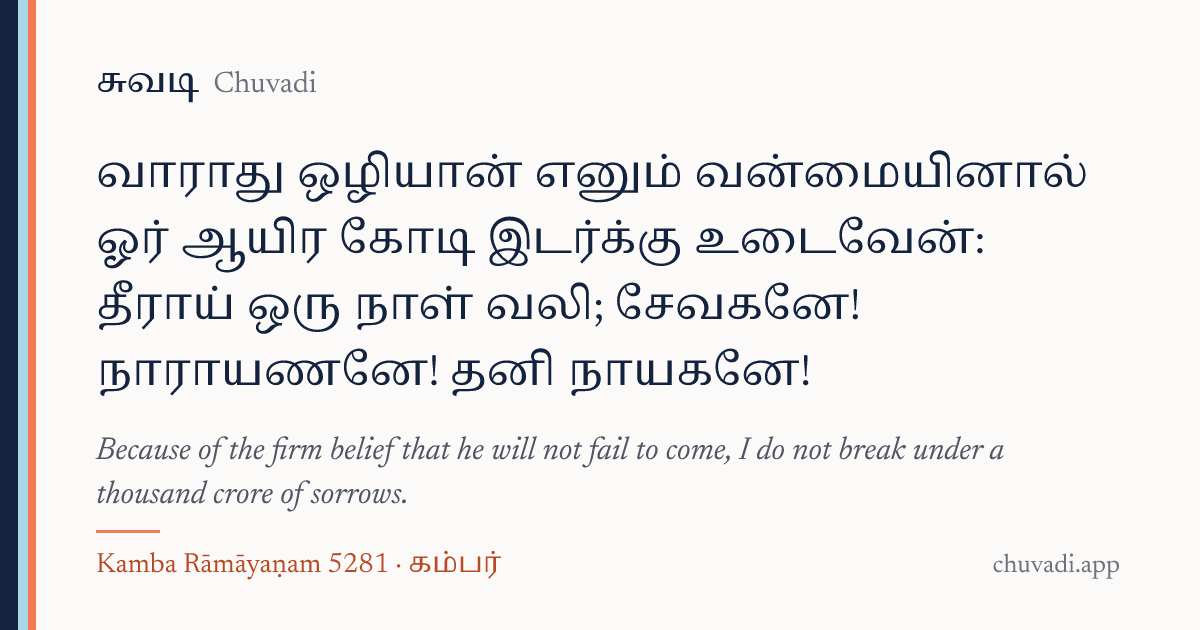
கம்பராமாயணம் 5281 · சுந்தர 5.6
பாடல் · The poem
Tap a word to see its gloss in the commentary and where else it occurs.
பாட வேறுபாடு · Project Madurai reads
பொருள் · Meaning in Tamil
(இராமபிரான்) வாராது ஒழியான்- இங்கேவாராமல் அமைதி பெறான்; எனும் - என்கின்ற ; வண்மையினால் - அவன் கருணை மிகுதியால், ஓர் ஆயிர கோடி - பல்கோடியாகப் பெருகிவரும்; இடர்க்கு உடையேன் - துன்பங்கட்குத் தளராமல் உள்ளேன்; சேவகனே - வீரம் உடையவனே; நாராயணனே - திருமால் போன்றவனே; தனி நாயகனே - ஒப்பற்ற தலைவனே; ஒருநாள் - ஒருதினம், வலி தீராய்- என்னுடைய நோவைத் தீர்ப்பாயாக.
அரசர்களைத் திருமாலாகப் பேசுவது மரபு. அது பற்றித் திருமால் என்று கூறினாள் என்றும் கொள்ளலாம். இதனைப் ‘பூவை நிலை’ என்று தமிழ் மரபு பேசும். வலி- நோவு. ‘வலியானே யான்பட்ட வலிகாணவாராயோ’ (கம்ப. 2833.) இப்பாடலில் உள்ள “வலி” அனைவர்க்கும் தீராவலியாக உள்ளது. ஏகநாயகன், தனி நாயகன் (கடவுள்) 'ஏகநாயகனை இமயவர்க்கு அரசை' (திருவிசை - சேந்தன் 1-1)
ஆங்கிலம் · English translationAI
Translation
- Because of the firm belief that he will not fail to come,
- I do not break under a thousand crore of sorrows.
- Some day end my pain, O hero!
- O Nārāyaṇaṉ! O peerless lord!
What the poem says
Cītai explains what keeps her alive: the certainty that Irāmaṉ will not fail to come for her. That faith lets her bear countless sorrows without breaking. She then appeals to him directly to end her pain one day.
She calls him Nārāyaṇaṉ, Viṣṇu. The commentary notes this can be read as the Tamil convention of likening a king to Viṣṇu, though for Kampaṉ's readers Irāmaṉ is Viṣṇu himself.