



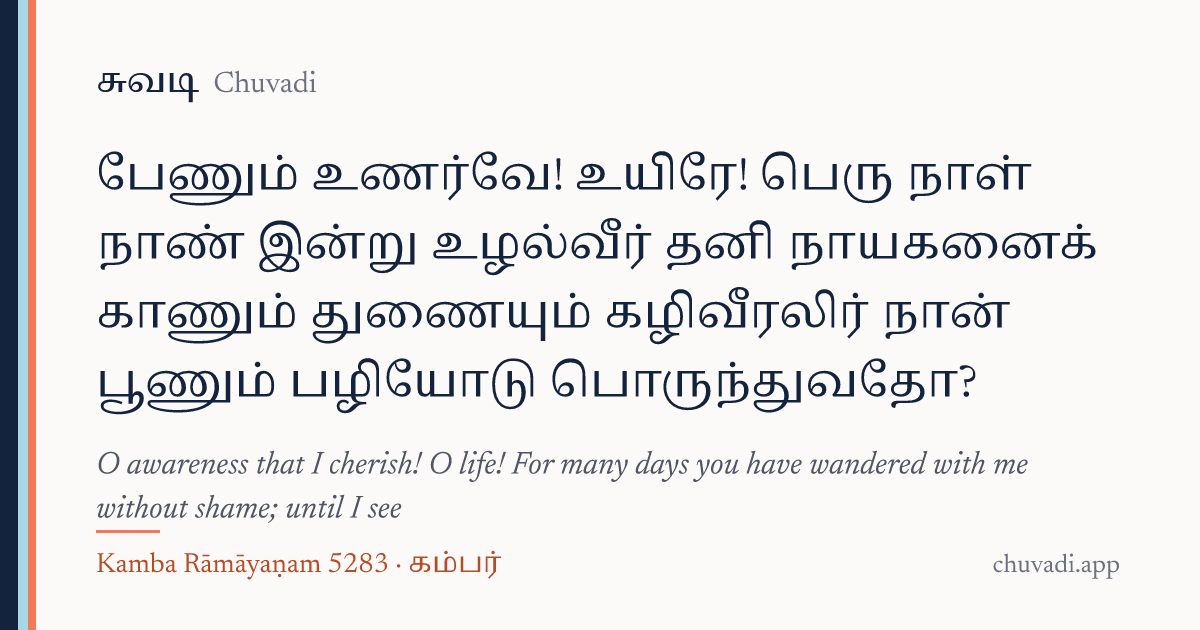
கம்பராமாயணம் 5283 · சுந்தர 5.8
பாடல் · The poem
Tap a word to see its gloss in the commentary and where else it occurs.
பொருள் · Meaning in Tamil
பேணும் - (என்னால்) பாதுகாக்கப் பெற்ற; உணர்வே - அறிவே; உயிரே - உயிரே (நீங்கள்); பெருநாள் - பலநாட்கள்; நாண் இன்று - வெட்கம் இல்லாமல் (என்னுடன்); உழல்வீர் - வருத்தமடைகிறீர்கள்; தனி நாயகனை - ஒப்பற்ற தலைவனான இராமபிரானை; காணும் துணையும் - யான் சந்திக்கும் வரை; கழிவீர் அலீர் - (என்னைவிட்டு) நீங்கமாட்டீர்கள்; (நீங்கள் நீங்காமையால்) நான் - யான்; பூணும் - ஏற்றுக்கொண்டுள்ள; பழியோடு - நிந்தையுடன்; பொருந்துவதோ - ஒன்றுபட்டு வாழ்வதா ?.
உயிர்முதலானவைதன்னைவிட்டு நீங்காமையால் தனக்குப் பழி வந்துள்ளது என்று பிராட்டி கருதுகின்றார். புகழ் எனில் உயிரும் கொடுப்பது நல்லோரியல்பு. அது வாய்க்கப் பெறாது பேசியபேச்சு. இன்று என்னும் எச்சம் இன்றி என வந்தது. வினை எஞ்சு இகரம் உகரமாய் வரும் என்பது விதி. “மனனே! பெருநாள், பிரியாது உழல்வாய்” (கம்ப. //63) என்று முன்பும் பிராட்டி பேசினாள்.
ஆங்கிலம் · English translationAI
Translation
- O awareness that I cherish! O life! For many days
- you have wandered with me without shame; until I see
- my peerless lord you will not depart; must I then
- live joined to the disgrace I now wear?
What the poem says
Cītai addresses her own awareness and her own life. They have clung to her shamelessly through all these days and will not leave until she sees Irāmaṉ again.
But because they stay, she must go on living with the disgrace of being held in Irāvaṇaṉ's city. The commentary notes that good people would give up life itself for honour; she speaks this way because that path has not been open to her.