



கம்பராமாயணம் 5284 · சுந்தர 5.9
பாடல் · The poem
Tap a word to see its gloss in the commentary and where else it occurs.
பாட வேறுபாடு · Project Madurai reads
பொருள் · Meaning in Tamil
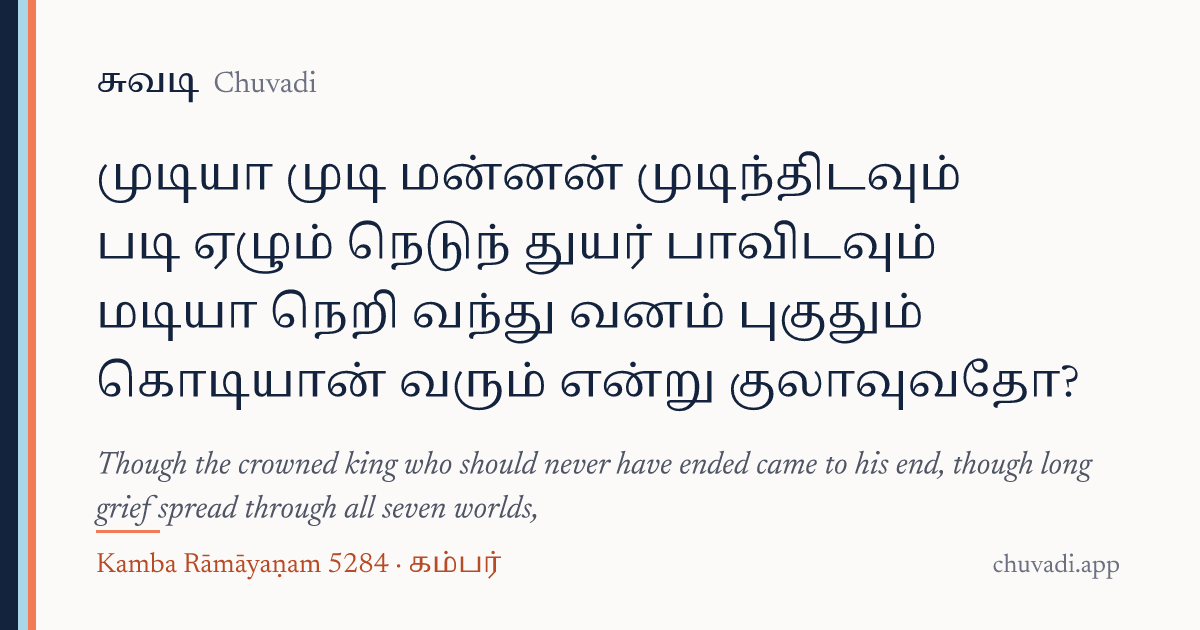
முடியா - இறப்பு இல்லாத; முடிமன்னன் - முடி சூடிய தசரதன்; முடிந்திடவும் - இறந்து படவும்; படி ஏழும் - ஏழு உலகங்களிலும்; நெடுந்துயர் - பெருந்துன்பம்; பாவிடவும் - பரவிப் பெருகவும்; (இவற்றால் மனம் இரங்காமல்) மடியா நெறி வந்து - முடிவற்ற வழியிலே வந்து; வனம் புகுதும் - காட்டிலே வாழப்புகுந்த; கொடியார் - கொடியவரான இராமன்; வரும் என்று - வந்து காண்பான் என்று (நீங்கள்); குலாவுவதோ - மகிழ்ச்சியடைவதா.
மன்னன்இறந்தும், மக்கள் கெஞ்சியும் இரங்காத மனம் என் பொருட்டா, இரங்கப் போகிறது என்கிறாள். தலைவி, ஊடலால் தலைவனைக் “கொடியன்” என்று கூறுவாள். கடுவனும் அறியும் அக்கொடியோனையே (குறுந் - 26) தமிழ்த்தெய்வம் உ.வே.சா அங்கு வரைந்தவற்றைக் காண்க. கடியன், கொடியன் நெடியமால் என்று சடகோபர் பேசினார் (திருவாய் 5-3-5) செய்யும் எனும் வாய்பாட்டு முற்று பலர்பாலில் வாராது.
கொடியார் என்று பாடம் கொள்வது நேரிதன்று; 'கொடியான்' என்ற பாடம் சிறப்புடைத்து.
ஆங்கிலம் · English translationAI
Translation
- Though the crowned king who should never have ended came to his end,
- though long grief spread through all seven worlds,
- he went the unending road and entered the forest;
- should you rejoice that this cruel one will come?
What the poem says
Still speaking to her own life and mind, Cītai turns her hurt against Irāmaṉ in the manner of a heroine in a lovers' quarrel. Even when his father Tacarataṉ died and the whole world grieved, he was not moved to turn back from the forest.
How then can she take comfort that such a hard-hearted man will come for her sake? Calling the beloved 'cruel' out of wounded love is an old convention in Tamil poetry, and the commentary cites examples from the Kuṟuntokai and from Nammāḻvār.