



கம்பராமாயணம் 5288 · சுந்தர 5.13
பாடல் · The poem
Tap a word to see its gloss in the commentary and where else it occurs.
பொருள் · Meaning in Tamil
பழிபிரியாச்சொல் - நிந்தையிலிருந்து விலகாத சொற்களை; சுமந்து - தாங்கி; தூங்குவென் - கவலையற்றிருக்கும் என்னுடைய; நல் - நல்ல; பிறப்புஉடைமையும் - சிறந்த குடிப்பிறப்பாகிய செல்வமும்; நாணும் - நாணமும்; நன்று - மிகமிக நன்றாக உள்ளது; கற்புடை மடந்தையர் - கற்புடையபெண்களிலும், கதை உளோர்கள் - வரலாற்றில் பேசப்படுபவர்களிலும்; இல்பிரிந்து - கணவனைப் பிரிந்து; உய்ந்தவர் - உயிருடன் வாழ்பவர்; யான்அலால்- என்னைத் தவிர; யாவர் - வேறு எவர் உள்ளனர்
வாழும் பெண்கள்வரலாற்றுப் பெண்கள் கணவனைப் பிரிந்ததும் இறந்தனர். என்னைப் போல் எவர் உயிருடன் வாழ்ந்தனர். இல் - கணவன். புதுவழக்கு - இல்லாள் என்பதே மரபு. ஆனால் இல்லான் என்று சேக்கிழார் பேசினார் (காரைக்கால்) கவிச்சக்கரவர்த்தியும் அம்மரபைப் பேசுகின்றார் போலும். தாம் - உரை அசை. கதையுளோர்கள் கற்புடைமடந்தையர் என்று கூட்டிக் கதையிலே பேசப்படும் கற்புடைப் பெண்கள் என்று பொருள் கூறப்பெற்றது. கதையின் போக்கை ஆராய்ந்து முடிவு காணுதல் முறை. நன்று - இகழ்ச்சி. அரோ - அசை
ஆங்கிலம் · English translationAI
Translation
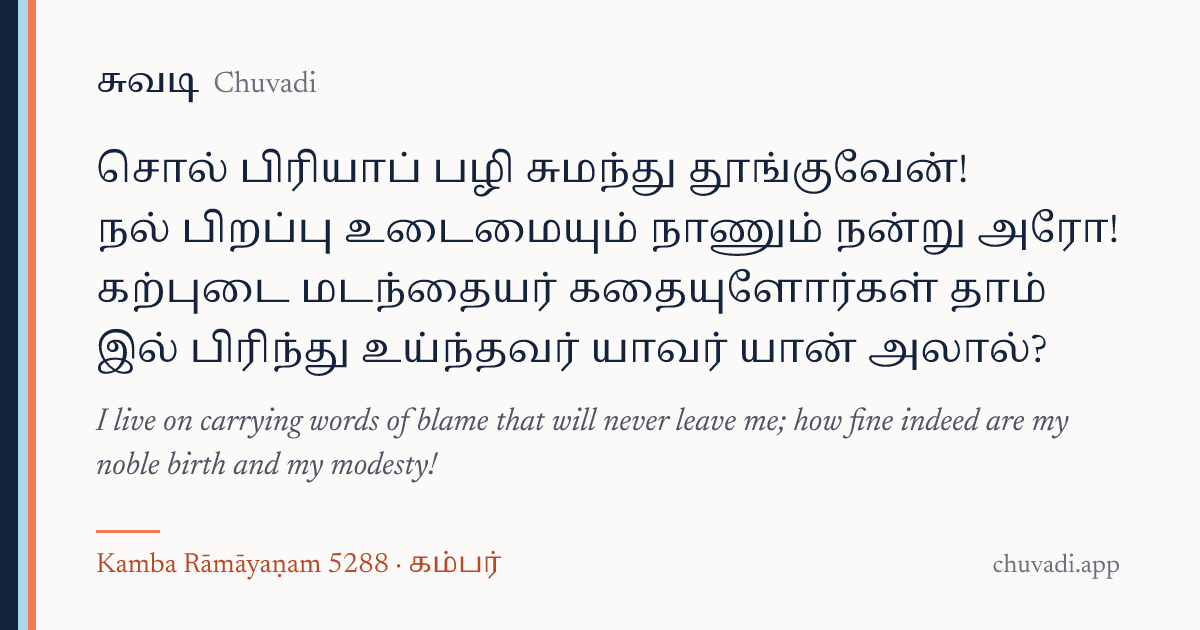
- I live on carrying words of blame that will never leave me;
- how fine indeed are my noble birth and my modesty!
- Among chaste women, and those spoken of in the old stories,
- who, parted from her husband, survived, but me?
What the poem says
Cītai speaks with bitter irony. She lives on under a weight of blame, and her noble birth and modesty are 'fine' indeed, she says, meaning they count for nothing.
Of all the chaste women, whether in her own day or in the old stories, none went on living once separated from her husband; she alone has. The commentary notes that il, 'house', here means the husband, a usage it also finds in Cēkkiḻār.