



கம்பராமாயணம் 5289 · சுந்தர 5.14
பாடல் · The poem
Tap a word to see its gloss in the commentary and where else it occurs.
பாட வேறுபாடு · Project Madurai reads
பொருள் · Meaning in Tamil
பிறர்மனை எய்திய - அயலவர் வீட்டை அடைந்த; பெண்ணைப் பேணுதல் - பெண்ணை விரும்புதல்; திறன் அலது என்று - ஒழுக்கம் அற்ற செயல் என்று; உயிர்க்கு இறைவன் - என் உயிரின் தலைவனான இராமபிரான்; தீர்ந்தனன் - என்னைக் கைவிட்டு விட்டான்; புறன் - வெளி உலகில்; அவன் அலர் உற - அந்த இராமபிரான் பழிச்சொல் பெற; அறன் அலது இயற்றி - இல்லற நெறிக்கு மாறுபட்டதைச் செய்து; போது போக்கி - (இறவாமல்) காலத்தைக் கழித்து (வாழும்); யான் - நான்; வேறு - தனியாக; என் கொண்டு - எதை ஆதாரமாகக் கொண்டு; ஆற்றுகேன் - உயிரை வைத்திருப்பேன்.
திறம் -ஒழுக்கம், மேன்மை, புகழ் என்னும் பொருள் தரும். அனைத்தும் ஈண்டு ஏற்கும். தீர்தல் - கைவிடுதல். போது போக்குதல் - குறிக்கோளின்றி இருத்தல். “பொழுது போக்கிப் புறக்கணிப்பாரையும்” என்பர் நாவேந்தர் ஆற்றுதல் - பிழைத்தல் (உய்தல்) ஆற்றுதல், வலிதல், உய்தல் ஆகும் (பிங்கலம் 1828)
ஆங்கிலம் · English translationAI
Translation
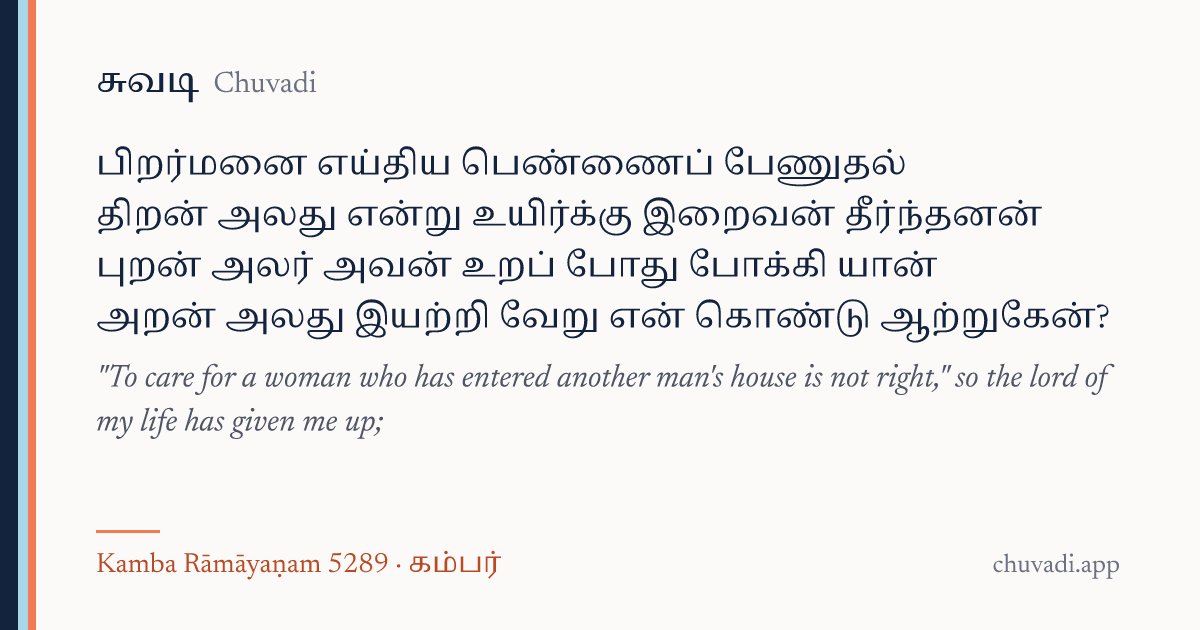
- "To care for a woman who has entered another man's house
- is not right," so the lord of my life has given me up;
- while he is talked about by the world outside, I idle the time away,
- doing what is against dharma: on what else am I to live?
What the poem says
Cītai imagines that Irāmaṉ, the lord of her life, has abandoned her on the principle that it is improper to take back a wife who has lived in another man's house.
Meanwhile the world gossips about him, and she simply passes the days, alive against what dharma requires. With nothing left to hold on to, she asks what she can live by.