



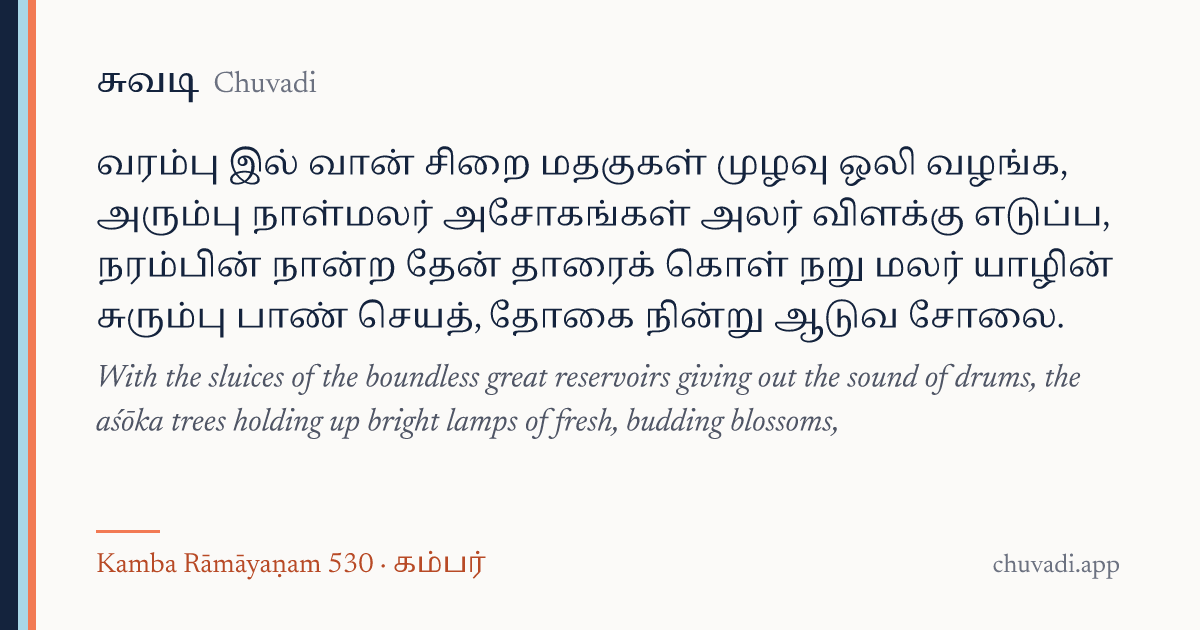
கம்பராமாயணம் 530 · பால 9.64
பாடல் · The poem
Tap a word to see its gloss in the commentary and where else it occurs.
பாட வேறுபாடு · Project Madurai reads
பொருள் · Meaning in Tamil
சோலை - (அந்த மிதிலைநாட்டுக் சோலைகளில்; வரம்பு இல் - அளவில்லாத; வான்சிறை மதகுகள் - பெரிய நீர் நிலையின் மதகுகள்; முழவு ஒலி வழங்க - மத்தள ஓசையைத் தரவும்; அசோகங்கள் - அசோக மரங்கள்; அரும்பு நாள் மலர் - அரும்புகின்ற புதிய மலர்களாகி; அலர் விளக்கு எடுப்ப - பொலிவுள்ள விளக்குகளை ஏந்தவும்; நரம்பின் நான்ற - யாழின் நரம்பு போல நீண்ட தேன் தாரை கொள் - சிறந்த தேனின் ஒழுக்கைக் கொண்ட; நறுமலர் யாழில் - நறுமணம் வீசும் மலர்களாகிய யாழிலே; சுரும்பு பாண் செய - வண்டுகள் பாடவும்; தோகை நின்று ஆடுவ - மயில்கள் நின்று கூத்தாடுகின்றன.
மயிலும் மகளிரும்: ஆடும் மகளிரின் தன்மை மயில்களுக்கு ஏற்றிக் கூறப்பெற்றுள்ளது. உருவகப் பாங்கு. சோலைகளின் மதகுகளில் நீர் பாயும்போது உண்டாகும் ஒலியை மத்தள ஒலியாகவும், மலர்களை விளக்கின் ஒளிப்பிழம்பாகவும், தேன் தாரைகளை யாழின் நரம்பாகவும், மலரை யாழாகவும், வண்டுகளைப் பாடகராகவும், மயில்களைக் கூத்தாடும் மகளிராகவும் உருவகப்படுத்தியுள்ளார். அசோகம்: இப்போது அசோகு என்று குறிக்கப்படும் மரமன்று. சிறை: நீரைத் தேக்கி வைத்திருக்கும் ஏரி, குளம் போல்வன; அணை என்றும் கூறலாம். ஒப்புமை: கம்பன் -35; அகநானூறு 82. 7
ஆங்கிலம் · English translationAI
Translation
- With the sluices of the boundless great reservoirs giving out the sound of drums,
- the aśōka trees holding up bright lamps of fresh, budding blossoms,
- and the bees playing minstrel on the yāḻ of fragrant flowers that hold streams of honey hanging like strings,
- the peacocks stand and dance — in the groves.
What the poem says
Kampaṉ pictures the groves of Mitilai as a stage. Water rushing through the sluices of the great tanks is the drumming. The red aśōka blossoms are the lamps. Each fragrant flower is a yāḻ, with threads of dripping honey for strings, and the bees are the singers. The peacocks are the dancing girls.
The commentary notes that the aśōka meant here is not the tree now called by that name, and compares the scene with a well-known passage in the Sangam anthology Akanāṉūṟu.