



கம்பராமாயணம் 5318 · சுந்தர 5.43
பாடல் · The poem
Tap a word to see its gloss in the commentary and where else it occurs.
பாட வேறுபாடு · Project Madurai reads
பொருள் · Meaning in Tamil
நிலனொடுபொருந்தில - அயோத்தியில்பூமியைச் சேராதிருந்ததும்; கானிடைப் போந்து - பிறகு காட்டின்கண் வந்து; வருந்தின - வருத்தம் அடைந்தன; எனின் - என்றாலும்; அது - அப்புறவடி; நூலை மாறு கொண்டிருந்தது - உடற்கூற்று இலக்கண நூலைக் கடந்து மிக அழகாக இருந்தது; புவனம் யாவையும் - எல்லா உலகங்களையும்; ஒருங்கு - ஒரே சமயத்தில்; உடன் புணர நின்றது - ஒன்றுபட்டு சேர நின்ற திருவடிகள்; உரைக்கற் பாலதோ - பிறர்க்கு உவமையால் உணர்த்தும் அளவு எளிமை உடையதோ.
எங்கும்நிறைந்துள்ள பொருட்கு வருதலும் போதலும் இல்லையன்றோ. பூதங்கள் தோறும் நின்றாய் என்றும், போக்கிலன் வரவிலன் என்றும் பேசப் பெற்றதை அறிக. (திருவாசகம்) புத்தகத்துக்கு ஒப்பாகாது நின்றது என்றும் பொருள் உரைப்பர். பாதத்தைப் புத்தகத்துக்கு (சுவடி) ஒப்புமையாக்கும் மரபு உண்டு. புத்தகம் ஆமை புறவடி ஒப்பாம் (உவமான 13) என்றும், புற அடி நன்கு அடைந்த புத்தகம் (இரத்தின 23) என்றும் பேசுவதை நினைவு கூர்க.
ஆங்கிலம் · English translationAI
Translation
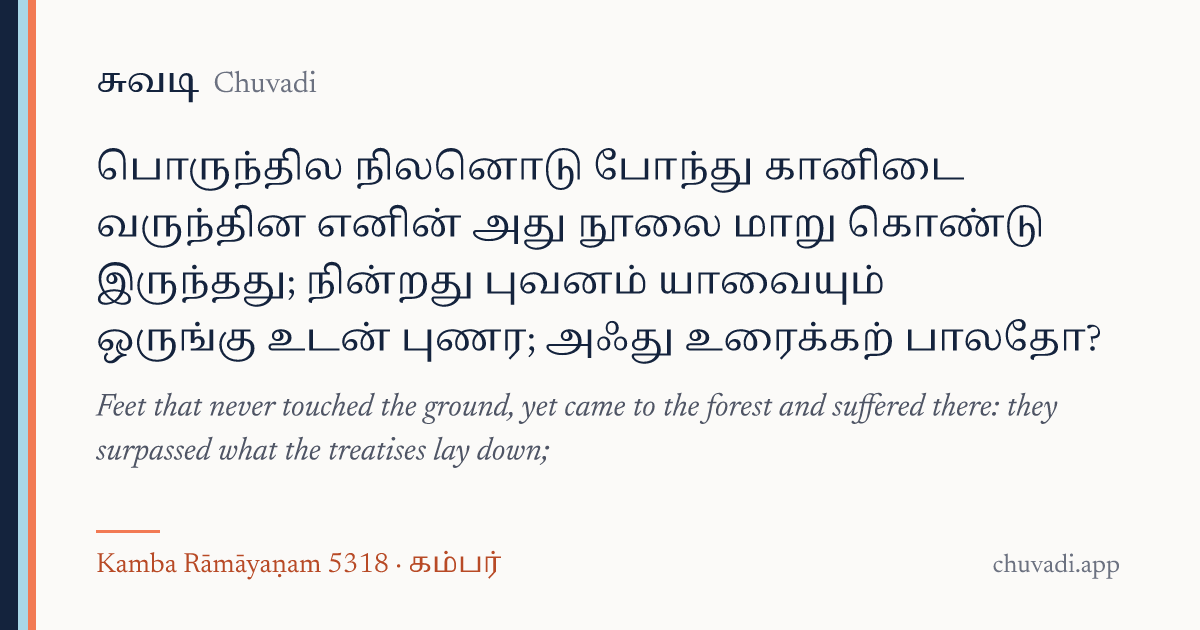
- Feet that never touched the ground, yet came to the forest
- and suffered there: they surpassed what the treatises lay down;
- they stood so as to hold all the worlds
- together at once; can that be put into words?
What the poem says
Aṉumaṉ speaks of the upper part of Irāmaṉ's feet. In Ayōtti those feet hardly ever touched the ground; then they walked the forest and suffered. Yet their beauty goes beyond every rule of the treatises on bodily form.
And these are the feet that pervade and hold all the worlds at once, the feet of God, who neither comes nor goes. How could such feet be described? The commentary also mentions a tradition of comparing the top of the foot to a palm-leaf book.