



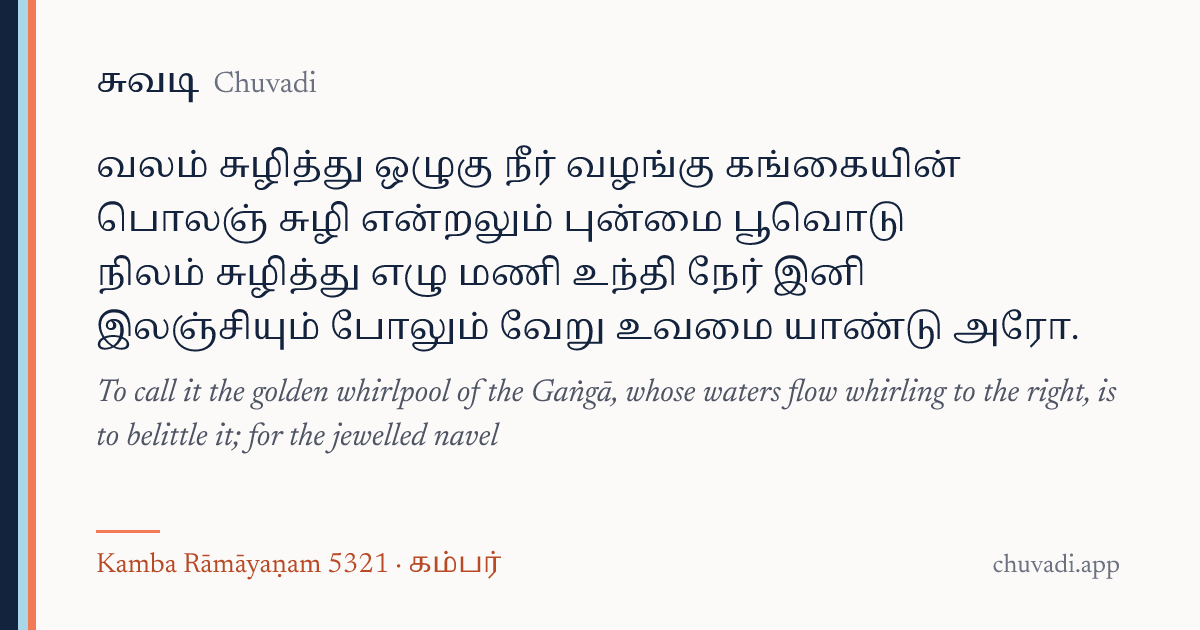
கம்பராமாயணம் 5321 · சுந்தர 5.46
பாடல் · The poem
Tap a word to see its gloss in the commentary and where else it occurs.
பொருள் · Meaning in Tamil
பூவொடு - தாமரைப் பூவையும்; நிலம் - பூமியையும்; சுழித்து எழு - கிளர்ந்து தோன்றிய (பெருமானின்); மணி உந்தி நேர் - அழகிய உந்திக்குச் சமமாக; வலம் சுழித்து - வலப்பக்கம் சுழித்துக்கொண்டு; ஒழுகும்நீர் - பெருக்கெடுக்கும் தண்ணீரை; வழங்கும் - உலகங்கட்குத் தரும்; கங்கையின் - கங்கையின்; பொலஞ்சுழி என்றலும் - அழகிய சுழி என்று கூறுவதும்; புன்மை - இழிவாகும் (அங்ஙனம் இருக்க) (திருவுந்திக்கு); இனி இலஞ்சியும் - மகிழம்பூவும்; போலும் - ஒப்பாகுமோ (இவற்றைத் தவிர); வேறு உவமை - வேறுபட்ட உவமானம் பொருள்கள்; யாண்டு - எங்கே உள்ளது.
மிக்க உந்திநீர்ச்சுழி (உவமான 77) புனற்சுழி அலைத்துப் பொருந்திய கொப்பூழ் (பெருங் 2-15- 68) என்றும், நீர்ப்பெயர்ச் சுழியின் நிறைந்த கொப்பூழ் (பொருநராற்று - 37) என்றும் பழம் பெரு நூல்கள் உந்தியை நீர்ச்சுழி என்று பேசின. இராமனைத் திருமாலாகவே அனுமன் பேசுகின்றான். ஆதலின் “பூவொடு நிலம் சுழித் தெழுமணி உந்தி” என்றான். சுழித்தெழுதல் - மகிழ்ச்சியின் மிகுதியை உணர்த்தும். சேக்கிழார் அறாத செந்தீ வலம் சுழிவுற்று... ஒளிர என்று பேசியது கருதுக. (பெரிய திருநீல நக்க 31) இலஞ்சி - மகிழம்பூ- குருகை இடம் கொண்டான் இலஞ்சி பெற்றோன் (மாறனலங் 359) போலும் - என்பதை எடுத்தல் ஓசையால் ஐயப்பொருள் தோன்றப் படித்து உண்மை உணர்க. அரோ - அசை.
ஆங்கிலம் · English translationAI
Translation
- To call it the golden whirlpool of the Gaṅgā, whose waters flow
- whirling to the right, is to belittle it; for the jewelled navel
- from which the lotus and the earth whirled up, could the makiḻ flower
- now be a likeness? Where else is there any comparison?
What the poem says
Aṉumaṉ turns to Irāmaṉ's navel. Classical poets liken a beautiful navel to a whirlpool, but even the bright, right-turning eddy of the sacred Gaṅgā is too poor a comparison.
For this is the navel of Viṣṇu, from which grew the lotus that bore the creator, and the world itself. The makiḻ flower, another stock likeness, will hardly do. The commentary suggests reading 'could it be like?' with a rising tone of doubt.