



கம்பராமாயணம் 5322 · சுந்தர 5.47
பாடல் · The poem
Tap a word to see its gloss in the commentary and where else it occurs.
பொருள் · Meaning in Tamil
தெய்வமே ! - பிராட்டியே; பொருவு அரு - ஒப்பற்ற; பொலன் கொள் - அழகைக் கொண்ட, மரகதமால் வரை - மரகத மலையானது; வெருவற - அஞ்சும்படி; விரிந்து உயர் - பரந்து உயர்ந்துள்ள; விலங்கல் ஆகத்தை - மலைபோன்ற திருமார்பை; பிரிவு அற - பிரிதல் இல்லாமல் (அங்கே வாழ); நோற்றனள் என்னில் - திருமகள் தவம் செய்தாள் என்றால்; அத்திருவினில் - அந்தத் திருமகளைவிட; பின்னை யாவர் திருவுளார் - பிறகு எவர் பேறு பெற்றவர்
பின்னை, விலங்கல் ஆகத்தைப் பிரிவு அற நோற்றனள் என்னின் திருவினும் யாவர் திருவுளார் எனமுடிக்க. பின்னை என்றற்கு பிறகு என்றே பொருள் கூறப்பெற்றது. பின்னை - திருமகள். பின்னை மணாளனை பேரிற் கிடந்தாளை (பெரியாழ்வார் 2-5-1) இது கிருஷ்ணாவதாரத்துக்குப் பிற்பட்ட வழக்கு - இராமாவதாரத்தில் அனுமன் கூற்றில் பொருந்தாது. பிராட்டியைத் தெய்வம் என்றான். சீதை என்பதோர்தெய்வம். என்பர் திருமங்கை மன்னர் (பெரிய திருவடி 10-2- 5)
ஆங்கிலம் · English translationAI
Translation
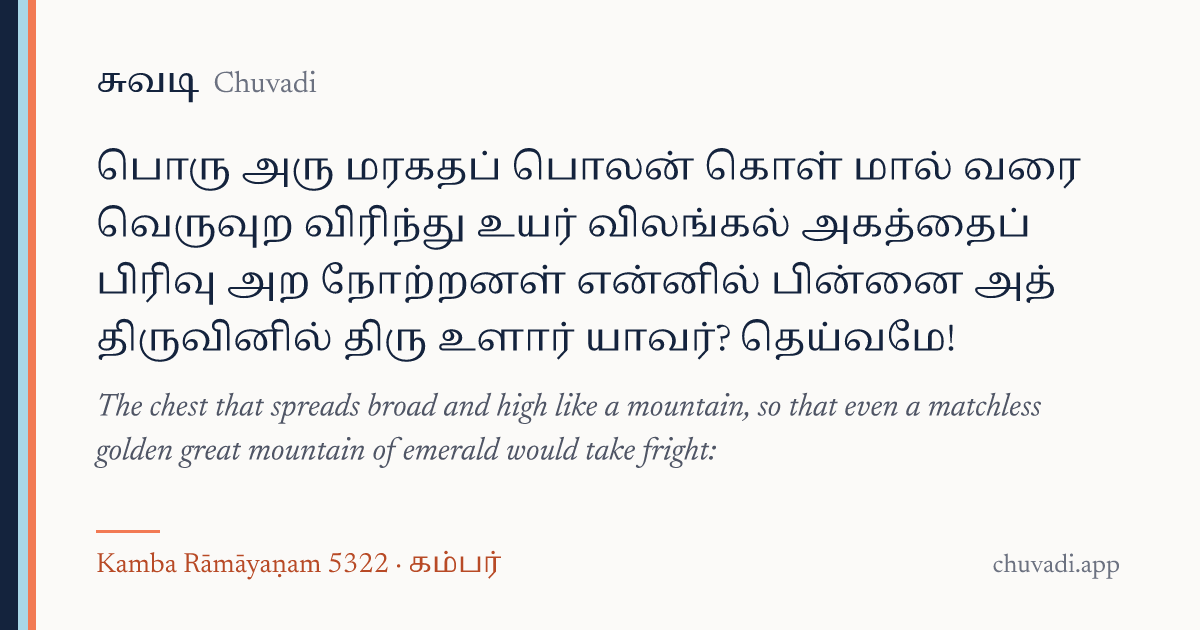
- The chest that spreads broad and high like a mountain, so that even a matchless
- golden great mountain of emerald would take fright:
- if she did penance never to be parted from it, then who
- is more blessed than that Tiru herself? O goddess!
What the poem says
Aṉumaṉ describes Irāmaṉ's broad, dark chest, so vast that a great mountain of emerald would shrink from comparison.
Tiru, the goddess Lakṣmī, performed penance to dwell on that chest for ever; who could be more fortunate than she? The words carry a gentle hint, for Cītai is herself Lakṣmī, and Aṉumaṉ addresses her as 'goddess'. The commentary notes that Tirumaṅkai Āḻvār also calls Cītai a goddess.