



கம்பராமாயணம் 5328 · சுந்தர 5.53
பாடல் · The poem
Tap a word to see its gloss in the commentary and where else it occurs.
பொருள் · Meaning in Tamil
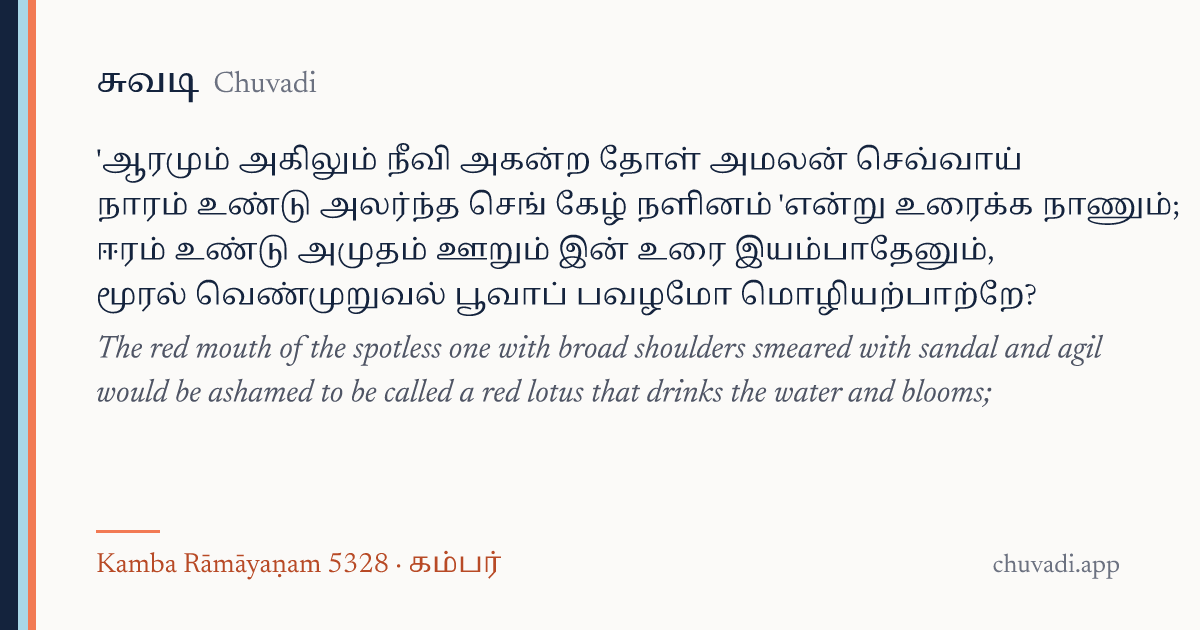
ஆரமும் அகிலும்நீவி - சந்தனக்குழம்பும் அகிற் குழம்பும் பூசப்பெற்று; அகன்ற தோள் அமலன் - விரிந்த தோள்களைப் பெற்ற இராமபிரானின்; செவ்வாய் - சிவந்த வாயானது (தனக்கு நிகராக); நாரம் உண்டு - நீரை உட்கொண்டு; அலர்ந்த - மலர்ந்துள்ள; செங்கேழ் நளினம் என்று உரைக்க - சிவந்த நிறமுடைய தாமரை போலும் என்று கூறினால்; நாணும் - வெட்கம் அடையும்; (அங்ஙனம் இருக்க) ஈரம் உண்டு - ஈரத்தன்மை பெற்று; அமுதம் ஊறும் - அமுதம் பெருகி; இன் உரை இயம்பாதேனும் - இனிய மொழிகள் பேசாவிடினும்; வெண்மூரல் - வெள்ளிய பற்களால்; முறுவல் பூவா - புன்னகை மலராத; பவளம் - பவளமானது; மொழியற் பாற்றோ- உவமையாகக் கூறத்தக்கதோ ?
சிரிக்கத்தெரிந்த தாமரையே ஒவ்வாதபோது சிரிக்கத் தெரியாத பவளம் ஒவ்வாதென்க. “சிரித்த பங்கயம்” என்று முன்பு பேசப்பெற்றது நினைக்க. நாணுதல் 'தாமரை' என்றும் கூறலாம். ஆரம் - சந்தனம். இங்கே குழம்பைக் குறிக்கிறது. அகிற்கும் அதுவே. நாரம் - தண்ணீர் நார.. பொய்கை (சூடாமணி 25) பவளமோ, ஓகாரம் அசை பாற்றே, ஓகாரம் வினாப் பொருள் தந்தது. பவளம் மொழியற் பாற்றோ என முடிக்க. ஈரம் - அன்பு. “இன்சொலால் ஈரம் அளைஇ” என்று தமிழ்மறை பேசும் (திருக்குறள் 91) மூரல் - பல். முறுவல் - புன்னகை. பூவா - மலராத. “புதியதோர் முறுவல் பூத்தாள்” (கம்ப. 2736) என்று பேசப் பெற்றது.
ஆங்கிலம் · English translationAI
Translation
- The red mouth of the spotless one with broad shoulders smeared with sandal and agil
- would be ashamed to be called a red lotus that drinks the water and blooms;
- then even if it did not have to speak sweet words full of kindness, welling with nectar,
- could coral, which never blossoms into a white smile, be named as its likeness?
What the poem says
Aṉumaṉ describes Irāmaṉ's red lips. The red lotus, which at least 'smiles' as it opens, would be ashamed to be called their equal.
Coral, the other common likeness for red lips, is even worse: it can neither speak loving, nectar-sweet words nor break into a white-toothed smile. If the lotus fails, coral fails all the more.