



கம்பராமாயணம் 5331 · சுந்தர 5.56
பாடல் · The poem
Tap a word to see its gloss in the commentary and where else it occurs.
பாட வேறுபாடு · Project Madurai reads
பொருள் · Meaning in Tamil
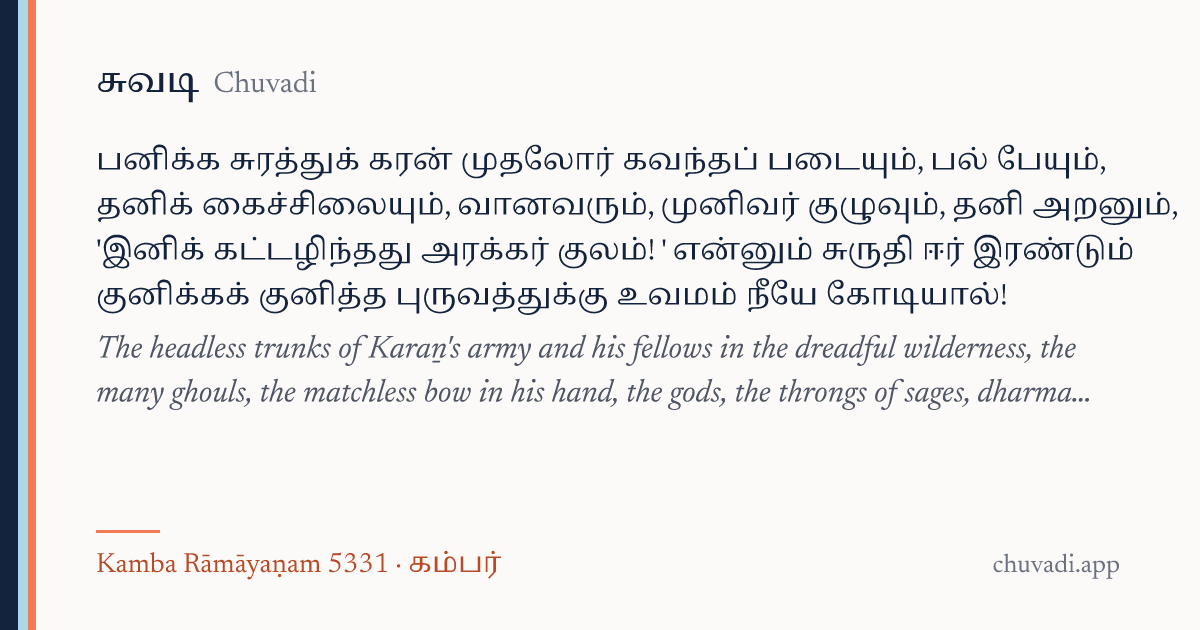
பனிக்க சுரத்து - நடுக்கமடையும்படி காட்டில் வாழும்; கரன்முதலோர்- கரன் முதலான அரக்கர்களின்; கவந்தப் படையும் - தலையற்ற உடல்களின் கூட்டமும்; பல்பேயும் - பலவிதமான பேய்களும்; தனி கைச்சிலையும் - இராமபிரானின் கைவில்லும், வானவரும் - தேவர்களும், முனிவர் குழுவும் - முனிவர்களின் தொகுதியும்; தனி அறனும் - ஒப்பற்ற தருமமும்; அரக்கர் குலம் - அரக்கர்களின் வம்சம்; இனி - இப்போது; கட்டு அழிந்தது - அடியோடு ஒழிந்தது; என்னும் - என்று கூறுகின்ற; சுருதி ஈர் இரண்டும் - நான்கு வேதங்களும்; குனிக்க - கூத்தாடும் வண்ணம்; குனித்த புருவத்துக்கு - வளைந்த புருவங்களுக்கு; உவமம் - உவமானமாகத் தக்க பொருள்களை; நீயே கோடி - நீயே ஆராய்ந்து கொள்க.
பனி - நடுக்கம். கல் - மலை. முல்லையும் குறிஞ்சியும் திரிந்த நிலமே பாலை ஆதலின் வளம் அழிந்த மலை 'கல்' என்று குறிப்பிடப்பெற்றது. கவந்தம் - தலையற்ற உடல். கவந்தம் எங்கணும் ஆடவும் (சிந்தாமணி 2310) தனி - ஒப்பின்மை. 'தனிச்சிலை தரித்த மேரு' (கம்ப. 2939.) கட்டழிதல் - அடியோடழிதல். இலங்கை கட்டழித்தவன் (திருச்சந்த 54) தொல் இலங்கை கட்டழித்த சேவகன் (சிலம்பு ஆய்ச்சியர் 35) குனித்த புருவமும் கொவ்வைச் செவ்வாயும் (தேவாரம்) இங்கே நினைவுக்கு வருகிறது. இத்தனை பேரும் ஆட வளைந்த பெருமான் புருவம் கண்ட நீரே அதற்கு உவமை சொல்லும் என்றான் அனுமன் என்பது பழைய உரை (அடை - பதி) கவந்தம் ஆடுதலை அட்டை ஆடல் என்பர்.
ஆங்கிலம் · English translationAI
Translation
- The headless trunks of Karaṉ's army and his fellows in the dreadful wilderness, the many ghouls,
- the matchless bow in his hand, the gods, the throngs of sages, dharma that has no equal,
- and the four Vedas crying "Now the race of demons is utterly destroyed!"
- all dancing when his brows bent: for those brows, you yourself must find the likeness!
What the poem says
Aṉumaṉ describes Irāmaṉ's brows by recalling the battle in the Daṇḍaka forest, where Irāmaṉ alone destroyed Karaṉ and his fourteen thousand demons. When his brows bent in anger, everything danced: the headless corpses of the slain, the feasting ghouls, his own bow, the gods, the sages, dharma itself, and the four Vedas, who cried out that the demon race was finished.
Such brows have no likeness. Aṉumaṉ tells Cītai, who has seen them herself, to find one if she can.