



கம்பராமாயணம் 5341 · சுந்தர 5.66
பாடல் · The poem
Tap a word to see its gloss in the commentary and where else it occurs.
பாட வேறுபாடு · Project Madurai reads
பொருள் · Meaning in Tamil
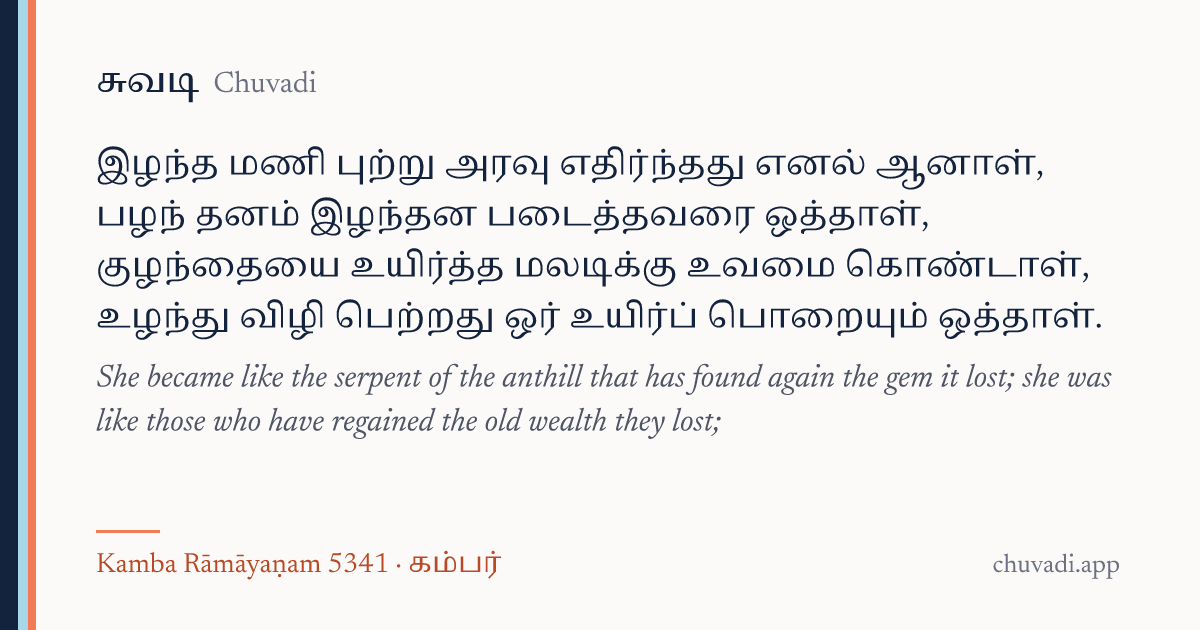
(திருவாழியைக் கண்டபிராட்டி) இழந்த மணி - தவறவிட்டமாணிக்கத்தை; எதிர்ந்தது புற்று அரவு எனல் ஆனாள் - தன் எதிரில் கண்ட புற்றில் உள்ள பாம்பு என்று கூறும்படி இருந்தாள்; இழந்தன பழந்தனம் - இழந்துவிட்ட பழைய செல்வத்தை; படைத்தவரை ஒத்தாள் - (மறுபடியும்) பெற்ற வறியவரை ஒத்திருந்தாள்; குழந்தையை உயிர்த்த - குழந்தையைப் பெற்றெடுத்த; மலடிக்கு உவமை கொண்டாள் - மலடிக்கு உவமானம் ஆயினாள்; உழந்து - பலநாட்கள் துன்பத்தில் வருந்தி; விழிபெற்றது - கண்களைப் பெற்ற; ஓர் உயிர்ப் பொறையும் - ஒப்பற்ற உடம்பையும்; ஒத்தாள் - ஒத்திருந்தாள்.
அம்மைக்குமோதிரம் கிடைத்தது, பாம்பு, தவறவிட்ட மணியைப் பெற்றது போலவும், வறுமையாளன் இழந்த செல்வத்தை மீளப் பெற்றதைப் போலவும், மலடி குழந்தையைப் பெற்றது போலவும், குருடன் விழி பெற்றது போலவும் இருந்தது. பிராட்டியைப் பாம்பு என்று கூறலாமா ? அமுதமான அம்மை தீயர் செய்கையால் நஞ்சு ஆனாள். நஞ்சுதான் அரக்கர் குடிக்கு என்று நங்கையை அவன் தம்பியே சொன்னான் என்று பெரிய திருமொழி பேசும் (பெரிய 10-2-4) வால்மீகம், சீதை மகா சர்ப்பம் போன்றவள். அவள் கவலை கொண்டு முகத்தை வைத்திருக்கும் ஐந்து விரல்களே அதன் ஐந்து தலைகள் என்று பேசும். (கம்ப. 7351) கவிச் சக்கரவர்த்தி, ‘திட்டியின் விடமன கற்பின் செல்வி’ என்று கும்பகர்ணன் வாயிலாகப் பேசுவான். இங்கு மணியிழந்த நாகம் மீண்டும் மணிபெறும் தன்மைக்கே ஒப்பீடு என்பதை அறிந்தால்
ஆங்கிலம் · English translationAI
Translation
- She became like the serpent of the anthill that has found again the gem it lost;
- she was like those who have regained the old wealth they lost;
- she could be likened to a barren woman who has given birth to a child;
- she was like a living body that, after long suffering, has gained its eyes.
What the poem says
Four images describe Cītai on seeing the ring: a serpent recovering the jewel it carries and had lost; a pauper getting back his lost fortune; a barren woman holding a newborn child; a blind person who, after long suffering, receives sight.
The commentary defends the serpent image: Cītai, nectar to the good, became poison to the demons. It recalls that an Āḻvār called her 'poison to the demon race' and that Vālmīki likens her to a great serpent. The comparison here, though, rests only on the snake regaining its gem.