



கம்பராமாயணம் 5345 · சுந்தர 5.70
பாடல் · The poem
Tap a word to see its gloss in the commentary and where else it occurs.
பொருள் · Meaning in Tamil
மணி ஆழி - மணிகள்பதித்த அந்த மோதிரம்; பசியால் - பசியினால்; இருந்து - (பிறிதோரிடம் செல்லாமல்) வீட்டிலேஇருந்து; இடர்உழந்தவர்கள் - துன்பத்தால் வருந்தியவர்கள்; எய்தும் - அடைந்த; அருந்தும் அமுது ஆகியது - உண்ணும் உணவாக ஆயிற்று; அறத்தவரை - இல்லறத்தில் இருப்பவரை; அண்மும் - சென்று சேர்ந்த; விருந்தும் எனல் ஆகியது - விருந்தாளி என்று கூறும் படியாகவும் ஆயிற்று; வீயும் உயிர் - இறக்கப் போகும் உயிர்; மீளும் - திரும்புதற்குக் காரணமாயிருக்கும்; மருந்தும் எனல் ஆகியது - மருந்து என்று கூறும்படியாகவும் ஆயிற்று; வாழி - அந்த திருவாழி பல்லாண்டு வாழ்க.
விருந்தும்மருந்தும் என்பதில் உள்ள உம்மைகளை எனலும் ஆகியது என்று இரண்டிடத்தும் சேர்க்க. விருந்து எனலும் ஆகியது மருந்து எனலும் ஆகியது என அமையும். விருந்தினர் முகம் காணும் நல்ல இல்லறத்தார் மகிழ்வர் விருந்தினர் முகம் கண்டு அன்ன விழா என்று முன்பு பேசப் பெற்றது (நாட்டு - 15) விழாவைக் காணும் போது உண்டாம் மகிழ்ச்சி விருந்தால் உண்டாம் என்பது குறிப்பு. விருந்து கண்டு ஒளிக்கும் வாழ்க்கை திருந்தா வாழ்க்கை என்று இகழப்படும்.
ஆங்கிலம் · English translationAI
Translation
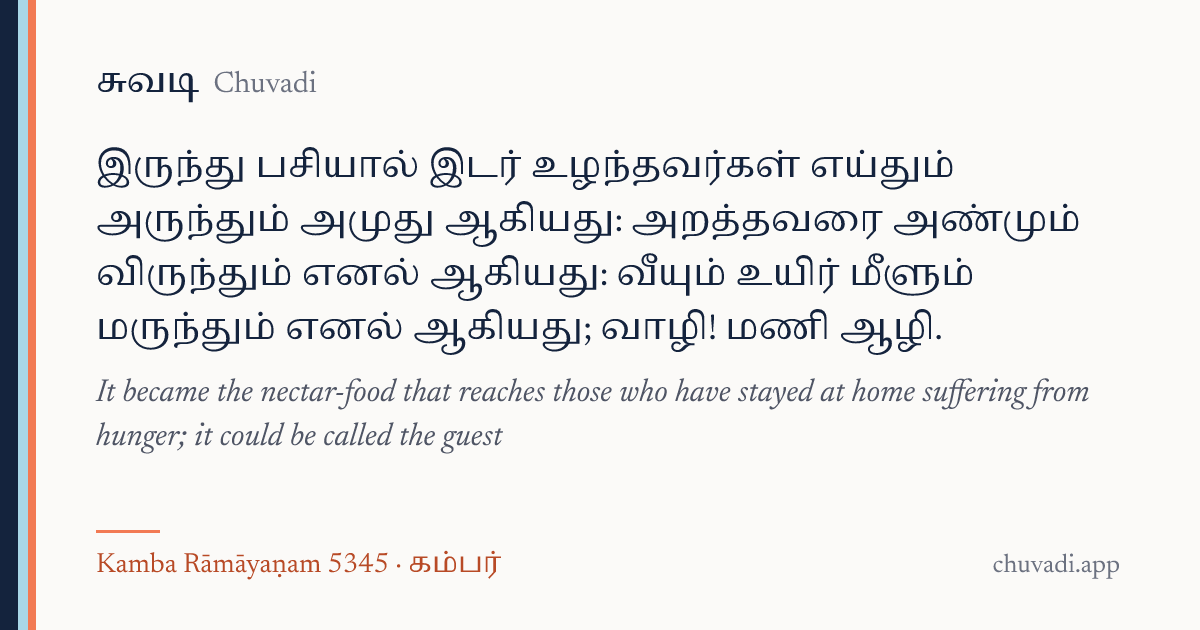
- It became the nectar-food that reaches those who have stayed at home suffering from hunger;
- it could be called the guest
- who comes to those who keep the householder's dharma; it could be called the medicine
- that brings back a life about to perish: long live the jewelled ring!
What the poem says
The poet piles up images for what the ring means to Cītai. It is like food reaching people who have stayed at home starving; like a welcome guest arriving at the house of a good householder, for whom receiving guests is a duty and a joy; like the medicine that calls back a life on the point of departing.
He ends with a blessing on the ring itself. The commentary notes that in Tamil tradition a household that hides from guests is despised, so a guest is a source of real delight.