



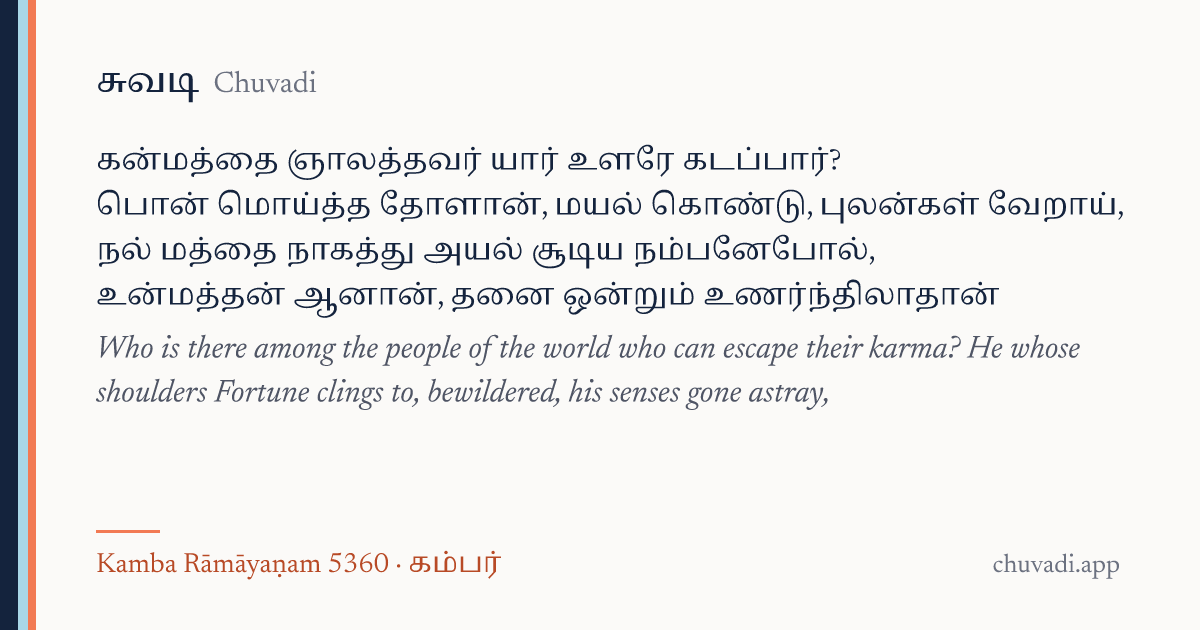
கம்பராமாயணம் 5360 · சுந்தர 5.85
பாடல் · The poem
Tap a word to see its gloss in the commentary and where else it occurs.
பாட வேறுபாடு · Project Madurai reads
பொருள் · Meaning in Tamil
பொன் மொய்த்ததோளான் - திருமகள் தங்கியதோள்களை உடைய இராமபிரான்; ஒன்றும் - சிறிதும்; தனை உணர்ந்திலாதான் - தன்னை அறிந்து கொள்ளாமல், மயல் கொண்டு - பிராட்டியின் பால் காதல் மிகுந்து; புலன்கள் வேறு ஆய் - ஐம்புலன்களும் நிலைதிரிந்து (உமையைப் பிரிந்த); நல்மத்தம் - நல்ல ஊமத்தம் பூவையும்; நாகத்து அயல் - பாம்பின் அருகில்; சூடிய - அணிந்த; நம்பனே போல் - சிவபிரானைப் போல; உன்மத்தன்ஆனான் - பித்தம் பிடித்தவன் ஆனான்; (ஆகையால்) ஞாலத்தவர் - உலகில்உள்ளவர்களுள்; கன்மத்தை - வினையின் நுகர்ச்சியை; கடப்பார் - வெற்றிகொண்டவர்; யார் உளர் - எவர் உள்ளனர்.
கடப்பார்-வெற்றி கொள்பவர். கடப்பார் எவரோ கருவினையை என்பர் புகழேந்தியார் மொய்த்தல் - தங்குதல் (இருத்தல்) மொய்த்தல் என்பது கொடுத்தலும் இருத்தலும் (அகராதி நிகண்டு. மொம் முதல் 5) சிவபிரானைப் பித்தன் என்று பேசுவது மரபு.
ஆங்கிலம் · English translationAI
Translation
- Who is there among the people of the world who can escape their karma?
- He whose shoulders Fortune clings to, bewildered, his senses gone astray,
- like the Lord who wears the good datura flower beside the serpent,
- became a madman, knowing nothing at all of himself.
What the poem says
The metre changes again. Aṉumaṉ, or the poet, reflects that no one in the world escapes the working of karma: even Irāmaṉ, on whose shoulders the goddess of fortune dwells, became like a madman in his grief, his senses confused, unaware of himself.
He is compared to Śiva, who wears the datura flower beside the serpent in his hair and whom tradition calls 'the mad one'; the commentary takes the comparison to be Śiva parted from Umā.