



கம்பராமாயணம் 5368 · சுந்தர 5.93
பாடல் · The poem
Tap a word to see its gloss in the commentary and where else it occurs.
பொருள் · Meaning in Tamil
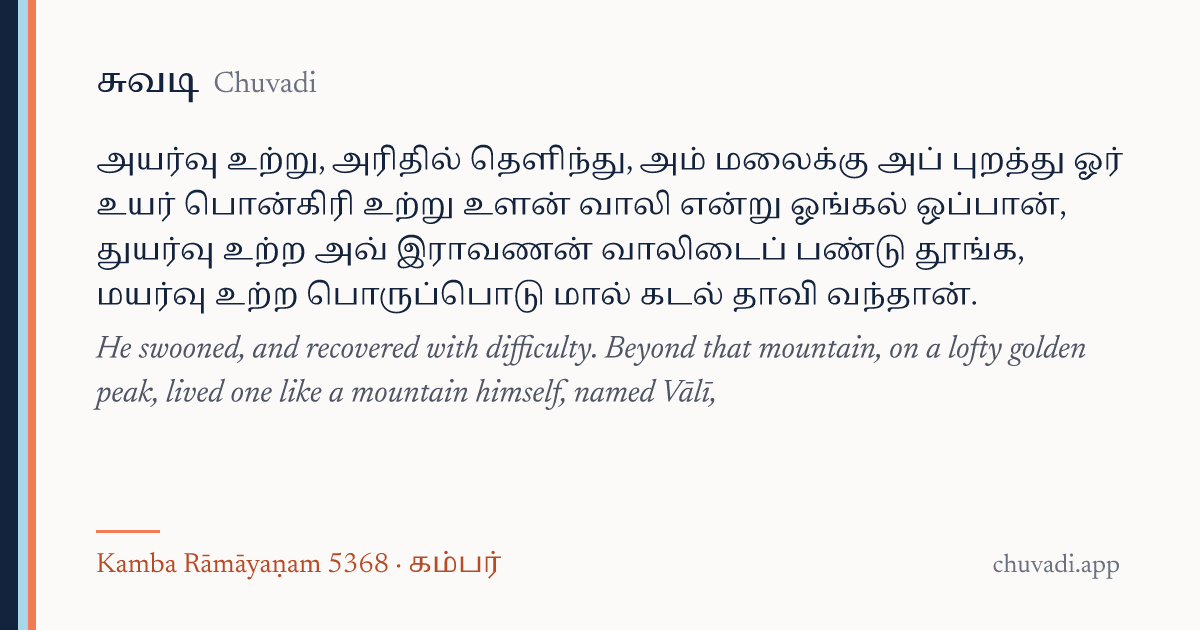
அயர்வு உற்று - சோர்ந்து; அரிதின் தெளிந்து - மிகவும் சிரமப்பட்டுத் தெளிந்து (இவை இராமன் நிலை); அம்மலைக்கு - அந்த இருசியமுக மலைக்கு; அப்புறத்து ஓர் - அந்தப் பக்கத்தில் உள்ள ஒரு; உயர் - உயர்ந்த; பொன்கிரி உற்றுளன் - அழகிய மலையில் இருப்பவனும்; வாலி என்று ஓங்கல் ஒப்பான் - வாலி என்னும் பெயருடன் மலையை ஒத்திருப்பவனும்; துயர்வு உற்று - துன்பம் அடைந்து; அவ் இராவணன் - அந்த இராவணன்; வாலிடை - தன் வாலின்கண்ணே; பண்டு தூங்க - முன்பு தொங்கும்படி (பிணித்து); மயர்வுற்ற - மயக்கம் அடைந்த; பொருப்பொடு - மலைகளையும்; மால் கடல் - பெரிய கடல்களையும்; தாவி வந்தான் - தாவி வந்தவனும்.
ஆங்கிலம் · English translationAI
Translation
- He swooned, and recovered with difficulty. Beyond that mountain, on a lofty golden peak,
- lived one like a mountain himself, named Vālī,
- who once, with that Irāvaṇaṉ hanging in distress from his tail,
- came leaping over the reeling mountains and the great sea.
What the poem says
Irāmaṉ fainted and only slowly came round. Aṉumaṉ now turns to Vālī, who lived on a high golden mountain beyond the hill where Cukkirīvaṉ took refuge.
Vālī was a giant like a mountain himself. Long before, he had caught Irāvaṇaṉ in his tail and leapt over mountains and seas with the demon king dangling helplessly from it. This verse and the next describe Vālī before telling of his end.