



கம்பராமாயணம் 537 · பால 9.71
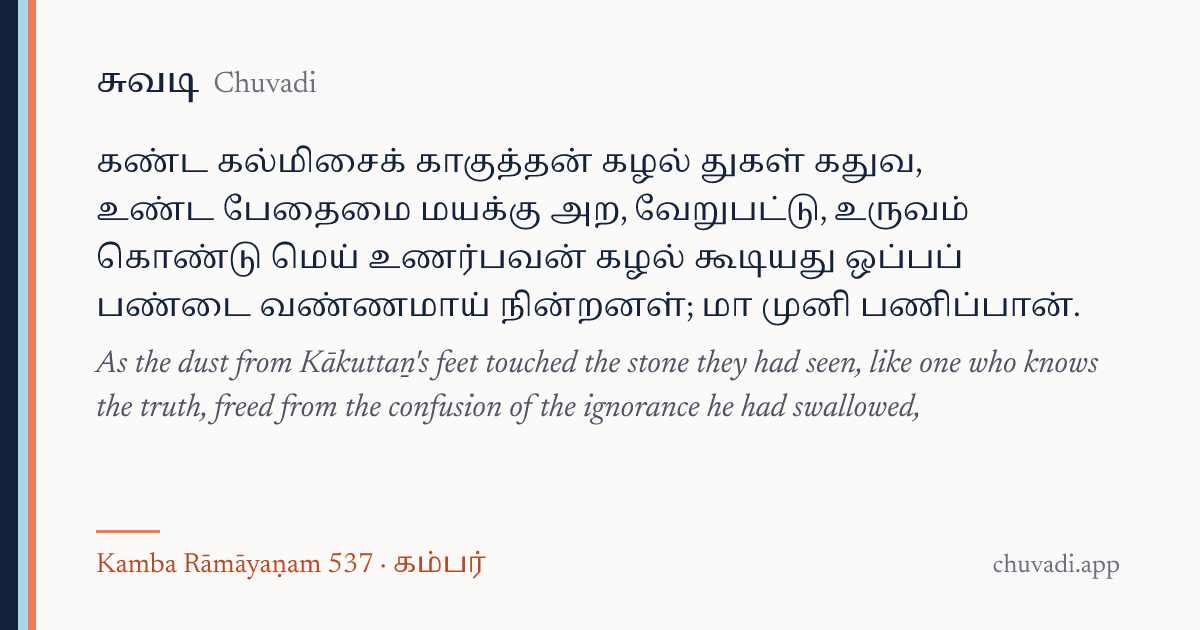
பாடல் · The poem
Tap a word to see its gloss in the commentary and where else it occurs.
பொருள் · Meaning in Tamil
கண்ட கல்மிசை - (அவ்வாறு) கண்ட கல்லின்மேலே; காகுத்தன் கழல் துகள் - இராமனது திருவடித் துகள்; கதுவ - பட்டதால்; உண்ட பேதைமை - (தான்) மனத்திற் கொண்டுள்ள அறியாமையாகிய; மயக்கு அற - இருள் மயக்கம் நீங்குமாறு; மெய் உணர்பவன் - உண்மையான தத்துவ ஞானம் பெற்றவன்; வேறுபட்டு - தனது அஞ்ஞானமாகிய அறியாமை நிலை மாறி; உருவம் கொண்டு - உண்மை வடிவம் (புது ஞானஸ்வரூபி) அடைந்து; கழல் கூடியது ஒப்ப - பரமனது திருவடிகளை அடைவதைப் போல; பண்டை வண்ணமாய் - (அந்த அகலிகை) முன்னைய வடிவத்தோடு; நின்றனள் - எழுந்து நின்றனள்; மா முனி பணிப்பான் - (அதனைக் கண்ட) விசுவாமித்திரன் இராமனை நோக்கிப் பின்வருமாறு கூறினான்.
அகலிகை நல்லுருவம் பெறல்: திருமாலின்திருவடி சேர்பவர் தம் கருமம் ஒழிந்து இப் புன்மையான உடம்பை ஒழித்து ஒளிமிக்க உருவத்தை அடைவதுபோல, இராமனது திருவடிப்பொடி சேர்ந்த அளவில் இவளது சாபம் நீங்கியது. தனது கல்லுருவம் மாறி முன்னைய நல்லுருவத்தைப் பெற்றாள். பேதைமை மயக்கு: அவிச்சை (அஞ்ஞான) யின் தொடர்ச்சி. மெய்யுணர்தல்: பிறப்பு, இறப்பு, வீடுகளையும் அவற்றின் காரணங்களையும் விபரீத ஐயங்கள் நீங்கி உண்மையாக அறிதல். முக்தி பெறுவார்நிலை: நிலம் முதலான ஐம்பூதங்களாலான இந்தக் கரும வினையுடலை நீக்கி, ஒளிமிக்க தெய்வீக உடம்பைப் பெறுதல். வான்மீகம் - மிதிலைக்கு அருகில் செல்லும் போது ஆச்சிரமம் ஒன்று பாழடைந்து கிடப்பது குறித்து இராமன் விசுவாமித்திரனைக் கேட்டான். அப்பொழுது அம் முனிவன் அகலிகையின் வரலாறு கூறி, அந்த ஆச்சிரமம் செல்லுமாறு வேண்டுகிறான். இராமனும் சாப விமோசனம் உண்டாகுமென்று கருதி அங்கே சென்றான்.
ஆங்கிலம் · English translationAI
Translation
- As the dust from Kākuttaṉ's feet touched the stone they had seen,
- like one who knows the truth, freed from the confusion of the ignorance he had swallowed,
- transformed, taking on his true form and reaching the feet of the Lord,
- she stood there in her former beauty; and the great sage spoke.
What the poem says
This is one of the most famous moments in Kampaṉ. The dust from Irāmaṉ's feet (Kākuttaṉ, "descendant of Kakutstha") touches the stone, and Akalikai at once stands up in her old form. Kampaṉ compares this to the liberation of a soul. A seeker who gains true knowledge throws off ignorance, sheds the body made of the five elements and karma, takes on a radiant form and reaches the feet of God.
The commentary notes the difference from Vālmīki. There, Irāmaṉ asks about a deserted hermitage near Mithilā and goes there on purpose to end the curse. In Kampaṉ the release happens simply at the touch of his foot-dust. Vicuvāmittiraṉ then explains to Irāmaṉ what has happened.