



கம்பராமாயணம் 5383 · சுந்தர 5.108
பாடல் · The poem
Tap a word to see its gloss in the commentary and where else it occurs.
பாட வேறுபாடு · Project Madurai reads
பொருள் · Meaning in Tamil
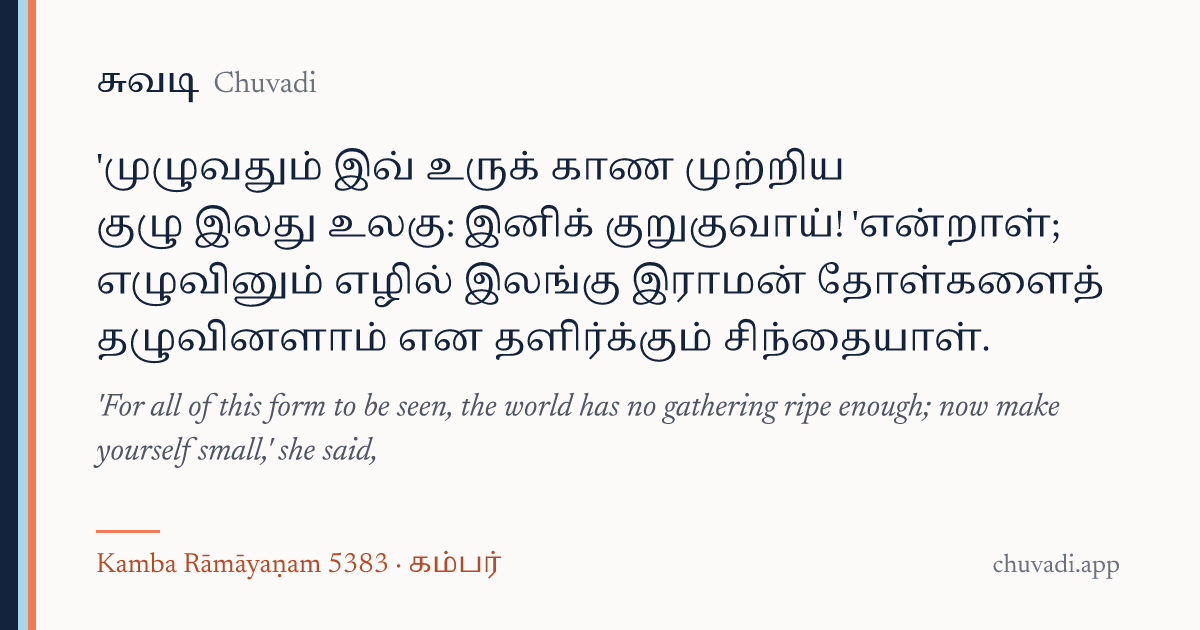
எழுவினும் எழில் இலங்கு - கணைய மரத்தினும் அழகு விளங்கும்; இராமன் தோள்களை - இராமபிரானின் தோள்களை; தழுவினள் ஆம் என - அணைத்தவள் ஆவாள் என்று கூறும்படி; தளிர்க்கும் - பூரிக்கின்ற; சிந்தை - மனம் உடைய பிராட்டி (அனுமனை நோக்கி); இவ் உரு முழுவதும் காண - இந்த வடிவம் முழுவதையும் பார்ப்பதற்கு; உலகு முற்றிய - உலகம் முதிர்ச்சி பெற்ற; குழு இலது - கூட்டம் உடையதாக இல்லை (ஆகையால்); இனி - இப்போது; குறுகுவாய் - ஒடுங்குவாயாக, என்றாள் - என்று கூறினாள். தளிர்க்கும் மேனியாள் உலகில் குழு இலது குறுகுவாய் என்றாள் என முடிக்க. முற்றிய - முதிர்ந்த - ஈண்டு முதிர்ச்சி என்றது அறிவின் முதிர்ச்சியை. அனுமன் பேருரு தனக்குச் சிறைவீடு கிடைக்கும் என்னும் நம்பிக்கை உண்டு பண்ணுதலின் பிராட்டி பூரித்தாள். எழில் - எழுச்சி. இனி - இப்போது. இனி நினைந்து இரக்கம் ஆகின்று (புறம்) முற்றிய குழு என்பதற்கு வலிமை மிகுந்த சாமர்த்தியம் என்று பொருள் கூறுவாரும் உளர்.
ஆங்கிலம் · English translationAI
Translation
- 'For all of this form to be seen, the world has no
- gathering ripe enough; now make yourself small,' she said,
- she whose heart burgeoned as if she had embraced
- the shoulders of Irāmaṉ, more splendid than the bars of a gate.
What the poem says
Cītai explains why he should shrink: there is no assembly in the world ripe enough, in understanding, to take in this whole form. Some take the phrase to mean 'no one strong enough'.
Seeing his power gives her hope that her captivity will end, and she swells with joy as if she were already in Irāmaṉ's arms. Hero's arms compared to the massive wooden bars of a fortress gate are a stock image.