



கம்பராமாயணம் 5386 · சுந்தர 5.111
பாடல் · The poem
Tap a word to see its gloss in the commentary and where else it occurs.
பொருள் · Meaning in Tamil
பாழி நெடுந்தோள் - பருத்து நீண்ட தோள்களை உடைய, வீரா - அனுமனே நீ; ஆழி நெடுங்கை - சக்கரம் ஏந்தும் கரத்தைப் பெற்ற; ஆண் தகை தன் - ஆடவருள் சிறந்த இராமபிரானின்; அருளும் - அருளும்; புகழும் - புகழும்; அழிவு இன்றி - அழிவு அடையாமல்; ஊழி பலவும் - பல யுகங்களும்; நிலை நிறுத்தற்கு - நிலைத்து நிற்பதற்கு; ஒருவன் நீயே - ஒப்பற்ற நீயே; உளை ஆனாய் - (தகுதி) உள்ளவன் ஆனாய்; நின் பெருமைக்கு ஏற்ப - உன்னுடைய விசுவரூபத்துக்குப் பொருத்தமாக; பகை இலங்கை - உலகத்தின் பகையான இலங்கையானது, ஏழு கடற்கும் - ஏழு சமுத்திரங்களுக்கும்; அப் புறத்தது - அப்பால் இருப்பதாக; ஆகாதது - அமையாமல்; இருந்தது - (ஒரு கடலின் நடுவில்) இருப்பது; இழிவு அன்றோ - (உன் சிறப்புக்கு) தாழ்வு அல்லவா.
அனுமனின் வீரத்துக்கு 'உரைகல்' ஒரு கடல் கடந்ததன்று. அவன் ஏழு கடலைக் கடந்தால்தான் அவன் வீரம் சரியாக உணரப்படும் என்பது குறிப்பு.
ஆங்கிலம் · English translationAI
Translation
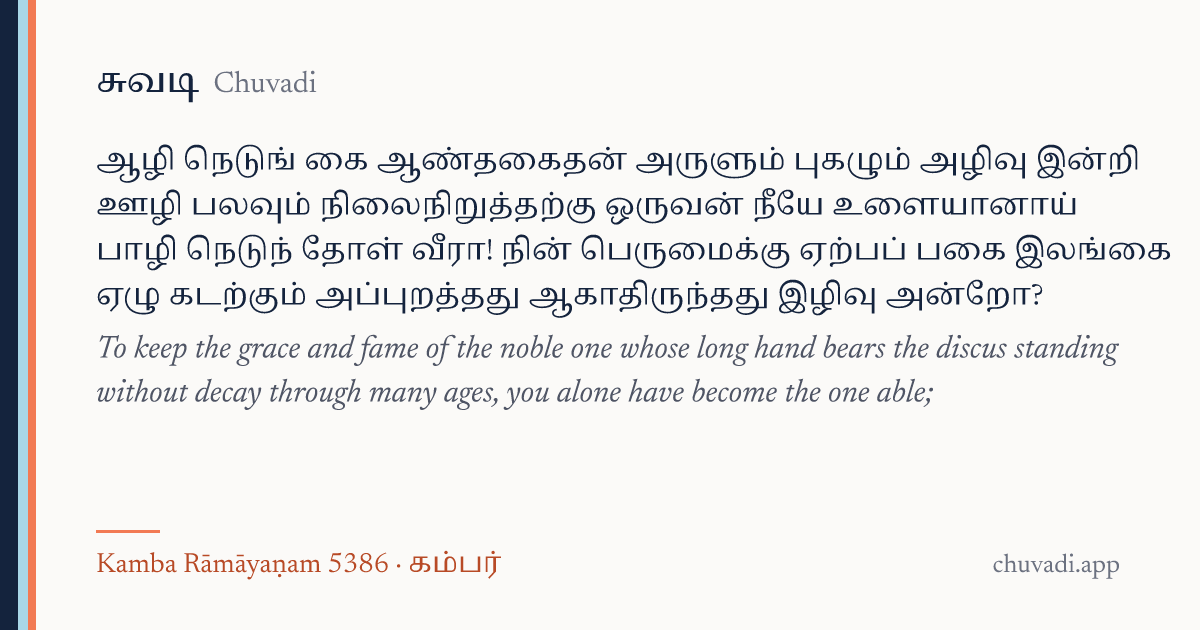
- To keep the grace and fame of the noble one whose long hand bears the discus
- standing without decay through many ages, you alone have become the one able;
- O hero of mighty, long shoulders! For your greatness, is it not a disgrace that hostile Ilaṅkai
- was not set beyond all seven seas?
What the poem says
Cītai continues to praise Aṉumaṉ. Irāmaṉ, holder of the discus as an incarnation of Viṣṇu, will have lasting fame through Aṉumaṉ's deeds.
Her witty point is that crossing only one sea is too small a test of his strength. Ilaṅkai should have been beyond all seven seas for his valour to be properly measured.