



கம்பராமாயணம் 5387 · சுந்தர 5.112
பாடல் · The poem
Tap a word to see its gloss in the commentary and where else it occurs.
பொருள் · Meaning in Tamil
(அனுமனே) நினக்கு - உனக்கு; அறிவும் ஈதே - ஞானமும் இதுவேயாகும்; உரு ஈதே - அழகும் இதுவேயாம்; ஆற்றல் ஈதே - வலிமையும் இதுவேயாம்; ஐம்புலத்தின் செறிவும் ஈதே - ஐம்புலன்களின் அடக்கமும் இதுவேயாகும்; செயல் ஈதே - செய்கையும் இதுவேயாகும்; தேற்றம் ஈதே - தெளிவும் இதுவேயாகும்; தேற்றத்தின் நெறியும் ஈதே - தெளிவு மேற்கொள்ளும் வழியும் இதுவேயாகும்; நினைவு ஈதே - எண்ணமும் இதுவேயாகும்; நீதி ஈதே - நீதியும் இதுவேயாகும்; என்றால் - என்று அமையுமானால்; விரிஞ்சன் முதலாம் மேலானோர் - பிரமன் முதலான தேவர்கள்; குணங்களால் - பண்புகளால்; வெறியர் அன்றோ - வெறுமையானவர்கள் அல்லவா.
ஈதே, ஈதே என்று திரும்பத் திரும்பப் பேசப்பட்டது, அனுமன் பேருரு. அவன் பேருருவுக்கும் அறிவு முதலானவற்றுக்கும் வேறுபாடில்லை. பண்பும் பண்பியும் ஒன்றாயிற்று. அனுமன் கொண்ட வடிவம் பெரியது. அதுபோல் அவனுடைய அறிவு முதலான குணங்களும் பெரியன. பிரமன் முதலானவர்களுக்கு இங்ஙனம் அமையாமையின் அவர்கள் சூனியம் (வெறியர்) ஆயினர். 'ஆற்றலும் நிறைவும் கல்வி அமைதியும் அறிவும் வேற்றுமை இவனோடு இல்லை' (கம்ப. 3767) என்று பிரான் முன்பு பேசுகிறான்; பிரான் பேசியதையே பிராட்டி விளக்கமாகப் பேசினாள். இருவர் உள்ளமும் ஒன்றென்பர். இருவரும் ஒன்றென அறிதல் நன்று. சக்தியும் சிவமும் ஒன்றுதானே. விளக்கம் வேண்டா.
ஆங்கிலம் · English translationAI
Translation
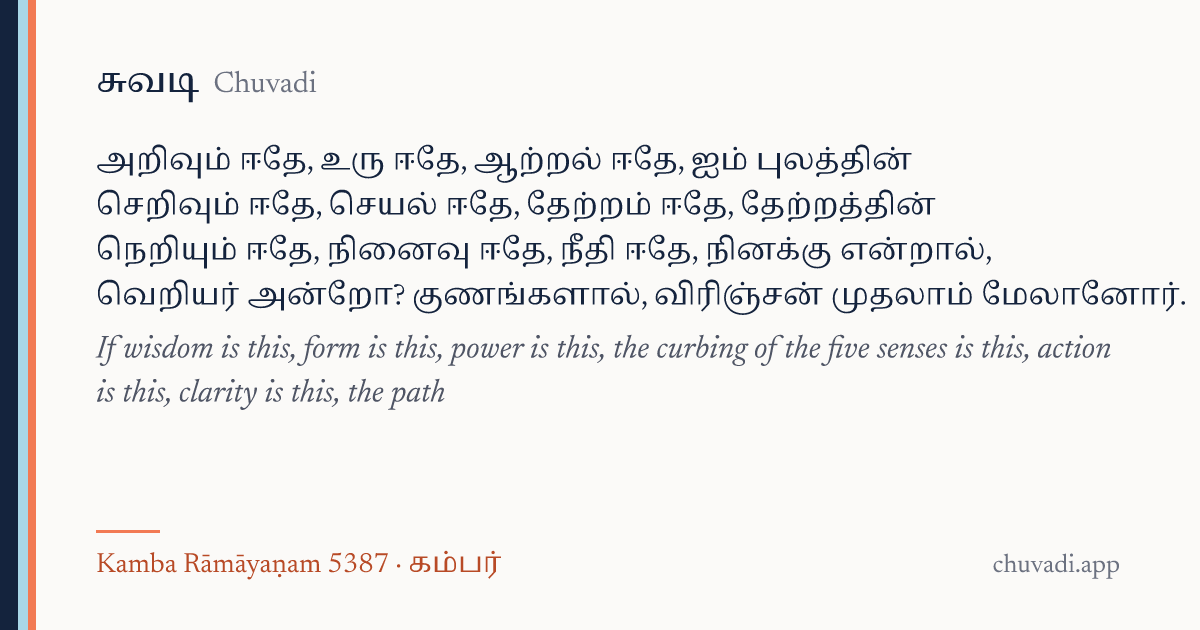
- If wisdom is this, form is this, power is this, the curbing
- of the five senses is this, action is this, clarity is this, the path
- of clarity is this, thought is this, justice is this, in you,
- are they not empty in virtues, Virañcaṉ and the other high ones?
What the poem says
Pointing to the immense form Aṉumaṉ has just shown, Cītai says each of his qualities is as great as that body. His wisdom, strength, self-control and justice are all on the same scale.
Measured against him, even Brahmā, here called Virañcaṉ, and the other gods seem empty of virtue. The commentary notes that Irāmaṉ said something very like this about Aṉumaṉ earlier in the epic, so Cītai and Irāmaṉ speak with one mind.