



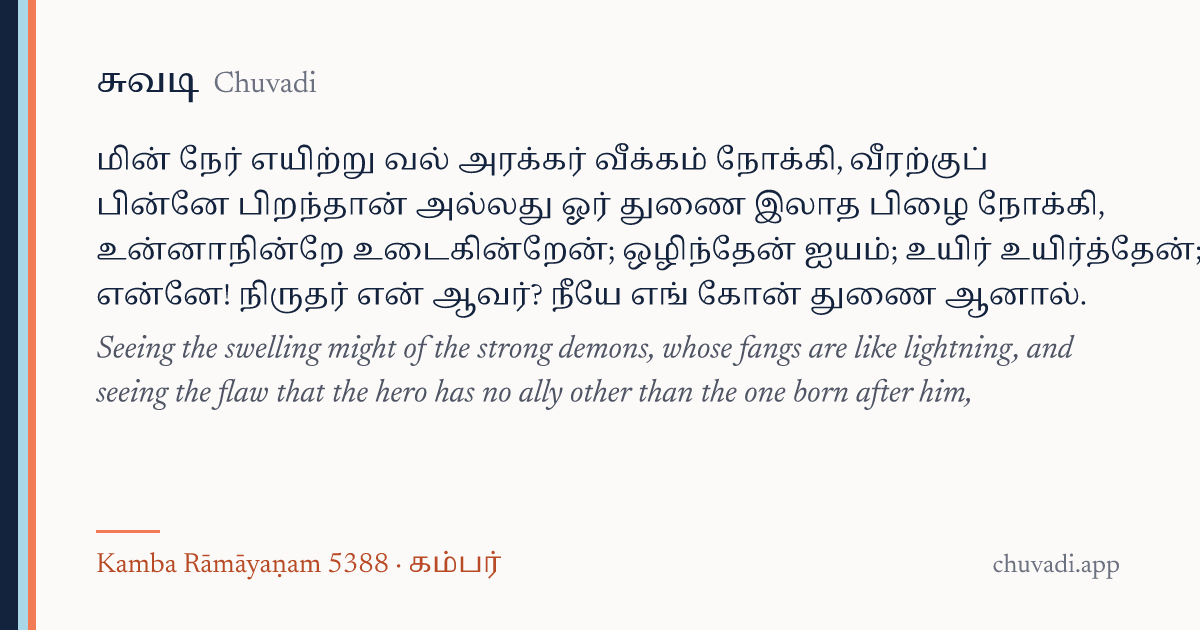
கம்பராமாயணம் 5388 · சுந்தர 5.113
பாடல் · The poem
Tap a word to see its gloss in the commentary and where else it occurs.
பொருள் · Meaning in Tamil
(அனுமன்) மின்நேர் எயிற்று - மின்னைப் போலும் பற்களையுடைய வல் அரக்கர் - வலிமை மிக்க அரக்கர்களின்; வீக்கம் நோக்கி - பெருக்கத்தைப் பார்த்து; வீரற்கு - இராமபிரானுக்கு, பின்னே பிறந்தான் அல்லது - பின்னே தோன்றிய இலக்குவனே அல்லாமல்; ஓர் துணையிலாத - வேறு ஒரு உதவியாளன் இல்லாத; (பெருமானுக்கு யாதாகுமோ என்று) உன்னா நின்றேன் - ஆலோசனை செய்து; உடைகின்றேன் - மனம் உடைந்து போன யான்; ஐயம் ஒழிந்தேன் - ஐயப்பாடு நீங்கினவள் ஆனேன்; உயிர் உயிர்த்தேன் - உயிர் தழைக்கப் பெற்றேன்; நீயே - சிறப்பின் வடிவமான நீயே; எம் கோன் துணை என்றால் - எம் பெருமானின் உதவியாளனாக அமைந்தாய் என்றால்; நிருதர் என்னாவர் - அரக்கர்கள் என்ன பாடுபடுவார்கள்; என்னே - என்ன ஆச்சரியம்.
கான் உறை வாழ்க்கை கலந்த இராமன். தலைமகற் பிரிந்த தனிமையன். தனாது சுற்றமும் சேண்மையதுவே. முற்றியது. வெண்கோட்டுக் குன்றம் எடுத்த மீளி வன் தோள் ஆண்டகை ஊரே; அன்றே சொல் முறை மறந்தனம் வாழி வில்லும் உண்டு அவற்கு அந்நாள் ஆங்கே. என்னும் சங்கராமாயணம் இங்கே நினைவுக்கு வருகிறது (புறத்திரட்டு 1332) 'தருமத்தின் தனிமை தீர்ப்பான்' (கம்ப. 3781) என்று முன்பு அனுமன் புகழப் பெற்றான். (அனுமப் படலம் 29) இங்கு நீயே எம்கோன் துணையானால் என்று பிராட்டி பேசினாள். தருமமே இராமன் என அறிக. அறத்தின் மூர்த்தி இராமன் என்று கம்பர் உணர்ந்தனர் மயங்கலும் மயங்கும் என்று சிலம்பு பேசும் (22-154) உயிர் உயிர்த்தேன் என்பதும் அது போன்றது. உயிர்த்தேன் என்பதே பொருள். அறிஞர்கள் சிந்திக்க வேண்டும்.
ஆங்கிலம் · English translationAI
Translation
- Seeing the swelling might of the strong demons, whose fangs are like lightning, and seeing the flaw
- that the hero has no ally other than the one born after him,
- I kept brooding and breaking apart; now my doubt is gone, I breathe again;
- what then! What will become of the demons, if you yourself are my lord's ally?
What the poem says
Cītai tells Aṉumaṉ what she had feared. The demons were many and strong, while Irāmaṉ had only his younger brother Ilakkuvaṉ beside him, and the thought broke her heart.
Now that someone like Aṉumaṉ stands with Irāmaṉ, her fear is gone and she says she lives again. The commentary links this to an earlier verse in which Aṉumaṉ is called the one who ends the loneliness of dharma, Irāmaṉ being dharma in person.