



கம்பராமாயணம் 5397 · சுந்தர 6.4
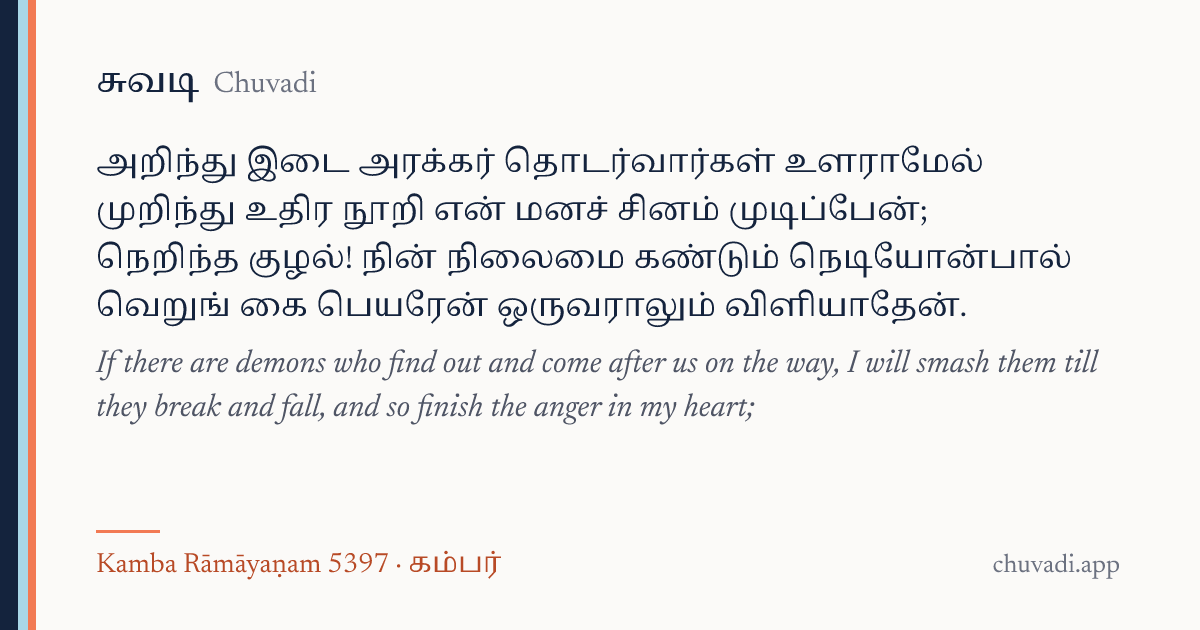
பாடல் · The poem
Tap a word to see its gloss in the commentary and where else it occurs.
பொருள் · Meaning in Tamil
நெறிந்த குழல்! - சுருண்ட கூந்தலையுடைய அம்மையே!; அறிந்து - (யான் உன்னைச் சுமந்து போவதை) தெரிந்து; இடை தொடர்வார்கள் அரக்கர் - இடையிலே என்னைத் தொடரும் அரக்கர்கள்; உளராமேல் - இருப்பார்களேயானால்; முறிந்து உதிர நூறி - அரக்கர்கள் சிதைந்து உதிரும்படி அழித்து; என் மனச் சினம் - என் உள்ளத்தில் உள்ள சீற்றத்தை; முடிப்பேன் - தணித்துக் கொள்வேன்; ஒருவராலும் விளியாதேன் - ஒருவராலும் சாகாவரம் பெற்ற நான்; நின் நிலைமை கண்டும் - உன்னுடைய துன்ப நிலையைப் பார்த்தும்; (அதற்குப் பரிகாரம் தேடாமல்) நெடியோன் பால் - இராமபிரான் பக்கல்; வெறுங்கை பெயரேன் - வெறுங்கையுடன் போகமாட்டேன்.
உளராமேல் என்றதனால் அரக்கர் பின்பற்றி வாரார் என்று அனுமன் கருதினான். சினம் அரக்கர்களின் கொடுஞ்செயலால் வந்தது. ஒருவராலும் விளியா வரம் பெற்றது நன்மையைச் செய்யவும் தீமையை அழிக்கவுமே என்று அனுமன் தன் மனக் கருத்தை உணர்த்தினான். நெறிந்த குழல் - சுருண்ட கூந்தல். நெறிந்த கருங்குழல் மடவாய் (பெரியாழ்வார் 3. 10. 1) நின் நிலைமை என்றது, பிராட்டி பிறருடைய உதவியின்றித் தவிக்கும் நிலைமை. இதனை 'உண்டு துணை என்ன எளிதோ' (கம்ப. 5345) என்று முன்பே பேசப் பெற்றது.
ஆங்கிலம் · English translationAI
Translation
- If there are demons who find out and come after us on the way,
- I will smash them till they break and fall, and so finish the anger in my heart;
- O you of curling hair! Having seen your plight, to the Tall One
- I will not go back empty-handed, I who cannot be killed by anyone.
What the poem says
Aṉumaṉ goes on urging Cītai to let him carry her off. If any demons notice and give chase, he will gladly crush them, venting the anger their cruelty has stirred in him.
He has a boon that no one can kill him, and he will not return to Irāmaṉ, the Tall One, with empty hands. The commentary notes that 'if there are' shows he does not really expect pursuit, and that he sees his boon as meant for protecting the good.