



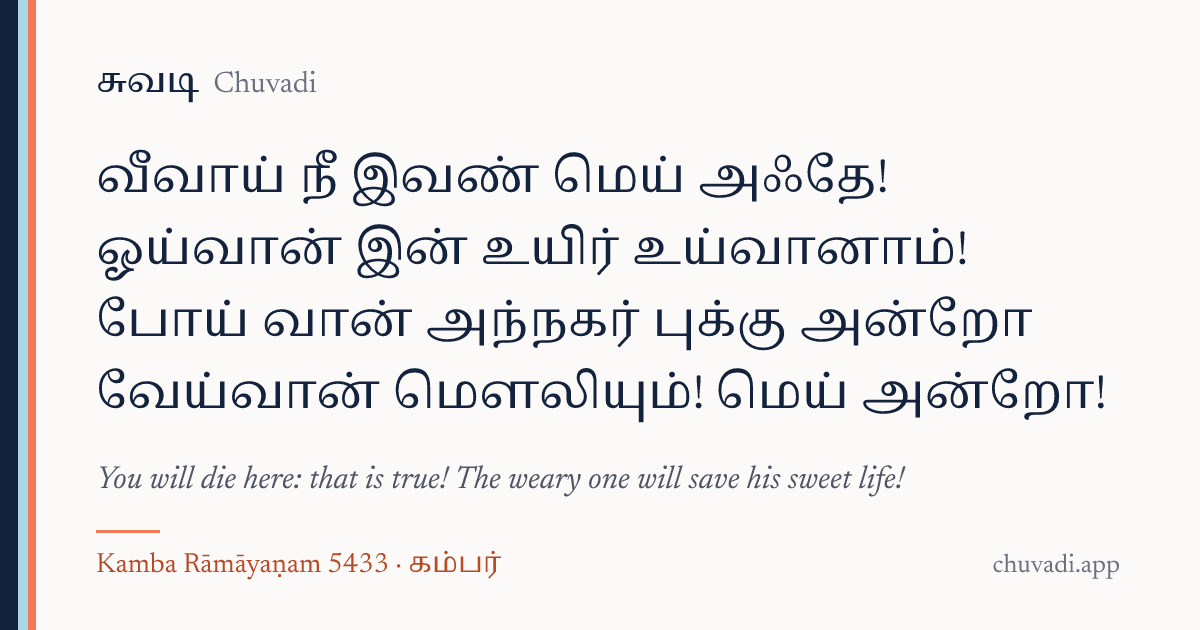
கம்பராமாயணம் 5433 · சுந்தர 6.40
பாடல் · The poem
Tap a word to see its gloss in the commentary and where else it occurs.
பொருள் · Meaning in Tamil
(பிராட்டியே) நீ இவண் வீவாய் - நீ இங்கே இறந்து விடுவாய்; அஃது மெய்யே - அது உண்மையே; (நீ இறந்தபின் ஓய்வான் - (பிரிவாற்றாமையால்) தளர்ந்துள்ள இராமபிரான்; இன் உயிர் உய்வானாம் - இனிய உயிர் தப்பி வாழ்வானாம்; போய் - காட்டை விட்டுச் சென்று; வான் அந்நகர் புக்கு அன்றோ - சிறந்த அயோத்தி நகர் புகுந்த பிறகல்லவா; மெளலியும் வேய்வான் - முடிசூட்டிக் கொள்வான்; மெய்யன்றே - இவை யாவும் நிகழக் கூடிய உண்மை யல்லவா.
இப்பாடலில் கூறப்பட்ட உடன்பாடு யாவும் எதிர்மறைப் பொருளில் வந்தவை. எடுத்தல் ஓசையால் கூறி இதனுள் உள்ள எதிர்மறைப் பொருளை அறிக. இப்பாடலின் நடை எதிர்மறைப் பொருள் தருவதற்கேற்ப அமைந்துள்ளது. இராமபிரான், பதினான்கு வருடம் முடியுமுன் எந்த நகரிலும் புகேன் என்று விரதம் எடுத்துக் கொண்டது பேசப் பெற்றது. போவான் என்ற பாடமே சிறந்தது. இவ்விருத்தம் மா - விளம் - காய் என்னும் சீர்களைப் பெற்று வரும். இத்தகைய பாடல்கள் இந்நூலில் 14 உள்ளன. எட்டு ஒன்பது அளவியற் சந்தம் என்று கம்பன் அடிப்பொடி அவர்கள் குறிக்கின்றார்
ஆங்கிலம் · English translationAI
Translation
- You will die here: that is true!
- The weary one will save his sweet life!
- Will he not go and enter that great city
- and put on his crown! Is that not true!
What the poem says
Aṉumaṉ replies to Cītai with heavy irony in short, punchy lines in a new metre. 'Yes, you will die here; and Irāmaṉ, worn out with grief, will save his own life, go home and be crowned. Of course!'
Every statement is meant to be heard as its opposite: none of this will happen. The commentary notes that Irāmaṉ has vowed not to enter any city until his exile is complete.