



கம்பராமாயணம் 5452 · சுந்தர 6.59
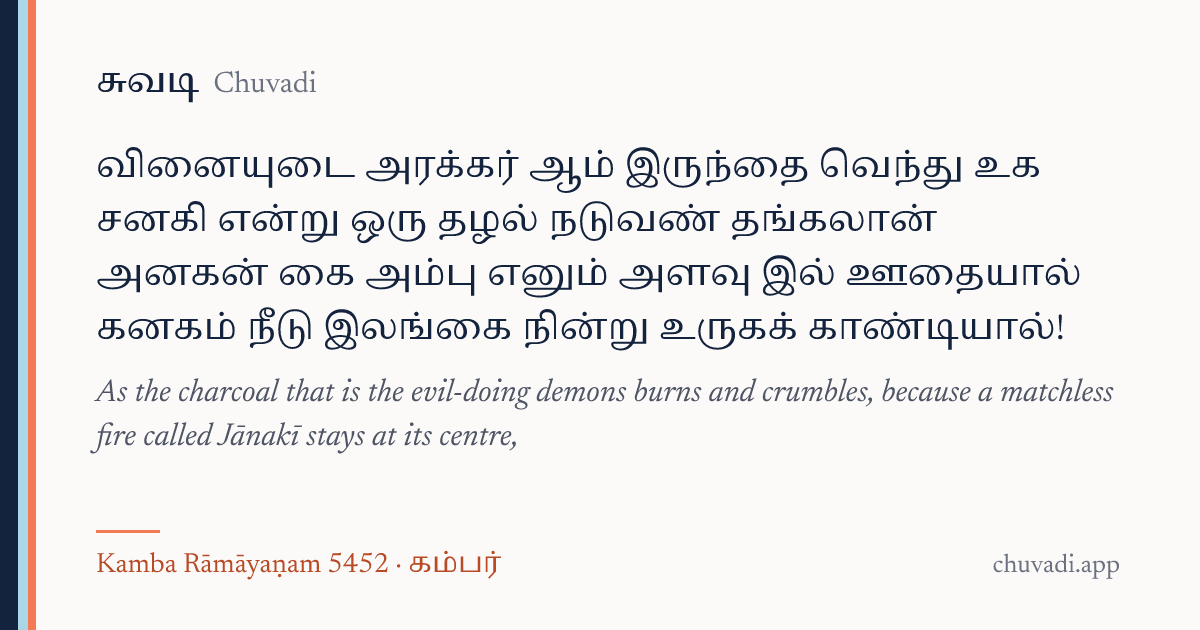
பாடல் · The poem
Tap a word to see its gloss in the commentary and where else it occurs.
பொருள் · Meaning in Tamil
வினையுடை - தீத்தொழில்களை உரிமையாகப் பெற்ற; அரக்கர் ஆம் இருந்தை - அரக்கர்களாகிய கரியானது; வெந்து உக - எரிந்து சாம்பலாய்ச் சிதறும்படி; சனகி என்று - சீதை என்று சிறப்பிக்கப்படும்; ஒரு தழல் - ஒப்பற்ற நெருப்பு; நடுவண் தங்கலால் - (அதன் நடுவில்) இருத்தலினாலே; அனகன் கை அம்பு எனும் - இராமபிரானின் கைகள் ஏவும் அம்பு என்னும்; அளவில் ஊதையால் - அளவற்ற பெருங்காற்றால்; நீடு - பெரிய; கனகஇலங்கை - பொன் மயமான இலங்கை மாநகர்; நின்று உருக - நிலைத்து உருகுவதை; காண்டி - காண்பாயாக. வினை என்றது தீவினையே. அரக்கர்கள் கரி, சீதை, நெருப்பு, இராமபிரானின் அம்பு, காற்று, இலங்கை பொன், கரியின் நடுவில் உள்ள நெருப்பு. காற்றால் மூண்டு எரியப் பொன் உருகும். கருநிறம் உடைமையால் அரக்கரைக் கரியாகவும், சிவந்த ஒளியாலும் தூய்மையாலும் தனது நிலையால் கொடியவரை எரித்தழிக்கும் தன்மையாலும் சீதையைத் தழலாகவும் விரைந்து வரும் தன்மையாலும் பிராட்டியின் கற்பாகிய தழலுக்கு மேன்மை விளைவித்தலாலும் அம்பைக் காற்றாகவும் பொன்மயமான இலங்கையைப் பொன்னாகவும் உருவகப்படுத்தினார் (வை.மு.கோ. விளக்கம்)
ஆங்கிலம் · English translationAI
Translation
- As the charcoal that is the evil-doing demons burns and crumbles,
- because a matchless fire called Jānakī stays at its centre,
- by the boundless wind that is the arrow from the hand of the sinless one,
- golden, great Ilaṅkai will stand and melt; you will see it!
What the poem says
This verse is an extended metaphor of a goldsmith's forge. The black demons are the charcoal and Cītai, called Jānakī as Janaka's daughter, is the fire burning at its centre. Irāmaṉ's arrows are the bellows-wind that fans the flames, and golden Ilaṅkai is the metal that melts.
The commentary explains each match: the demons are dark like charcoal, Cītai is bright, pure and burns the wicked, and the arrows rush like wind and feed the fire of her chastity.