



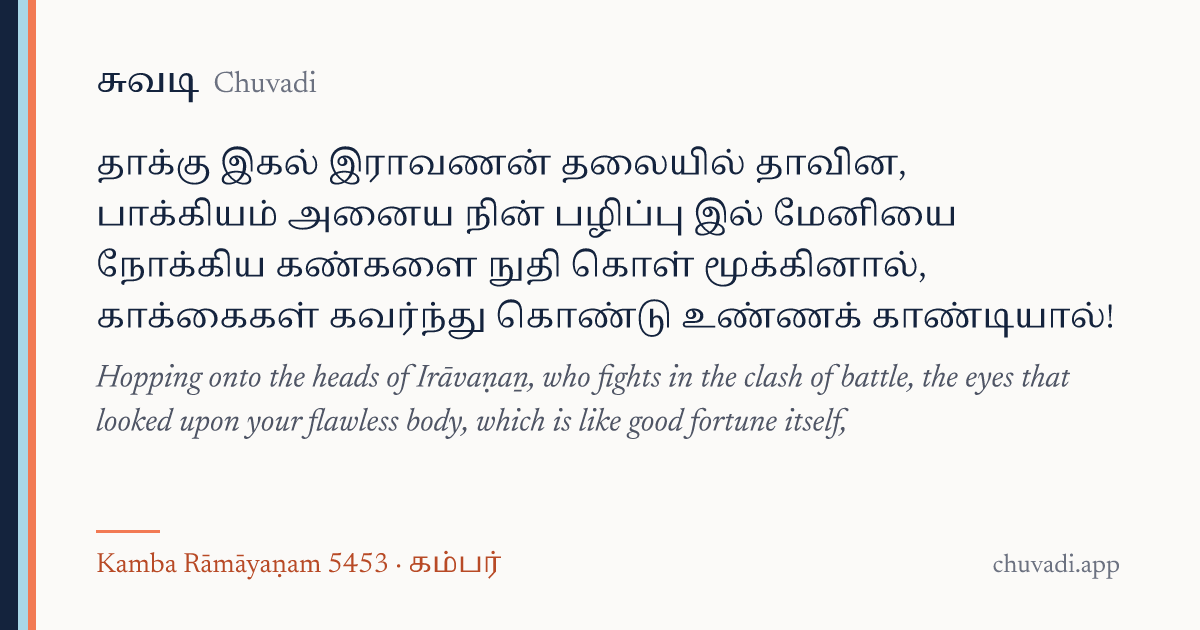
கம்பராமாயணம் 5453 · சுந்தர 6.60
பாடல் · The poem
Tap a word to see its gloss in the commentary and where else it occurs.
பொருள் · Meaning in Tamil
(பிராட்டியே) காக்கைகள் - காகங்கள்; தாக்கு இகல் - பகைவர்கள் மோதும் போரிலே (விழுந்த); இராவணன் தலையில் - இராவணனுடைய தலைகளில், தாவின - தாவியமர்ந்து கொண்டு; பாக்கியம் அனையன் - நல்வினைப் பயன் போலும்; நின் - உன்னுடைய; பழிப்பு இல் மேனியை - பழிப்பற்ற திருமேனியை; நோக்கிய கண்களை - பார்த்த கண்களை; நுதி கொள் மூக்கினால் - கூர்மை கொண்ட அலகுகளால்; கவர்ந்து கொண்டு - கொத்தி எடுத்துக் கொண்டு; உண்ண - உண்ணுதலை; காண்டி - பார்ப்பாயாக.
தாக்கு இகல் - என்பதை இராவணனுக்கு அடைமொழி ஆக்கினும் அமையும். காக்கைகள், கண்களை உண்ணக் காணுதி. பாக்கியம் - நல்வினைப் பயன். பிராட்டி, கண்ட வாளரக்கன் விழி காகங்கள் உண்ட போதன்றி யான் உளென் ஆவெனோ (கம்ப. 5359) என்று கூறியதைக் கருத்திற் கொண்டு திருவடி பேசிய நுட்பம் அறிக. உலகின் துன்பம் கண்டு, மகிழ்ந்த கொடுங்கோலனின் கண்களை உண்டு காகம் மகிழும் காலம் வரப் போகிறது. இது தீயவர்களுக்கு விடுத்த எச்சரிக்கை. நல்லவர்கள், தீயவர் வீழ்ச்சியில் மகிழ்வர். பிறர்துயர்ப்படுவர் உலகியல் கண்டு தெளிக. கொடுங்கோல் அழிவில் மகிழாதவர்கள் யாவரே எனினும் அவர் தீயவரே. அனுமன் நல்லோன் ஆதலின் கொடியவர் வீழ்ச்சியை விவரித்து மகிழ்ந்தான்.
ஆங்கிலம் · English translationAI
Translation
- Hopping onto the heads of Irāvaṇaṉ, who fights in the clash of battle,
- the eyes that looked upon your flawless body, which is like good fortune itself,
- with their sharp beaks
- the crows will snatch and eat; you will see it!
What the poem says
Aṉumaṉ answers Cītai's earlier wish almost word for word. She had said she would only feel alive when crows ate the eyes that had looked at her body.
He promises that she will see crows perched on Irāvaṇaṉ's fallen heads, pecking out those eyes. The commentary adds that the good naturally rejoice at a tyrant's fall.