



கம்பராமாயணம் 5454 · சுந்தர 6.61
பாடல் · The poem
Tap a word to see its gloss in the commentary and where else it occurs.
பாட வேறுபாடு · Project Madurai reads
பொருள் · Meaning in Tamil
மேல் - முற்காலத்தில்; இராவணற்கு - இராவணனுக்கு; உற அழிந்து - நன்றாகத் தோற்று; வெள்கிய - நாணமுற்றனவும்; திரிந்து நிற்பன - நிலைகுலைந்து நிற்பனவும் (ஆகிய); நீல் உறு திசைக்கரி - நீலநிறமுடைய திக்கு யானைகள்; ஆல்உற - மகிழ்ச்சியடையும்படி; வில்கால்உறுகணை - இராமபிரானுடைய வில்லிலிருந்து காலாக உறுகின்ற அம்புகள்; அனையவன் தலையை - அந்த இராவணனின் தலைகளை, தடிந்து வவ்வி - களைந்து கைப்பற்றி; இடுவ - போடுவதை; காண்டி - பார்ப்பாயாக.
ஆல் - அசை. தோற்ற யானைகளின் பாதத்தில் வென்ற இராவணனின் தலை விழும் என்றது செருக்கின் முடிவு இப்படித்தான் அமையும் என்று குறிப்பித்தவாறு. திசையானைகளுள் வெண்மை முதலிய பிறநிறம் உடையனவும் உளவேனும் பெரும்பான்மை பற்றி நீல் உறுதிசைக் கரி என்றார் (அண்ணாமலை - பதி) இடுவ, தொழிற்பெயர்த்திரிபு. இடுதல் என்பதே பொருள். பிறவாறு கூறி இடர்ப்பட வேண்டா. தொழிற் பெயர் எச்சமாய் தோன்றல் மரபே (உரைச்சூத்திரம்)
ஆங்கிலம் · English translationAI
Translation
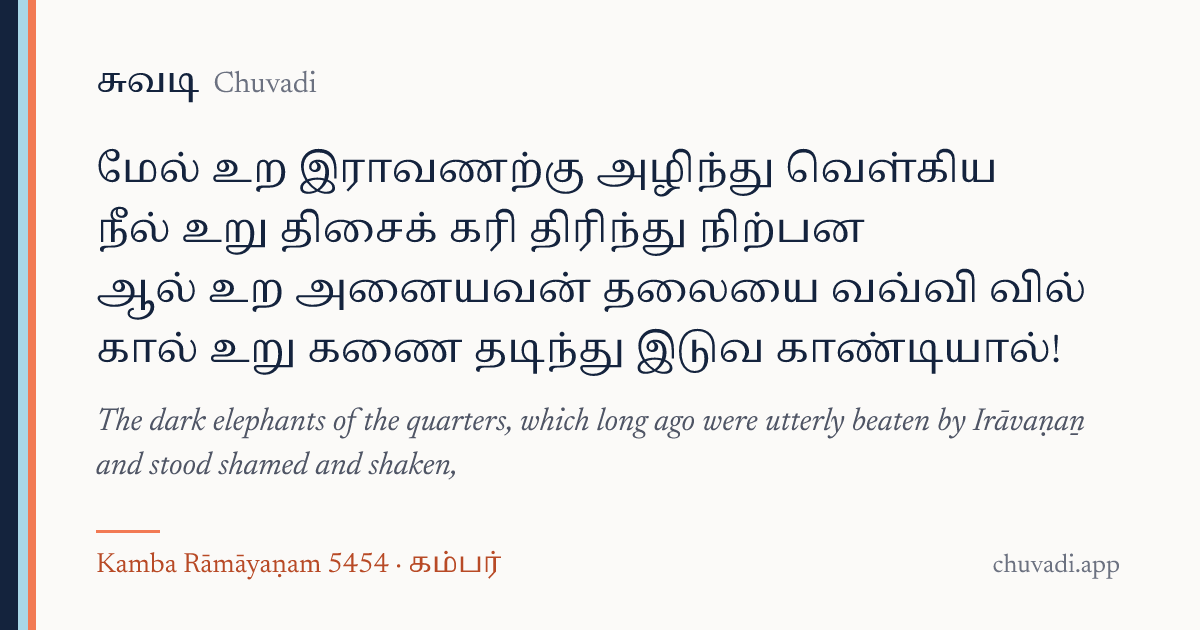
- The dark elephants of the quarters, which long ago were utterly beaten by Irāvaṇaṉ
- and stood shamed and shaken,
- will rejoice as the arrows that fly like wind from the bow
- cut off and seize that one's heads and fling them down; you will see it!
What the poem says
Long ago Irāvaṇaṉ defeated the elephants that guard the eight directions of the world and left them humiliated.
Now, to their delight, Irāmaṉ's wind-swift arrows will cut off his heads and fling them at their feet. The commentary sees in this the fate that pride always meets.