



கம்பராமாயணம் 5460 · சுந்தர 6.67
பாடல் · The poem
Tap a word to see its gloss in the commentary and where else it occurs.
பொருள் · Meaning in Tamil
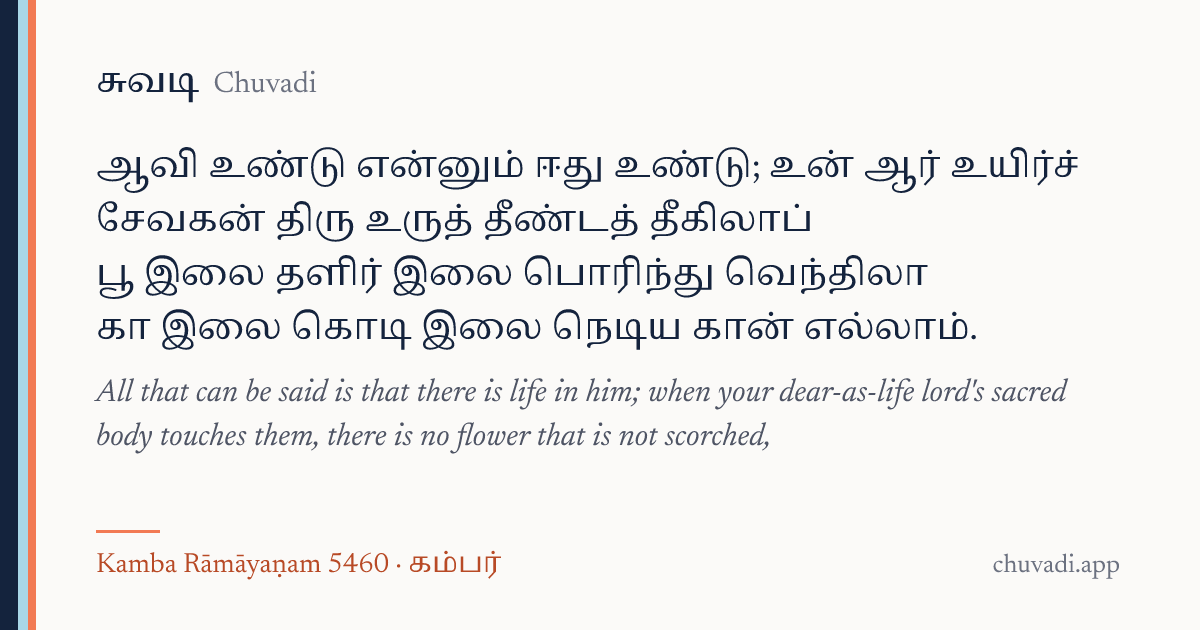
(இராமபிரானுக்கு) ஆவி உண்டு - உயிர் உள்ளது; என்னும் - என்று கூறப்படும்; ஈது உண்டு - இந்த வார்த்தைதான் உள்ளது; நெடிய கான் எலாம் - பெரிய காடு முழுவதிலும்; உன் - உன்னுடைய; ஆருயிர்ச் சேவகன் - அரிய உயிர் போலும் இராமபிரானின்; திருவுறு தீண்ட - திருமேனியைத் தொடுவதனால்; தீய்ந்திலா - கரிந்து போகாத; பூ இலை - பூக்கள் கிடையாது; தளிர் இலை - இலைகள் கிடையாது; பொரிந்து - (புறணிகள்) வெடிப்புற்று; வெந்திலா - வெந்து போகாத; கா இலை - சோலைகள் கிடையாது; கொடிஇலை - கொடிகள் கிடையாது. ஆன்ம நாயகன் என்பது ஆருயிர்ச் சேவகன் என்று பேசப்பட்டது. பொரிதல், மரப்பகுதியில் புறணி வெடித்து நிலைமாறுதல். மரங்களின் அடிப்பகுதி. சில்லு சில்லாய் வெடித்திருப்பதை எங்கும் காணலாம். மரங்கள் இயல்பாகப் பொரிந்திருப்பது அதன் வளர்ச்சியைக் காட்டும். அது 'பெரியாரை' என்று பேசப்படும். இங்கு வெப்பத்தால் உண்டான பொரிதல் பேசப்படுகிறது. பிரிவாற்றாமையால் உண்டாம் வெப்பம் பேசப் பெற்றது. இராமபிரானின் மேனி வெப்பத்தால் அவன் குளித்த குளங்கள் வற்றின என்று வான்மீகம் பேசும். ஆவி உண்டு இல்லை என்று டட ஆண் தொழில் என்னும் பாடம் (25) நன்று.
ஆங்கிலம் · English translationAI
Translation
- All that can be said is that there is life in him; when your dear-as-life
- lord's sacred body touches them, there is no flower that is not scorched,
- no tender leaf; no grove whose bark has not cracked and burned,
- no creeper, in all the long forest.
What the poem says
Aṉumaṉ describes Irāmaṉ's state. The most anyone can say is that he is still alive. His body burns so fiercely with the fever of separation that every flower, leaf, tree and creeper in the forest is scorched where he touches it.
This heat of lovesickness is a classical convention. The commentary notes that the Sanskrit Rāmāyaṇa says the pools he bathed in dried up.