



கம்பராமாயணம் 549 · பால 9.83
பாடல் · The poem
Tap a word to see its gloss in the commentary and where else it occurs.
பாட வேறுபாடு · Project Madurai reads
பொருள் · Meaning in Tamil
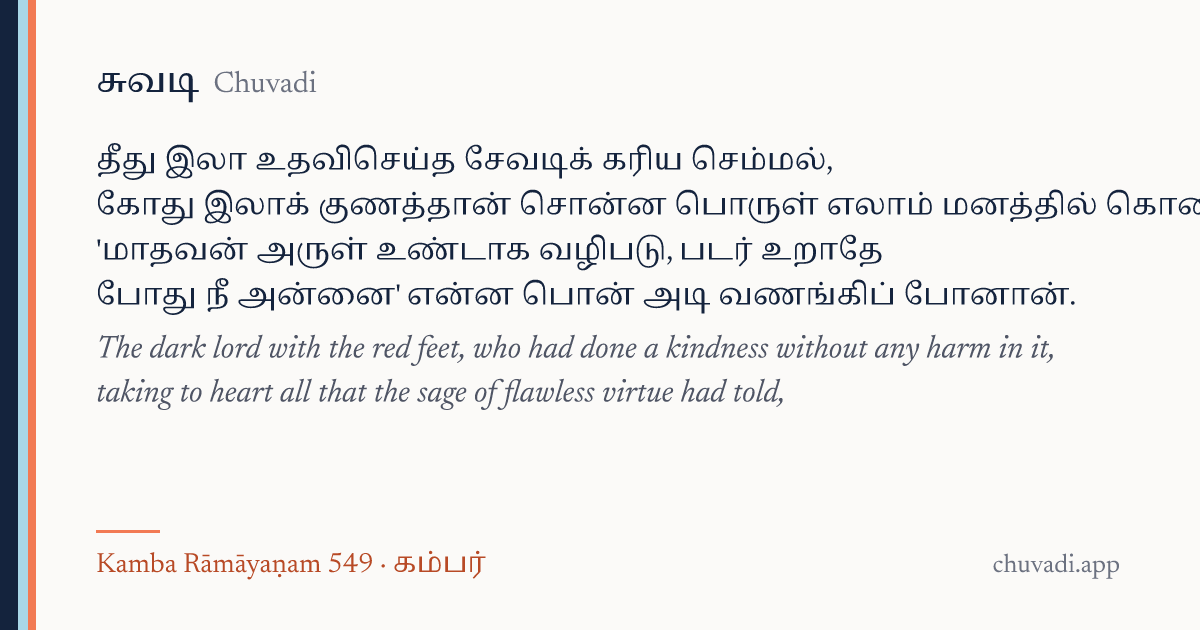
தீது இலா உதவி - தீமையில்லாத பேருதவியை; செய்த - அகலிகைக்குச் செய்தருளிய; சே அடிக் கரிய செம்மல் - செம்மையான திருவடிகளையுடைய கரிய இராமன்; கோது இலா - குற்றமற்ற; குணத்தான் சொன்ன - நற்குணங்களையுடைய விசுவாமித்திரன் சொல்லிய; பொருள் எலாம் - செய்தி முழுவதையும்; மனத்தில் கொண்டு - தன் உள்ளத்தில் கொண்டு; அன்னை - (அகலிகையை நோக்கி) தாய் போன்றவளே!; மாதவன் அருள் - மிக்க தவத்தால் மேம்பட்ட கெளதமனது கருணை; உண்டாக - (உன் பக்கம்) உண்டாகும்படி; நீ வழிபடு - நீ அவனுக்குப் பணிவிடை செய்வாயாக; படர் உறாதே - (இடையிலே உனக்கு ஏற்பட்ட துன்பத்தை நினைந்து) வருந்தாதே!; போது என்ன - செல்க என்று கூற; பொன்னடி - (அகலிகை) இராமனுடைய அழகிய திருவடிகளை; வணங்கிப் போனாள் - வணங்கி அப்பால் சென்றாள்.
தீதிலா உதவி: பிறருக்குத் தீமை பயவாதது; கைம்மாறு கருதாதது; முன் செய்த உதவியை நோக்காதது. சேவடிக் கரிய செம்மல்: முரண் தொடை. ஒப்புமை: 'திருவடியும் கையும் கனிவாயும் செய்ய கரியவன்' - (சிலம்பு: ஆய்க் குரவை, படர்க்கைப் பரவல் 2
ஆங்கிலம் · English translationAI
Translation
- The dark lord with the red feet, who had done a kindness without any harm in it,
- taking to heart all that the sage of flawless virtue had told,
- said, 'Serve the great ascetic, so that his grace may come to you; do not grieve;
- go now, mother'; and she bowed at his golden feet and went.
What the poem says
Irāmaṉ takes in the whole story. He calls Akalikai "mother," tells her not to grieve over what has passed, and asks her to serve her husband faithfully so that she wins back his grace. She bows at his feet and goes.
The commentary calls his help "harmless": it hurts no one, expects nothing in return, and does not look back to favours received. The phrase "the dark one with red feet" sets two colours against each other, as in a line of the Cilappatikāram that describes Kṛṣṇa.