



கம்பராமாயணம் 550 · பால 9.84
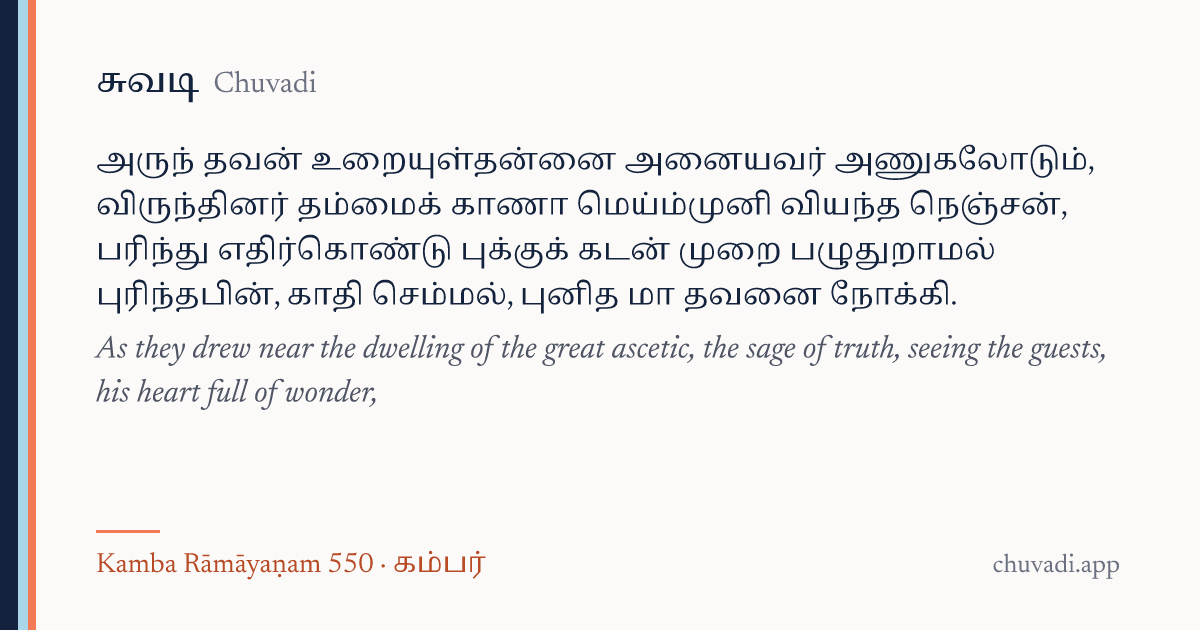
பாடல் · The poem
Tap a word to see its gloss in the commentary and where else it occurs.
பாட வேறுபாடு · Project Madurai reads
பொருள் · Meaning in Tamil
அருந்தவன் - சிறந்த தவத்தைப் புரியும் கெளதம முனிவனது; உறையுள் தன்னை - ஆச்சிரமத்தை; அனையவர் அணுகலோடும் - அவர்கள் மூவரும் அடைந்ததும்; மெய்ம்முனி - தத்துவ ஞானம் பொருந்திய கெளதம முனிவன்; விருந்தினர் தம்மைக் காணா - விருந்தினராகிய அவர்களைப் பார்த்து; வியந்த நெஞ்சன் - ஆச்சரியத்தோடு கூடிய மனம் கொண்டவனாக; பரிந்து எதிர்கொண்டு - அன்பு பூண்டு எதிரே போய் (அவர்களை) அழைத்து வந்து; கடன்முறை பழுதுறாமல் - (விருந்தினர்க்குச் செய்யக்கூடிய) கடமையாகிய விருந்து உபசரிப்பு சிறிதும் குறைவுபடாமல்; புரிந்தபின்- செய்த பின்னர்; காதி செம்மல் - காதி என்னும் முனிவனின் மைந்தனான விசுவாமித்திரன்; புனித மாதவனை நோக்கி - தவத்தால் தூயவரான அக் கெளதமரைப் பார்த்து.
வான்மீகச் செய்தி: கெளதமன், தன் மனைவியான அகலிகை, இந்திரன் ஆகிய இருவரையும் சபித்ததால் நேர்ந்த பாவத்தைப் போக்கிக் கொள்வதற்காக இமயமலைச் சாரலுக்குச் சென்றான். தனது ஞானக் கண்ணால் தன் மனைவியின் சாப விமோசனத்தை உணர்ந்து ஆச்சிரமம் திரும்பி, விருந்தினரை உபசரித்தான். வியந்த நெஞ்சன்: சிறந்த விருந்தினர் தன் ஆச்சிரமம் வருவதற்குக் காரணமாகத் தான் செய்த பெருந்தவம் யாதோ என்று வியந்தான். வந்த விருந்தினரை உபசரிப்பதற்கு உதவியாக உள்ள தன் மனைவியைப் பிரிந்த நாள் முதல் எந்த விருந்தினரையும் தன் பக்கம் வரக் காணாத அம் முனிவன், இன்று தன் மனைவியோடு விருந்தினரும் வருவதைப் பார்த்து வியப்புற்றான் என்றும் கருதலாம்.
ஆங்கிலம் · English translationAI
Translation
- As they drew near the dwelling of the great ascetic,
- the sage of truth, seeing the guests, his heart full of wonder,
- went out lovingly to meet them, brought them in, and when he had done
- every duty of hospitality without fault, the noble son of Kāti, looking at the holy ascetic, —
What the poem says
The three travellers come to Kautamaṉ's hermitage. The sage, who already knows through his inner vision that his wife's curse is over, welcomes them warmly and receives them with every courtesy. He is filled with wonder. Perhaps he is marvelling at what merit could have brought such guests, or perhaps, as the commentary suggests, it is because no guest had come to him since he lost his wife, who helped him receive guests, and now guests and wife arrive together. In Vālmīki he had gone to the Himalaya to do penance for the sin of his curses. Vicuvāmittiraṉ, son of Kāti (Gādhi), then speaks to him, as the next verse tells.