



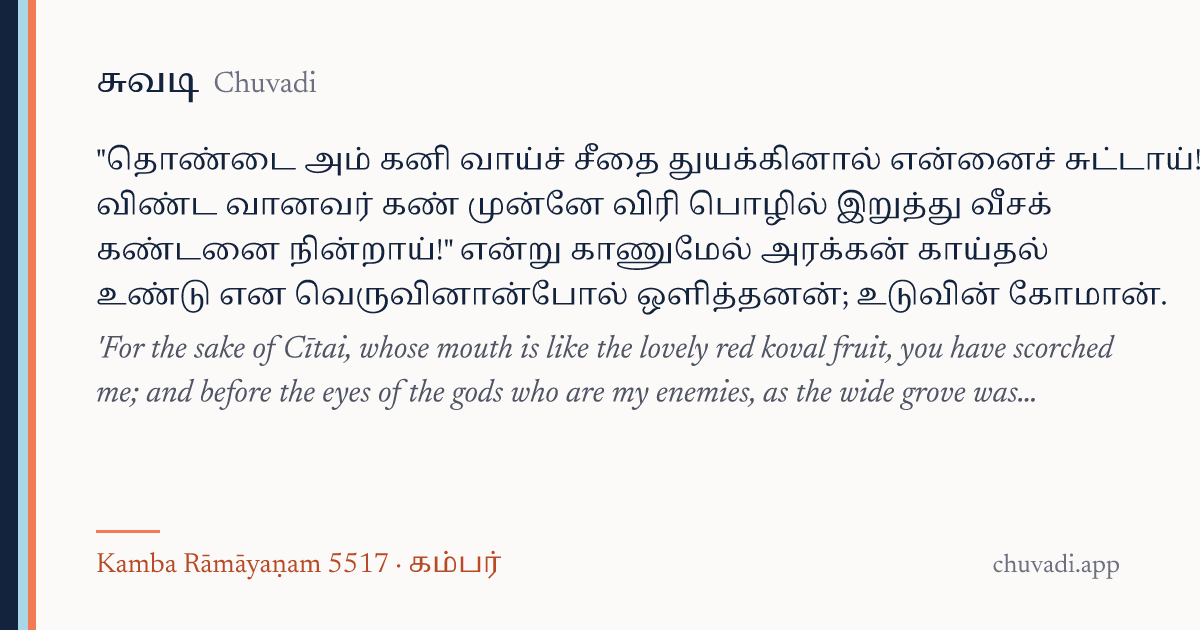
கம்பராமாயணம் 5517 · சுந்தர 7.40
பாடல் · The poem
Tap a word to see its gloss in the commentary and where else it occurs.
பொருள் · Meaning in Tamil
தொண்டை அம்கனி வாய்ச் சீதை துயக்கினால் - கொவ்வைக் கனிபோன்ற அழகிய வாயையுடைய சீதையிடம் கொண்ட தொடர்பால் (நிமித்தமாக); என்னைச் சுட்டாய் - என்னை நெருப்பு போல் சுட்டு வருத்தினாய்; விண்ட வானவர் கண் முன்னே - என்னிடத்துப் பகைமை கொண்ட தேவர்களின் கண்ணுக்கு எதிரில்; விரி பொழில் இறுத்து வீசக் கண்டனை நின்றாய் - பரந்த சோலையை (ஒரு குரங்கு) முறித்து அழிக்கவும் வேடிக்கை பார்த்துக் கொண்டிருந்தாய்; என்று - என்று நினைத்து; அரக்கன் காணு மேல் காய்தல் உண்டு என - அரக்கனாகிய இராவணன் காண்பானேல் தன்னை வருத்துதல் செய்யக்கூடும் என்று கருதி; வெருவினான் போல் - அஞ்சினவனைப் போல; உடுவின் கோமான் ஒளித்தனன் - நட்சத்திரங்களுக்குத் தலைவனான சந்திரன் மறைந்தான். சந்திரன் இராவணனுக்கு அஞ்சி மறைந்ததாகக் கூறியது ஏதுத் தற்குறிப்பேற்ற அணி. நட்சத்திரங்களுக்கு நாயகன் என்று திங்களைக் குறிப்பது புராணக் கற்பனை. காதல் வேதனையுறும்போது சந்திரன் சுடுவான் என்பது கவிமரபு. துயக்கு - தொடர்பு; (சம்பந்தம்) திருமகள் அம்சமான சீதைக்கும் சந்திரனுக்கும் அமுதத்துடன் தோன்றியதனால் உடன் பிறப்புச் சம்பந்தம்.
ஆங்கிலம் · English translationAI
Translation
- 'For the sake of Cītai, whose mouth is like the lovely red koval fruit, you have scorched me;
- and before the eyes of the gods who are my enemies, as the wide grove was smashed and scattered,
- you stood and watched!' — fearing that the rākṣasa, should he see him, would rage at him so,
- the lord of the stars hid himself, as if in terror.
What the poem says
Night is ending and the moon sets. The poet gives a fanciful reason: the moon was afraid of Irāvaṇaṉ. The king might accuse it of two crimes — of burning him with longing for Cītai (in poetic convention moonlight torments lovers), and of standing by while a monkey wrecked his grove in full view of the gods.
There is a further link: Cītai is the goddess Tirumakaḷ, who rose from the churned Ocean of Milk together with the moon and the nectar, so the moon is her 'brother', another reason Irāvaṇaṉ might suspect it.