



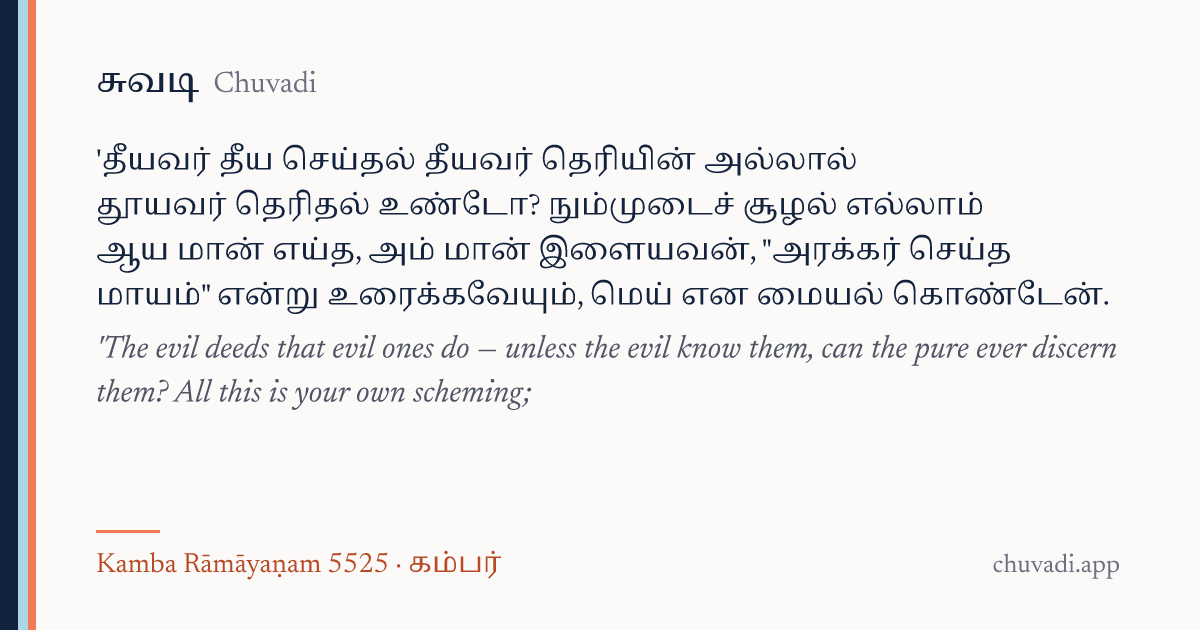
கம்பராமாயணம் 5525 · சுந்தர 7.48
பாடல் · The poem
Tap a word to see its gloss in the commentary and where else it occurs.
பொருள் · Meaning in Tamil
தீயவர் தீய செய்தல் - கொடியோர் செய்யும் தீய செயல்களை; தீயவர் தெரியின் அல்லால் - அவர் போன்ற கொடியரே தெரிந்து கொள்வரே தவிர; தூயவர் துணிதல் உண்டோ - (என்னைப் போன்ற) நல்லவர்கள் அறிவர் என்று நிச்சயிக்க முடியுமா ? (முடியாது); எல்லாம் நும்முடைச் சூழல் - இவை எல்லாம் அரக்கர்களாகிய உங்களுடைய சூழ்ச்சியாகும்; ஆய மான் எய்த - (ஏனென்றால்) முன்பு காட்டில் மான் உருவில் வந்த மாரீசன் என்பக்கத்தில் வர; அம்மான் அரக்கர் செய்த மாயம் என்று இளையவன் உரைக்கவேயும் - அந்த மான், அரக்கர் செய்த மாயச் செயலால் வந்தது என்று இலக்குவன் எடுத்துச் சொல்லிய போதும்; மெய் என மையல் கொண்டேன் - (அதனை) மெய்யான மான் என்றே (அறிவு மயக்கத்தால்) எண்ணி, அதன்மீது விருப்பம் கொண்டேன். 'மையல் கொண்டேன்' - என்றது அதனால் யான் இங்கு வந்து இத்துயரடையக் காரணமாயிற்று என்பதைக் குறிப்பிட்டபடி பிராட்டி தான் அறியாதவளாகவே உரைக்கின்றாள். சூழல் - சூழ்ச்சி, “தொன்மை மயக்கிய தோற்றிய சூழல்கள் சிந்தித்தே” (திருவாய் மொழி 7.5.4) என மயக்கத்தின் இயல்பை நம்மாழ்வார் விளக்கியது காண்க.
ஆங்கிலம் · English translationAI
Translation
- 'The evil deeds that evil ones do — unless the evil know them,
- can the pure ever discern them? All this is your own scheming;
- when that deer came, though the younger brother said of that deer, ‘It is a rākṣasa's
- trick,’ even so I was infatuated, taking it to be real.'
What the poem says
Cītai answers the guards. She pretends to know nothing: wicked tricks, she says, are understood only by the wicked, and the pure cannot see through them. This must be one of the rākṣasas' own illusions.
She reminds them of the golden deer, Mārīcaṉ in disguise. Ilakkuvaṉ had warned that it was a rākṣasa illusion, yet she was charmed by it and believed it real — the very mistake that brought her into captivity. Her reply is pointed: she will not betray Aṉumaṉ, and she turns the question back on her captors.