



கம்பராமாயணம் 5530 · சுந்தர 7.53
பாடல் · The poem
Tap a word to see its gloss in the commentary and where else it occurs.
பாட வேறுபாடு · Project Madurai reads
பொருள் · Meaning in Tamil
அண்ணல் - பெரியோனான அனுமன்; வெம் தொழில் அரக்கன் - கொடிய தொழிலை மேற் கொண்ட அரக்கனாகிய இராவணன்; பண்டு, வெள்ளி அம் கிரியை வேரோடு அள்ளினன் என்ன கேட்டான் - முற்காலத்தில், வெள்ளி மலையாகிய அழகிய கைலாசத்தை வேரோடு பறித் தெடுத்தான் என்று, (உலகோர் சொல்லக் கேட்டவனாய், அத் தொழிற்கு இழிவு தோன்ற - அந்தச் செயலுக்குக் குறைவு உண்டாகுமாறு; புள்ளி மாமேரு என்னும் பொன் மலை எடுப்பான் போல - பல நிறம் கொண்ட பெரிய மேரு எனப்படும் பொன் மலையை எடுப்பவன் போல; வள் உகிர் தடக்கை தன்னால் - கூர்மையான நகங்களை உடைய தனது பெரிய கைகளால், மண் நின்றும் வாங்கி - தரையிலிருந்தும் (அந்தச் சயித்தத்தை - மண்டபத்தை) எளிதாகப் பெயர்த்தெடுத்து,
இதுவும் அடுத்த கவியும் குளகமாகும்.
ஆங்கிலம் · English translationAI
Translation
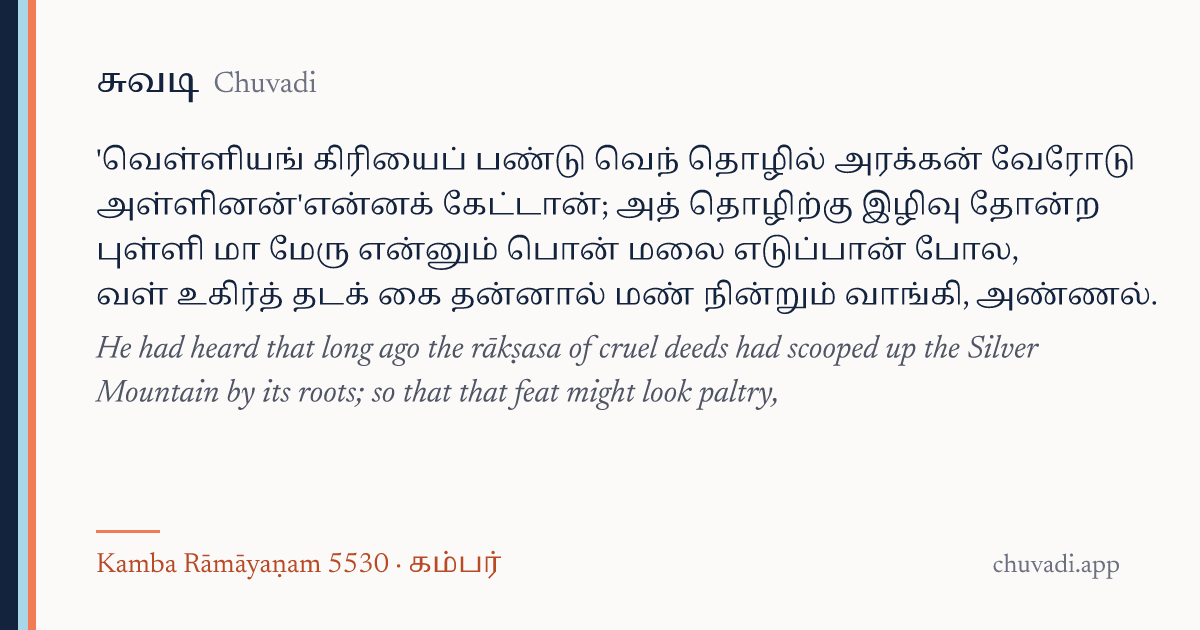
- He had heard that long ago the rākṣasa of cruel deeds had scooped up
- the Silver Mountain by its roots; so that that feat might look paltry,
- as if he were lifting the golden mountain, great many-hued Mēru,
- with his great sharp-clawed hand the noble one wrenched it from the ground, and —
What the poem says
Aṉumaṉ knew the famous story of how Irāvaṇaṉ once tried to uproot Kailāsa, the silver mountain of Śiva. To make that boast look small, he pulls the whole jewelled hall out of the ground as though he were lifting Mount Mēru itself.
The sentence is not finished here: this verse and the next form a single grammatical unit, and the next verse tells what he did with it.