



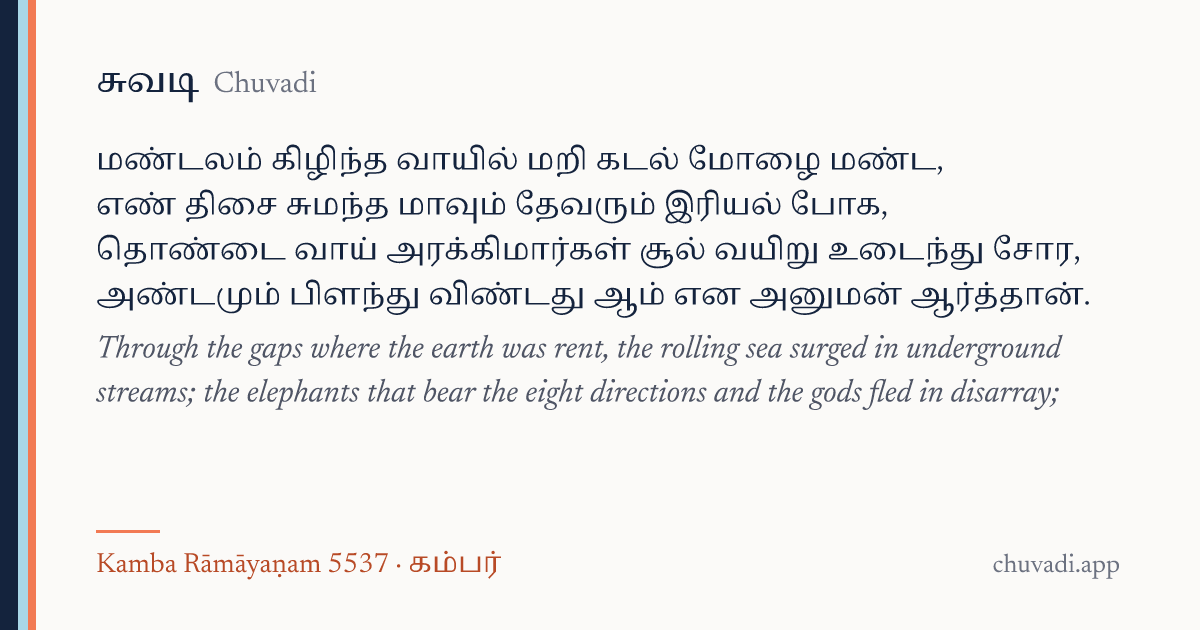
கம்பராமாயணம் 5537 · சுந்தர 7.60
பாடல் · The poem
Tap a word to see its gloss in the commentary and where else it occurs.
பொருள் · Meaning in Tamil
அனுமன் - அசோகவனத்தில் நின்ற அனுமன்; மண் தலம் கிழிந்த வாயில் - பூமி பிளந்த வழியில்; மறிகடல் மோழை - அலைகள் மடங்கி வீசும் கடலின் நீர் கீழாறாகப் (பாய்ந்து); மண்ட - நெருங்கவும்; எண் திசை சுமந்த மாவும் - எட்டுத் திக்குகளிலும் நின்று பூமியைச் சுமக்கின்ற யானைகளும், தேவர்களும் இரியல் போக - திக்குப் பாலகர்களும் அஞ்சி ஓடவும்; தொண்டை வாய் அரக்கிமார்கள் - கொவ்வைக் கனி போன்ற சிவந்த அதரங்களை உடைய அரக்கியர்கள்; வயிறு சூல் உடைந்து சோர - வயிற்றில் உள்ள கருச்சிதைந்து தளரவும்; அண்டமும் பிளந்து விண்டது ஆம் என - இந்த உலக உருண்டையே வெடித்து பிளவு பட்டது என்று கூறும்படியும்; ஆர்த்தான் - ஆரவாரம் செய்தான்.
அனுமன் இவ்வாறு ஆர்ப்பாட்டம் செய்வதற்கு அரக்கர்களைப் போருக்கு இழுப்பதே நோக்கமாகும். படலத்தின் தொடக்கத்தில் இந்த நோக்கம் (5434) சுட்டப்பட்டுள்ளது. மோழை - கீழாறு; குமிழியும் ஆம். 'அண்டம் மோழை எழ' (திருவாய் 7-4-1) சூல் வயிறு - கருவுற்றவயிறு; பெருத்த வயிறும் ஆம்.
ஆங்கிலம் · English translationAI
Translation
- Through the gaps where the earth was rent, the rolling sea surged in underground streams;
- the elephants that bear the eight directions and the gods fled in disarray;
- the rākṣasīs with lips like red koval fruit miscarried, their pregnant wombs giving way;
- Aṉumaṉ roared, as though the cosmic egg itself had split and burst apart.
What the poem says
Aṉumaṉ now gives a tremendous war-cry. Its force cracks the earth so that the sea pours in below ground, sends the elephants of the eight quarters and the guardian gods fleeing, and causes pregnant rākṣasīs to miscarry. It sounds as if the universe itself had burst.
His purpose in raising this din, stated at the start of the canto, is to provoke the rākṣasas into coming out to fight him. With this verse the canto of the destruction of the grove ends.