



கம்பராமாயணம் 5542 · சுந்தர 8.5
பாடல் · The poem
Tap a word to see its gloss in the commentary and where else it occurs.
பாட வேறுபாடு · Project Madurai reads
பொருள் · Meaning in Tamil
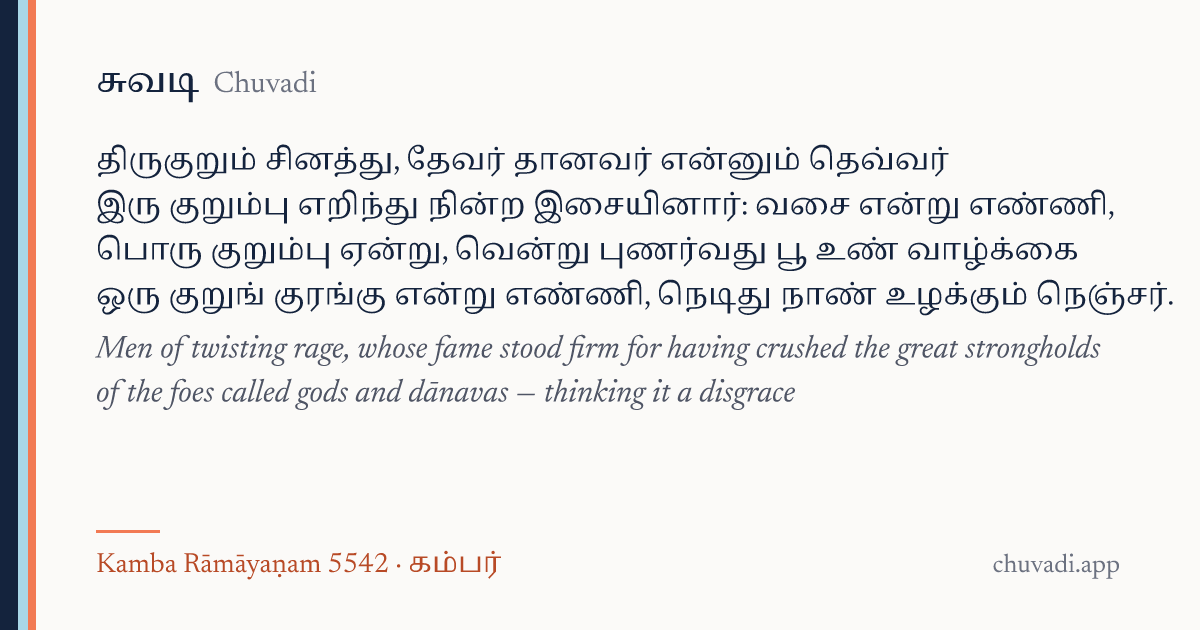
திருகுறும் சினத்து - முரண் கொண்ட கோபத்தை உடைய; தேவர், தானவர் என்னும் தெவ்வர் - தேவர்கள் அசுரர்கள் என்று சொல்லப்படுகின்ற பகைவர்களுடைய; இரு குறும்பு எறிந்து நின்ற இசையினார் - பெரிய அரண்களை அழித்து, விளங்கும் நிலை பெற்ற புகழையுடையவர்களுக்கு; பொரு குறும்பு ஏன்று - பொருகின்ற போரினை மேற்கொண்டு, பூஉண் வாழ்க்கை ஒரு குறுங் குரங்கு - மலர் (காய்கனி கிழங்கு) முதலியவற்றை உண்டு வாழ்கின்ற ஒரு சின்னக் குரங்கு; வென்றி புணர்வது வசை என்று எண்ணி - வெற்றி அடைவது இது ஒரு பெரும் பழிப்பு ஆகும் என்று நினைத்து; நெடிது நாண் உழக்கும் நெஞ்சர் - பெரிதும் வெட்கத்தால் வருந்தும் மனத்தினராயினர்.
நாண் உழக்கும் நெஞ்சர்; தேவர் தானவர்களை வென்ற தாம், பூவை உண்ணும் ஒரு குரங்கோடு போர் செய்ய நிகழ்ந்ததை நினைத்து வருந்தும் மனத்தினர்.
ஆங்கிலம் · English translationAI
Translation
- Men of twisting rage, whose fame stood firm for having crushed the great strongholds
- of the foes called gods and dānavas — thinking it a disgrace
- to take up a fight and win a victory over one little monkey
- that lives by eating flowers, their hearts were long tormented with shame.
What the poem says
These warriors had stormed the fortresses of both the gods and the asuras. To be sent out against one small monkey that lives on flowers and fruit feels to them like an insult.
Even a victory in such a fight, they think, would only bring them ridicule, and they march out burning with shame.