



கம்பராமாயணம் 5585 · சுந்தர 8.48
பாடல் · The poem
Tap a word to see its gloss in the commentary and where else it occurs.
பாட வேறுபாடு · Project Madurai reads
பொருள் · Meaning in Tamil
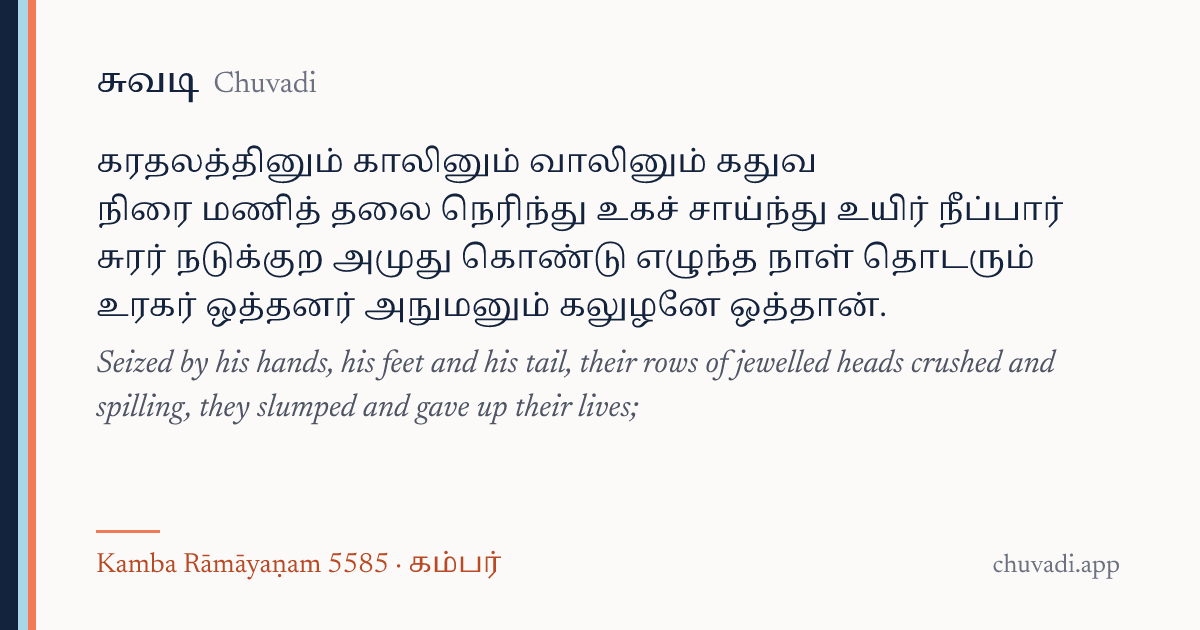
கரதலத்தினும், காலினும் வாலினும் கதுவ - அனுமன் தனது கைகளாலும், கால்களாலும், வாலினாலும் பற்றுதலினால், நிரைமணித்தலை நெரிந்து உக சாய்ந்து உயிர் நீப்பார் - வரிசையாகக் கரிய நிறமுள்ள தமது தலைகள் நசுங்கிச் சிதறுதலினால் மண்மீது விழுந்து உயிர்விடுகின்ற கிங்கரர்கள்; சுரர் நடுக்குற அமுது கொண்டு எழுந்த நாள் - தேவர்கள் அஞ்சும்படி, அமுத கலசத்தை எடுத்துக் கொண்டு மேலே கிளம்பும் பொழுது; தொடரும் உரகர் ஒத்தனர் - (காவலிருந்து கவர வொட்டாது தடுக்கத்) தொடர்ந்த பாம்புகளை ஒத்தனர்; அனுமனும் கலுழனே ஒத்தான் - அனுமனும், (அமுதத்தோடு எழுந்த) கருடனை ஒத்திருந்தான்.
ஆங்கிலம் · English translationAI
Translation
- Seized by his hands, his feet and his tail,
- their rows of jewelled heads crushed and spilling, they slumped and gave up their lives;
- they were like the serpents that gave chase on the day he rose up bearing the nectar, to the gods' dismay;
- and Aṉumaṉ was like Kaluḻaṉ himself.
What the poem says
Aṉumaṉ grabs the rākṣasas with hands, feet and tail and crushes their heads. The scene recalls the legend of Garuḍa (Kaluḻaṉ), the eagle, who carried off the pot of nectar while the gods trembled, and tore apart the serpents who chased him to guard it.
The rākṣasas with their jewelled heads are the hooded serpents with gems in their crowns; Aṉumaṉ is Garuḍa.