



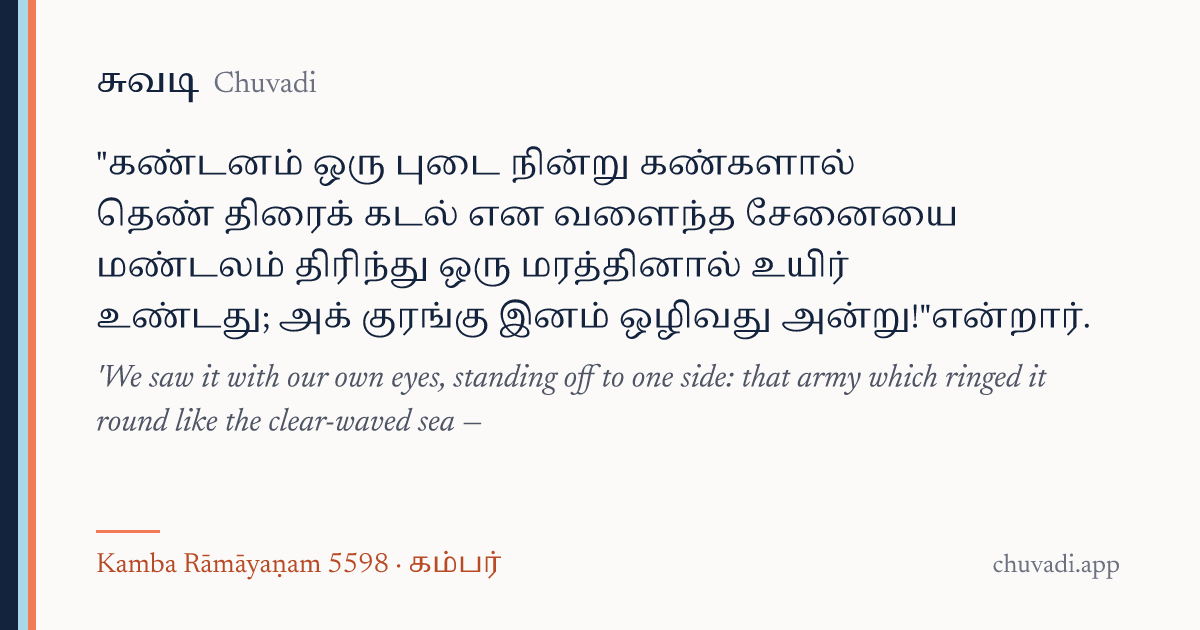
கம்பராமாயணம் 5598 · சுந்தர 8.61
பாடல் · The poem
Tap a word to see its gloss in the commentary and where else it occurs.
பொருள் · Meaning in Tamil
ஒரு புடை நின்று கண்களால் கண்டனம் - நாங்கள் ஒருபக்கத்தில் மறைந்து நின்று எங்கள் கண்களால் நேரில் பார்த்தோம்; தெண் திரை கடல் என வளைந்த சேனையை - தெளிந்த அலைகளை உடைய கடல் போலப் பரந்து சூழ்ந்திருந்த அரக்கர் சேனையை; அக்குரங்கு - அந்தக் குரங்கானது; மண்டலம் திரிந்து - எப்புறத்தும் வளைந்து சுழன்று சுழன்று சஞ்சரித்ததாகி, ஒரு மரத்தினால் உயிர் உண்டது - ஒரு மரத்தினாலே தாக்கி, அரக்கர்களின் உயிரை வாங்கி விட்டது; இனம் ஒழிவது அன்று என்றார் - அது, அவ்விடத்தை விட்டு இன்னும் நீங்கிப் போகவில்லை என்று கூறினார்கள். 'கண்டனன் கற்பினுக்கு அணியைக் கண்களால்' (6031) என்ற இடத்தும் இங்கும் வந்த சொல்நடை ஒன்றே, ஆயினும் சூழ்நிலையால் இங்கே அவலம், அங்கே களிப்பு. இரு வகையான உணர்வுகளின் அழுத்தத்தை ஒரே நடையால் உணர்த்திடும் திறனை மனங்கொள்க.
ஆங்கிலம் · English translationAI
Translation
- 'We saw it with our own eyes, standing off to one side:
- that army which ringed it round like the clear-waved sea —
- that monkey wheeled about in circles and with a single tree devoured their lives;
- and it has not left the place even now!' they said.
What the poem says
Now the guardians speak plainly: they watched from hiding. The army surrounded the monkey like the sea, but it whirled round and round and killed them all with one tree — and it is still there.
The opening words, 'we saw with our eyes', echo Aṉumaṉ's later joyful report to Irāmaṉ, 'I saw her, the jewel of chastity, with my eyes'. The same turn of phrase carries dismay here and delight there. With this verse the canto of the Kiṅkarar ends.