



கம்பராமாயணம் 5603 · சுந்தர 9.5
பாடல் · The poem
Tap a word to see its gloss in the commentary and where else it occurs.
பொருள் · Meaning in Tamil
மருங்கில் காற்றினைக் கட்டி - பக்கங்களில் உள்ள காற்றைப் பிடித்துத் தொகுத்து; கால் வகுத்து - அதற்கு நான்கு கால்களையும் உண்டாக்கி; உயிரும் கூட்டி - உயிரினையும் அதில் சேர்த்து; கூற்றினை ஏற்றி அன்ன - எமனை மேலே ஏற்றியது போன்றுள்ள (வீரரைத் தம்மீது கொண்டுள்ள); குலப்பரி குழுவ - நல்லசாதிக் குதிரைகள் கூட்டமாகத் தொடரவும்; வியந்துஎழும் பதாதி ஈட்டம் - மன மகிழ்ச்சியோடு (போருக்குப்) புறப்படுகின்ற காலாட்களின் கூட்டம்; குன்றின் தூற்றினின் எழுப்பி - மலைப்புதர்களிலிருந்து எழுப்பி; ஆண்டு தொகுத்தென - அந்தப் போர்க்களத்தில் ஒன்றுசேர்த்தனவும்; சுழல் பைங்கண்ண - சுழலுகின்ற பசுமையான கண்களை உடையனவுமான; வேறு இனப்புலி ஏறு என்ன - வெவ்வேறு வகையான ஆண் புலிகள் போலத் தோன்றவும்.
'வயங்க' என அடுத்தக் கவியோடு தொடரும். சம்புமாலியுடன் சென்ற குதிரைப்படை, காலாட்படைகளின் ஆற்றல் உணர்த்தப் பெற்றது.
கூற்றினைப் படைத்து, சுற்றியுள்ள காற்றை நான்கு கால்களாக அந்தக் கூற்றுக்கு வகுத்து, உயிரூட்டப்பட்டன போல விளங்கினவான குதிரைகள். இந்தக் குதிரைகள் பகைவர்க்குக் கூற்றாக அமைந்து உயிர் பறிக்கும் என்பது கற்பனை.
ஆங்கிலம் · English translationAI
Translation
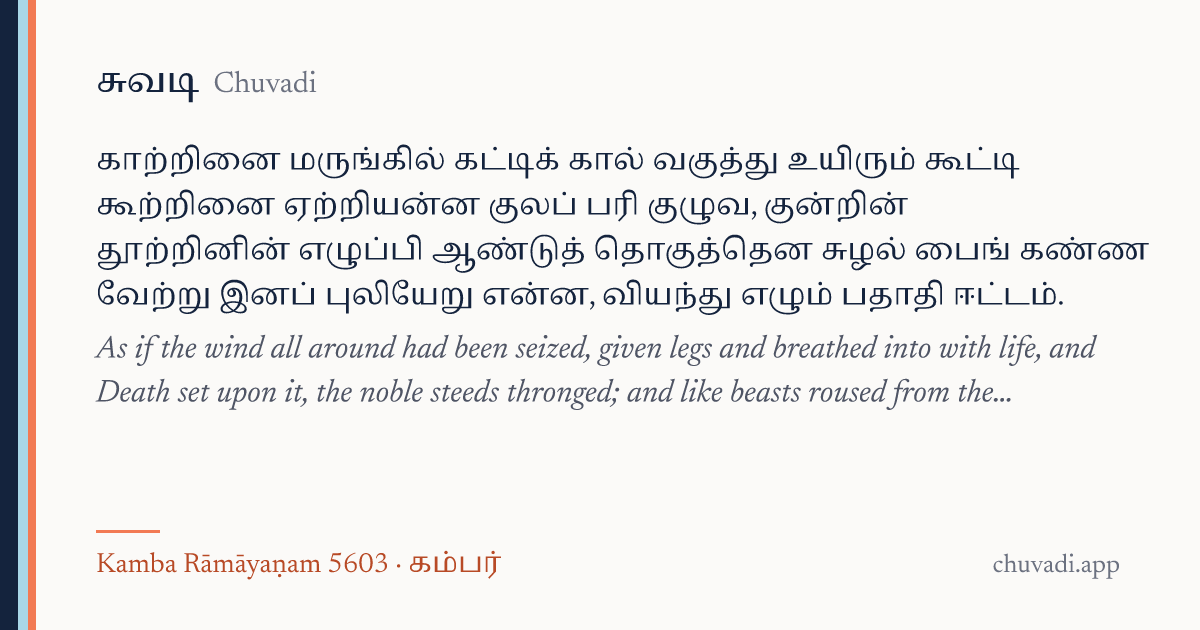
- As if the wind all around had been seized, given legs and breathed into with life,
- and Death set upon it, the noble steeds thronged; and like beasts roused from the hill-thickets
- and gathered there, with rolling green eyes,
- male tigers of many breeds, the host of foot-soldiers rose up, exulting.
What the poem says
The description of Campumāli's army continues with the cavalry and infantry. The horses are as swift as the wind: it is as though the wind had been caught, given four legs and a living breath, and then had Death himself mounted on it as rider — they will bring death to the enemy.
The foot-soldiers march out eagerly, like tigers of every kind flushed from mountain thickets, their green eyes rolling.