



கம்பராமாயணம் 5611 · சுந்தர 9.13
பாடல் · The poem
Tap a word to see its gloss in the commentary and where else it occurs.
பொருள் · Meaning in Tamil
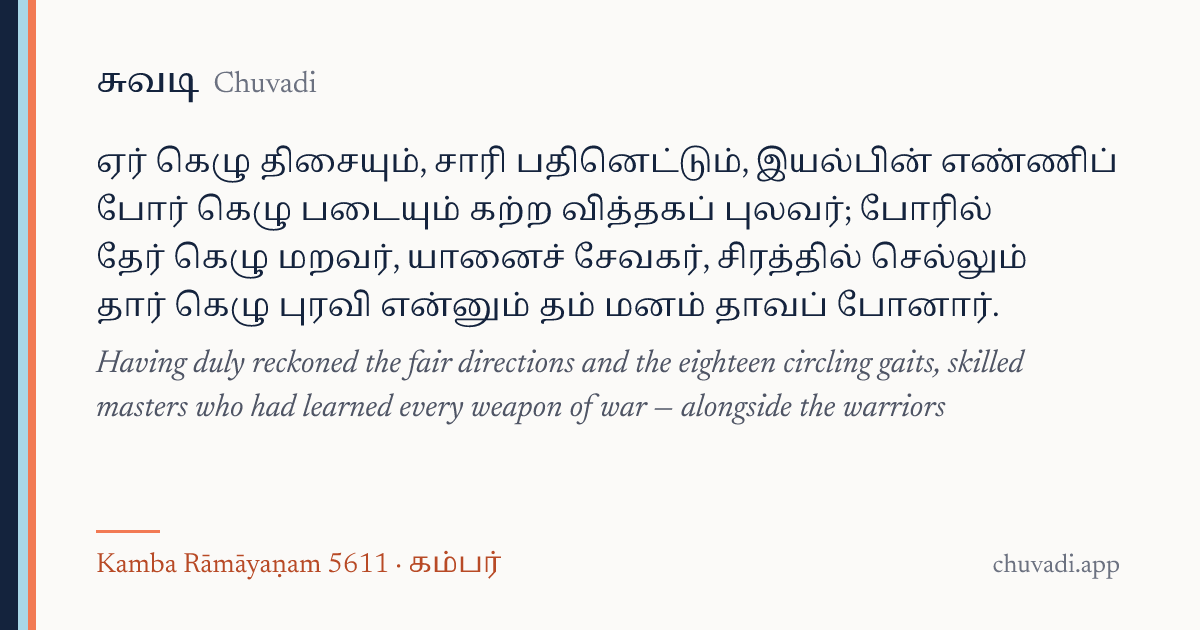
ஏர் கெழுதிசையும் - (செல்லுதற்கு உரிய) அழகிய திசைகளையும், சாரி பதினெட்டும் - பதினெட்டு வகைப்பட்ட சாரிகளையும்; இயல்பின் எண்ணி - முறைப்படி சிந்தித்துப்பார்த்து; போர்கெழு படையும் கற்ற - போருக்குப் பொருந்திய படைகளின் தன்மையையும் கற்றறிந்த; வித்தகப் புலவர் - போர்க்கலைத் திறமை மிக்க அறிஞர்களாகிய (குதிரை வீரர்கள்); போரில் - போர்க்களத்தில்; தேர் கெழு மறவர் - தேர்ப்படை வீரர்கள்; யானைச் சேவகர் - யானைப் படை வீரர்கள் ஆகியோர்; திறத்தில் செல்லும் - பக்கமாகச் செல்லுகின்ற; தார் கெழு புரவிஎன்னும் - கிண்கிணி மாலைகள் அணிந்த குதிரைகள் என்னும், தம் மனம்தாவப் போனார் - தங்கள் மனம் முந்தித் தாவுமாறு சென்றனர். கற்ற வித்தகப்புலவர்... தம் மனம் தாவப் போனார் என்று சொற்களை இணைத்துப் பொருள் கொள்க. வீரப் போருக்குப் பொலிவு தருவன ஆகலின் (ஏர்) அழகு பொருந்திய திசைகள் என்றார். போர்க் குதிரைகள் சுழன்று வரும் இயக்கத்தைச் “சாரி” என்பர் போரியலார்; அவை பதினெட்டு என்ப. போர்க்களத்தில் பிற வகைப் படைகளின் பாங்கர் இயங்குவனவாகலின் குதிரைப் படையைத் “திறத்தில் செல்லும்” என்றார் பொதுவாக மனப் புரவி என்பர்; இங்கே புரவி என்னும் மனம் என எதிர்நிலை உருவகமாக வந்தது.
ஆங்கிலம் · English translationAI
Translation
- Having duly reckoned the fair directions and the eighteen circling gaits,
- skilled masters who had learned every weapon of war — alongside the warriors
- of the chariots and the soldiers of the elephants, they rode on,
- their minds, as if they were the bell-garlanded horses running at the flank, leaping ahead.
What the poem says
Now the cavalry: expert horsemen who know which directions are favourable for attack and have mastered the eighteen cāris, the wheeling manoeuvres of war-horses. They ride on the flanks of the chariots and elephants.
Instead of the usual image of 'the mind as a horse', the poet reverses it: the eager minds of these riders are the galloping horses themselves, racing ahead into battle.