



கம்பராமாயணம் 5619 · சுந்தர 9.21
பாடல் · The poem
Tap a word to see its gloss in the commentary and where else it occurs.
பொருள் · Meaning in Tamil
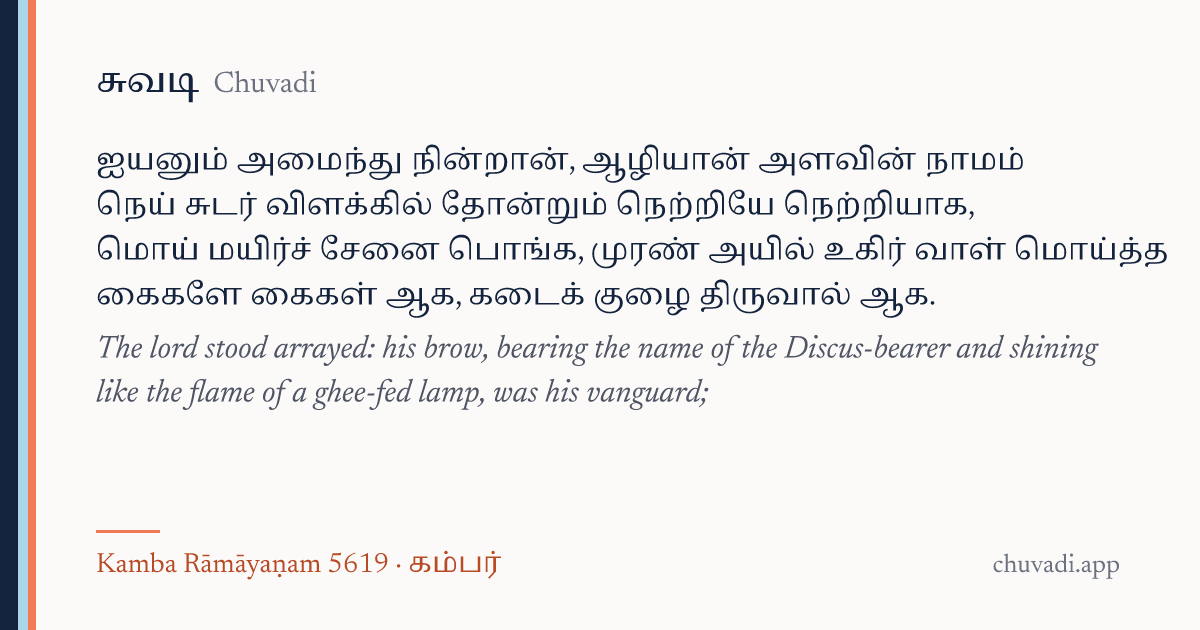
ஐயனும் - தலைவனாகிய அனுமனும்; ஆழியான் - சக்கராயுதம் கொண்ட திருமாலின்; அளவின் நாமம் - பெருமையை உடைய திருநாமம்; நெய்சுடர் விளக்கின் தோன்றும் - நெய் ஊற்றி எரிகின்ற விளக்கின் சுடர் போலத் தோன்றுகின்ற; நெற்றியே நெற்றியாக - தன் நெற்றியே முன்னணிச் சேனையாகவும்; மொய்ம் மயிர்ச் சேனை பொங்க - உடம்பில் நெருங்கி வளர்ந்துள்ள உரோமங்களே படை வீரர்களாக முனைப்புடன் விளங்கவும்; முரண் அயில் உகிர்வாள் மொய்த்த கைகளே - வலிமையும் கூர்மையும் பொருந்திய நகங்களாகிய வாள்கள் செறிந்த கைகளே; கைகளாக - இரு பக்கங்களிலும் பொருந்தி வருகின்ற சேனைகளாகவும்; திருவால் - தெய்வத்தன்மை பொருந்திய வாலே; கடைக் கூழையாக - அணிவகுப்பின் பின்னணிச் சேனையாகவும்; அமைந்து நின்றான் - தான் ஒருவனே அணிவகுத்துள்ள ஒரு முழுச் சேனையாக அமைந்து போர்க்களத்திலே உறுதியாக நின்றான்.
சம்புமாலி திரட்டிக் கொண்டு வந்த பல்வகைச் சேனைக்கு எதிராகத் தான் ஒருவனே ஒரு முழுச் சேனையாக அனுமன் அமைந்தான் என்பது கருத்து. சக்கரப் படை கொண்ட திருமாலாகிய இராமபிரானின் சார்பினன் ஆகையால் இவன் ஒருவனே போதும் என்று கம்பர் கருதுகிறார் யோகப் பயிற்சியும் பிரமசரிய ஒழுக்கமும் கொண்டோரின் நெற்றியில் ஒளி காணமுடியும். 'நெற்றி' இரு பொருளில் வந்தது; உடலுறுப்பாகிய நெற்றி சேனை அணி வகுப்பில் முன்னணியில் நிற்கும் சேனை; இதனைத் தார் என்ப. புறப்பொருள் இலக்கணங்கள். 'நெற்றியில் அரக்கர் பதி செல்ல' (6750) என்ற இடத்தில் 'நெற்றி' இப் பொருளில் வந்தது காண்க. கை; பக்கம்; கைகள்; இரு பக்கத்து அணிவகுத்த சேனைகள். (கை என்பதற்கே சேனை என்னும் பொருள் உண்டு லெக்சிகன்). கூழை; அணிவகுப்பில் கடைசியிலுள்ள படை மயிர்ச் சேனை உகிர்வாள்; உருவகங்கள் திருவால்; அழகிய வால் என்றும் கொள்ளலாம்.
ஆங்கிலம் · English translationAI
Translation
- The lord stood arrayed: his brow, bearing the name of the Discus-bearer
- and shining like the flame of a ghee-fed lamp, was his vanguard;
- the dense hairs of his body surged as his troops; his hands, thick with strong sharp claws for swords,
- were his flanking wings; and his sacred tail was his rearguard.
What the poem says
Facing Campumāli's vast four-fold army, Aṉumaṉ forms an army all by himself. His forehead, glowing with the name of Viṣṇu the discus-bearer (that is, of Irāmaṉ), is the vanguard; the thick hairs of his body are the massed soldiers; his clawed hands are the two wings; his tail is the rearguard.
The poet plays on battle terms that are also body-words: neṟṟi means both 'forehead' and 'front rank', kai both 'hand' and 'flank', and kūḻai both 'tail end' and 'rearguard'. As Irāmaṉ's devotee, Aṉumaṉ alone is enough.