



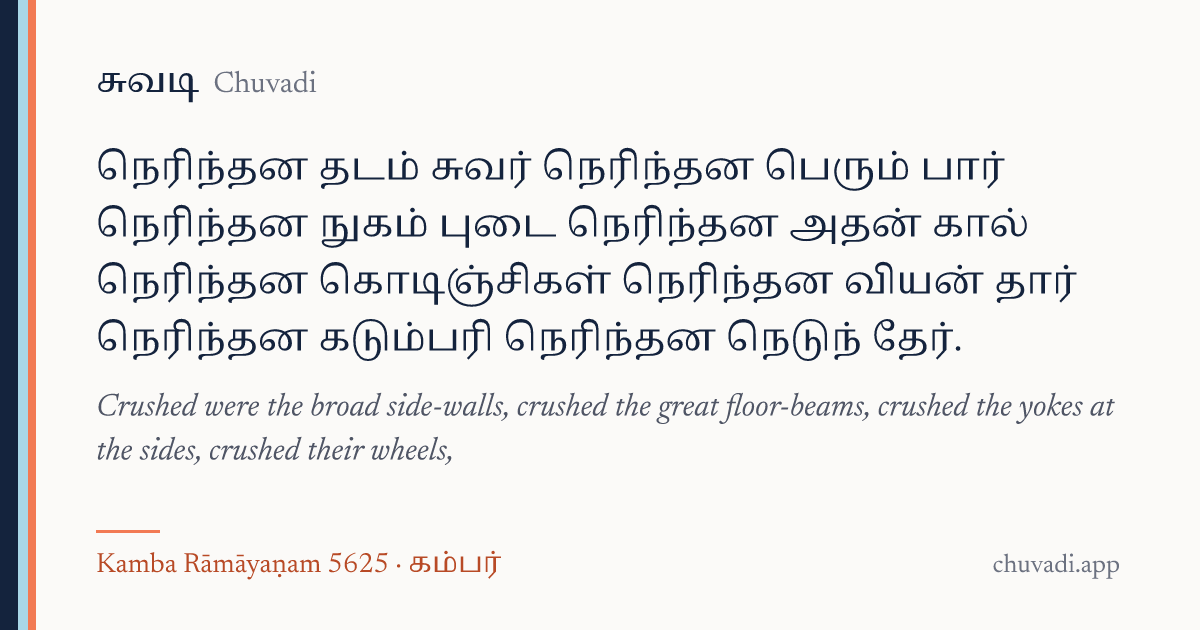
கம்பராமாயணம் 5625 · சுந்தர 9.27
பாடல் · The poem
Tap a word to see its gloss in the commentary and where else it occurs.
பொருள் · Meaning in Tamil
தடம் சுவர் நெரிந்தன - (வீரர்கள் ஏறிவந்த தேர்களினுடைய) சுற்றுப் புறங்கள் நொறுங்கிப் போயின; பெரும்பார் நெரிந்தன - பெரிய அச்சுக் கட்டைகள் நொறுங்கிப் போயின; நுகம் புடை நெரிந்தன - நுகத்தடிகள் பக்கங்களிலே நொறுங்கிப் போயின; அதன்கால் நெரிந்தன - அத்தேர்களின் சக்கரங்கள் நொறுங்கிப் போயின; கொடிஞ்சிகள் நெரிந்தன - மேல் தட்டுகள் நொறுங்கிப் போயின; வியன்தார் நெரிந்தன - சிறந்த மாலைகள் நொறுங்கிப் போயின; கடும்பரி நெரிந்தன - அவற்றில் பூட்டப்பட்டுள்ள வேகமான குதிரைகள் அழிந்து போயின; நெடும் தேர் நெரிந்தன - (முடிவாகப்) பெரிய தேர்களே நொறுங்கிப் போயின. தேர்ப்படையின் அழிவு கூறப்பட்டது. தேரின் பல உறுப்புக்கள் கூறப்பட்டுள்ளன. நுகம் - (குதிரைகளைப் பூட்டுவதற்குரிய) குறுக்குக் கட்டை. கொடிஞ்சி; தாமரை வடிவமாகப் பண்ணித் தேரின் முன்னே நடப்படுவதோர் உறுப்பு. கால் - சக்கரம்; பார் - தேரின் அடிப்பாகத்தில் உள்ள நெடுஞ் சட்டம்.
ஆங்கிலம் · English translationAI
Translation
- Crushed were the broad side-walls, crushed the great floor-beams,
- crushed the yokes at the sides, crushed their wheels,
- crushed the lotus-shaped finials, crushed the fine bell-garlands,
- crushed the swift horses, crushed the tall chariots.
What the poem says
Next the chariots, in a verse built on neriṉtaṉa, 'were crushed'. The poet runs through the parts of a chariot: the side-walls, the long floor-beams, the yokes to which the horses are harnessed, the wheels, the lotus-shaped ornament mounted at the front (koṭiñci), the garlands of bells, the horses — and finally the chariots themselves.