



கம்பராமாயணம் 5641 · சுந்தர 9.43
பாடல் · The poem
Tap a word to see its gloss in the commentary and where else it occurs.
பொருள் · Meaning in Tamil
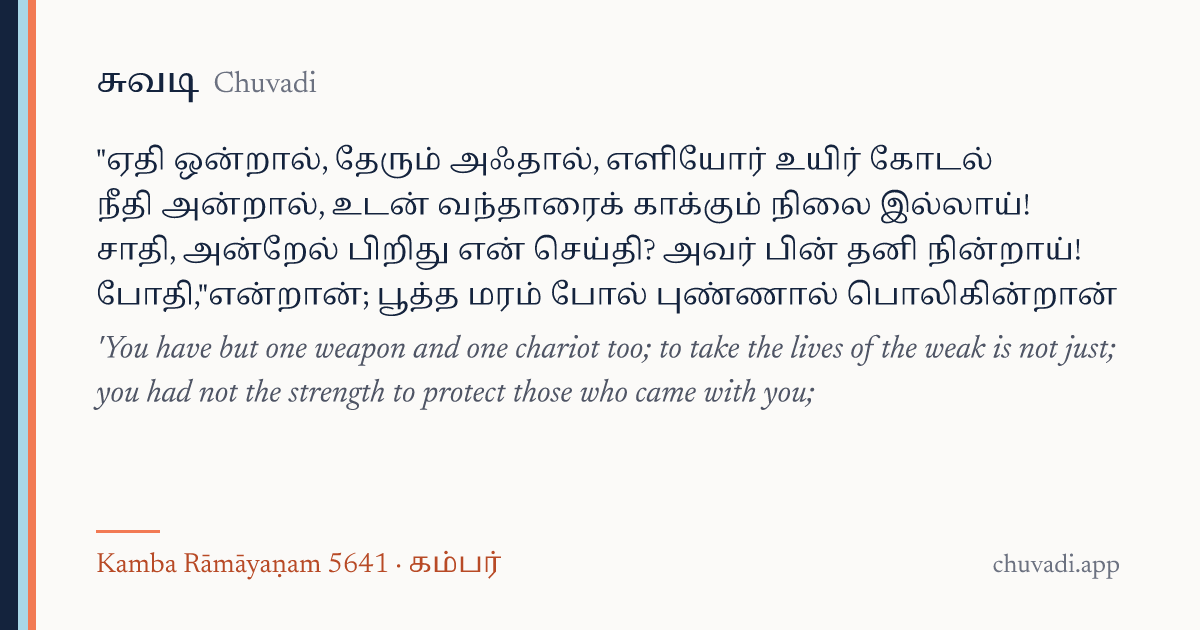
பூத்த மரம் போல் புண்ணால் பொலிகின்றான் - பூத்து விளங்குகின்ற மரத்தைப் போல, உடல் முழுவதும் புண்களால் நிறையப் பெற்று விளங்குபவனான அனுமன் (சம்புமாலியை நோக்கி); ஏதி ஒன்றால் - உன்னிடம் உள்ள ஆயுதமும் ஒன்றே, தேரும் அஃதே - தேரும் உனக்கு ஒன்றுதான் உள்ளது; உடன் வந்தோரைக் காக்கும் நிலை இல்லை - உன்னோடு கூடப் போருக்குத் துணையாக வந்தவர்களைக் காப்பாற்றும் வலிமையில்லாத நீ; அவர் பின் தனி நின்றாய் - அவர் இறந்த பிறகு தனிப்பட்டு நின்று விட்டாய்; சாதி - (நீ என்னோடு இப்போது போர் செய்யவந்தால்) இறப்பாய் இது நிச்சயம்; அன்றேல், பிறிது என் செய்தி ? - இல்லை என்றால் வேறு என்ன செய்யப் போகின்றாய் ? எளியோர் உயிர் கோடல் நீதி அன்றால் - எளியோர் உயிரைக் கொள்ளுதல் நீதி நெறிக்கு ஏற்றதன்று; போதி என்றான் - (ஆதலால் இப்போது உன்னை விடுகின்றேன் நீ திரும்பிச் செல்வாய் என்று (இரக்கம்) தோன்றக் கூறினான்.
உடம்பெல்லாம் புண்பட்ட நிலையிலும், அனுமன், தனித்து நிற்கும் சம்புமாலிபால் கொண்ட இரக்கத்தை இப்பாடல் விளக்குகிறது. மேனி முழுதும் புண்மயமாய்த் தோற்றமளித்த வீர ஆஞ்சநேயனை வருணிப்பது இப்பாடல். வீரர்க்கு விழுப்புண்களே சிறப்பு; ஆதலின் பொலிவுக்கே உரிய பூக்களைப் புண்களுக்கு உவமையாக்கினார் கவிச் சக்கரவர்த்தி. பூத்துக் குலுங்கும் மரம் போலப் புண்ணாற் பொலிந்தான் அனுமன். தனித்து இராவணனுக்கு அருள்செய்த பெருமாளுக்கு (7271) இளைத்தவனல்லன் பாகவதன்; இராமபிரானைப் போலவே பகைவனுக்கு அனுமன் அருள் காட்டியதைச் சுட்டுவது இப் பாசுரம். ஏதி - ஆயுதம்.
ஆங்கிலம் · English translationAI
Translation
- 'You have but one weapon and one chariot too; to take the lives of the weak
- is not just; you had not the strength to protect those who came with you;
- you will die — or else what will you do? You stand alone now that they are gone;
- go!' he said — he who shone with wounds like a tree in full flower.
What the poem says
Aṉumaṉ, his body covered with wounds that the poet likens to blossoms on a flowering tree, speaks to Campumāli with pity. He has only one chariot and one weapon left, he could not protect his men, and he will surely die if he fights. It would be unjust to kill someone so helpless: let him go home.
For a warrior, wounds received in battle are adornments, hence the flower image. Aṉumaṉ's mercy anticipates Irāmaṉ's own later offer to the defeated Irāvaṇaṉ to go home and return to fight another day.