



கம்பராமாயணம் 5644 · சுந்தர 9.46
பாடல் · The poem
Tap a word to see its gloss in the commentary and where else it occurs.
பொருள் · Meaning in Tamil
சம்புமாலி என்ற அந்த அரக்கன் மிகவும் கோபித்தான்; முனியா - அவ்வாறு கோபித்து; முன்னும் பின்னும் சென்றுஉற்ற பகழி - முன்னாகவும் பின்னாகவும் பொருந்தச் சென்று போயடைந்த அம்புகள்; உறாது - அனுமன் மேல் தாக்காமல்; முறியா உதிர்கின்றதை உன்னா - முறிந்து கீழே சிந்தி விழுகின்றதை நினைத்து; சுற்றும் நெடுந்தேர் ஒட்டித் தொடர்ந்தான் - (அனுமனைச்) சுற்றிலும் (தனது) பெரிய தேரைச் செலுத்தி நெருங்கப் பார்த்து; தொடரும் துறை காணான் - (அவனை) நெருங்கிச் செல்லும் வழியைப் பெறாமல்; வெற்றி எழுவை - இதுவரை வெற்றியைத் தந்த எழு என்னும் படையை; மழுவாய் அம்பால் அறுத்து வீழ்த்தினான் - மழுப் போன்ற நுனியை உடைய அம்பினால் அறுத்துத்தள்ளினான்.
ஆங்கிலம் · English translationAI
Translation
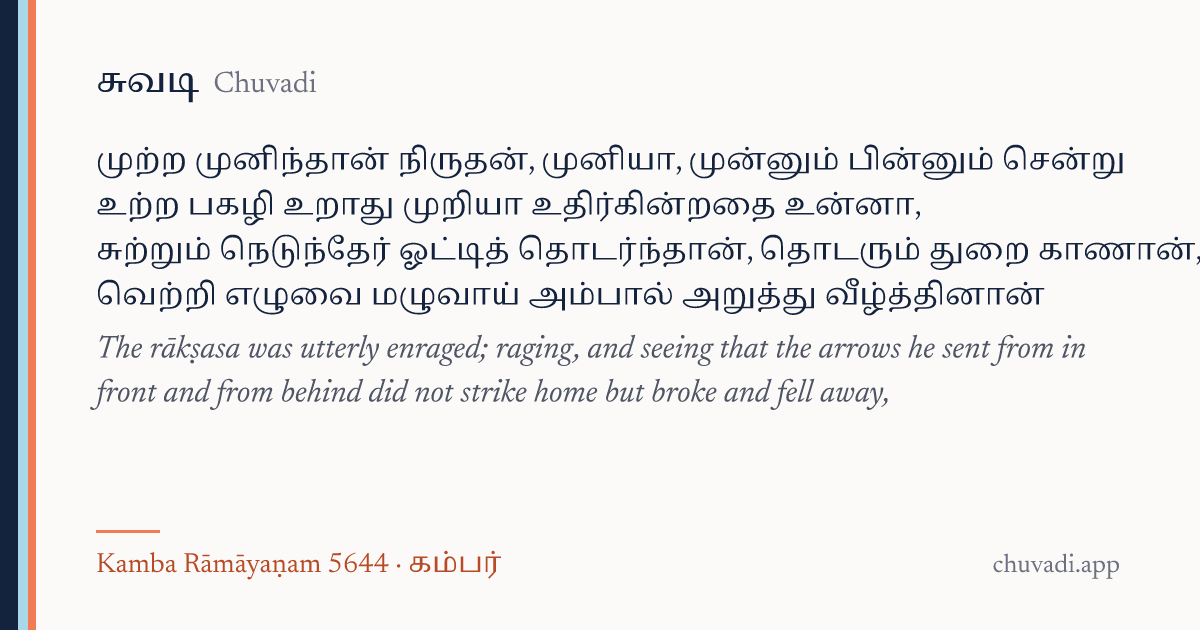
- The rākṣasa was utterly enraged; raging, and seeing that the arrows
- he sent from in front and from behind did not strike home but broke and fell away,
- he drove his tall chariot round and round to close with him, but found no way in,
- and with an axe-headed arrow he sliced through the victorious iron bar and brought it down.
What the poem says
Campumāli is furious to see his arrows breaking and falling harmlessly from every angle. He circles Aṉumaṉ in his chariot looking for an opening, but cannot get near him.
Then he manages one blow: with an arrow whose head is shaped like a battle-axe he cuts through Aṉumaṉ's iron bar, the weapon that had won him every fight so far.