



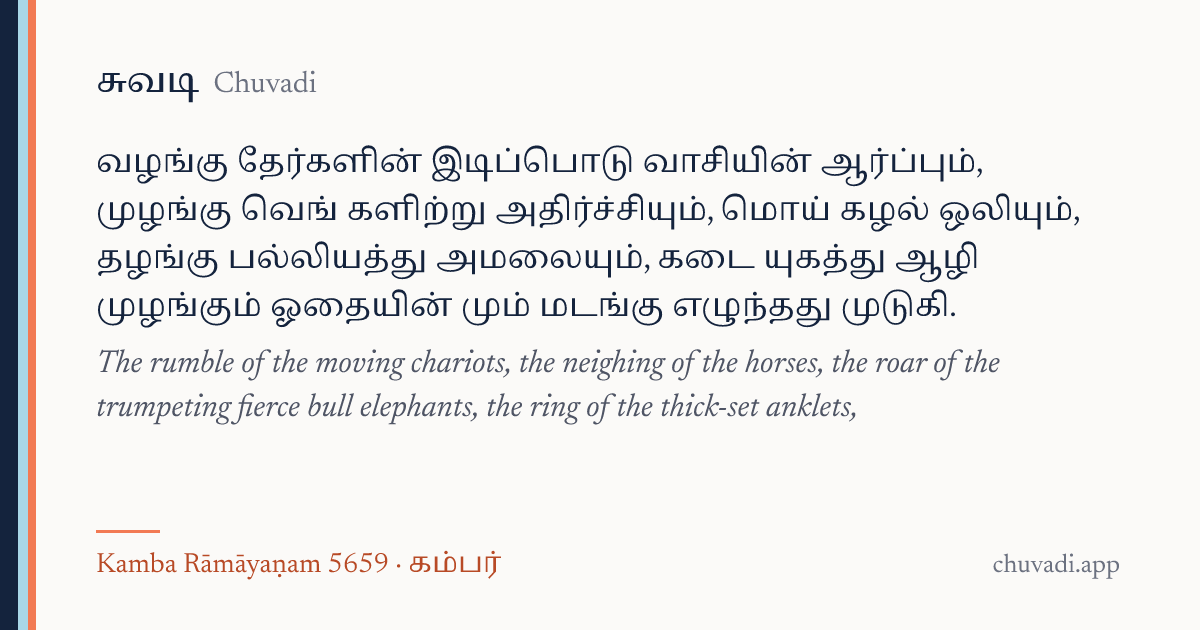
கம்பராமாயணம் 5659 · சுந்தர 10.10
பாடல் · The poem
Tap a word to see its gloss in the commentary and where else it occurs.
பொருள் · Meaning in Tamil
வழங்கு தேர்களின் இடிப்பொடு - விரைந்து செல்கின்ற தேர்களின் ஒலியும்; வாசியின் ஆர்ப்பும் - குதிரைகளின் கனைப்பு ஒலியும்; முழங்கு வெம் களிற்று அதிர்ச்சியும் - பிளிறுகின்ற கொடிய யானைகளின் பேரொலியும்; மொய் கழல் ஒலியும் - (வீரர்கள் காலில்) கட்டிய வீரக்கழல்களின் ஒலியும், தழங்கு பல்லியத்து அமலையும் - ஒலிக்கும் பலவாத்தியங்களின் பேரொலியும் (கூடி); கடை யுகத்து ஆழி முழங்கும் ஓதையின் - யுக முடிவுக் காலத்தில் கடல்கள் கொந்தளித்து ஒலிக்கின்ற ஓசையை விட; மும் மடங்கு முடுகி எழுந்தது - மூன்று மடங்கு அதிகமாக விரைந்து மேற்கிளம்பியது.
ஒலி, தழங்கல், அமலை, ஓதை என்பன ஒரு பொருள் குறிக்கும் பல சொற்கள். 'ஆறுபாய் அரவம்' என்ற நாட்டுப் படலப் பாடலில் (கம்ப. 34) ஒலி குறித்துப் பல சொற்கள் ஒரு பொருள் குறித்து வந்தன; ஒப்பிட்டுச் சுவைக்கத் தக்கன.
ஆங்கிலம் · English translationAI
Translation
- The rumble of the moving chariots, the neighing of the horses,
- the roar of the trumpeting fierce bull elephants, the ring of the thick-set anklets,
- the din of the many sounding instruments, rose up swiftly
- three times louder than the roar of the ocean at the end of an age.
What the poem says
The noise of the advancing host is described: chariots, horses, elephants, the anklets of the warriors and countless instruments together make a sound three times greater than the ocean's roar when the world is destroyed at the end of an aeon.
The poet uses several different words for sound in this verse, a device he also uses in a famous verse of the opening canto describing the land of Kōcalam.