



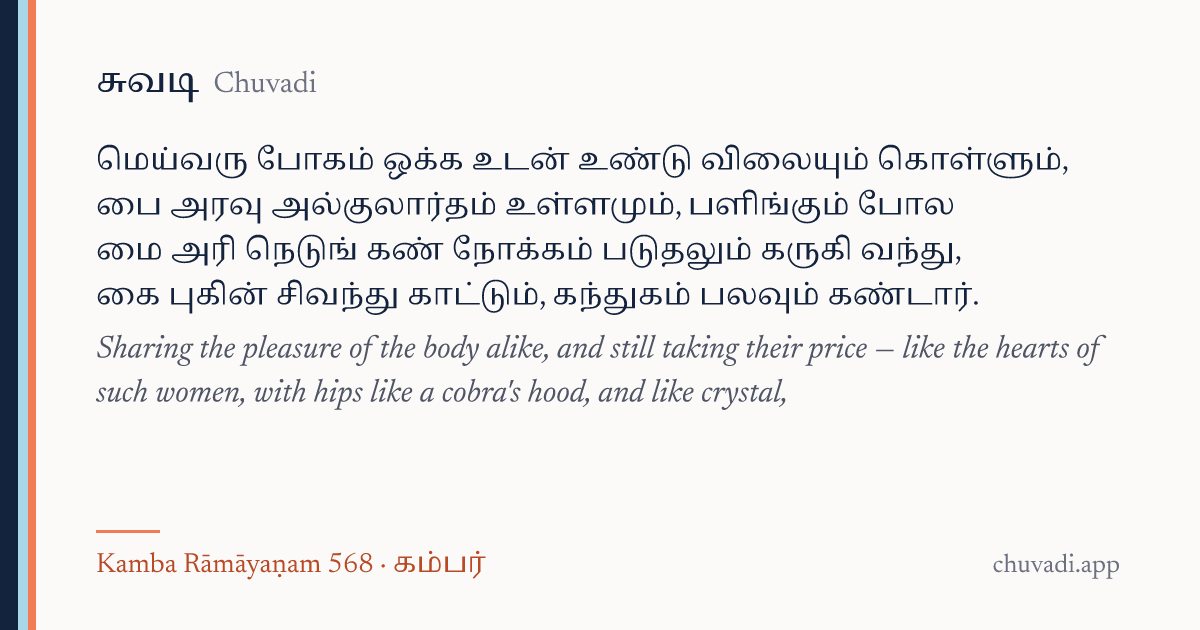
கம்பராமாயணம் 568 · பால 10.16
பாடல் · The poem
Tap a word to see its gloss in the commentary and where else it occurs.
பாட வேறுபாடு · Project Madurai reads
பொருள் · Meaning in Tamil
மெய்வரு போகம் - உடலின் சேர்க்கையால் உண்டாகிய காம இன்பத்தை; ஒக்க உடன் உண்டு - ஆண்களோடு பொருந்தத் தாமும் அனுபவித்து; விலையும் கொண்டு - (அந்த இன்பத்திற்காகத் தாம் (ஆடவரிடத்திலிருந்து) விலைப் பொருளைப் பெற்றுக் கொள்கிற; அரவு பை அல்குலார்தம் - பாம்பின் படத்தைப் போன்ற அல்குலையுடைய வேசியர்களின்; உள்ளமும் பளிங்கும்போல - மனமும் பளிங்கும் போல; மை அரி நெடுங்கண் நோக்கம் - மையிட்ட செவ்வரி படர்ந்த நீண்ட தம் கண்களின் பார்வை; படுதலும் கருகி - படுகின்றபோது கருநிறம்கொண்டு; வந்து கைபுகின் - கைகளிடம் வந்து பொருந்தும்போது; சிவந்து காட்டும் - செந்நிறம் கொண்டும் தோன்றுகின்ற; கந்துகம் பலவும் - பந்துகள் பலவற்றையும்; கண்டார் - கண்டார்கள்.
விலைமகளிர்; பளிங்கு: வேசியர்க்குப் பொருளாசையே உள்ளது; தம்மை அடைந்த ஆண்களிடம் உண்மையான காதல் இல்லை. இருந்தாலும், அந்த விலைமகளிர் தம் மனத்தில் அவரிடம் அன்பு உள்ளவர்போல நடிப்பார்கள்; பளிங்குக் கல்லுக்குத் தனக்கென ஒரு நிறம் இல்லை; ஆனாலும் சேர்ந்த பொருளின் நிறம் தன்னிடம் உள்ளது போலக் காட்டும். இவ்வாறு, வேசியர் மனமும் பளிங்கும் போலவே மகளிர் ஆடும் பந்துகள் உள்ளன; அப்பந்துகள் பெண்களின் கண்பார்வை தம்மீது படும்போது தம்மிடம் கருநிறம் இல்லாவிட்டாலும் அக் கண்ணின் கரிய நிறத்தையும், அம்மகளிரின் செந்நிறமான கையில் படும்போது தம்மிடம் செந்நிறம் இல்லாவிட்டாலும் அந்தக் கையின் செந்நிறத்தையும் தம்மிடம் கொண்டு காட்டும். 'அடுத்தது காட்டும் பளிங்குபோல்'- குறள்.706
ஆங்கிலம் · English translationAI
Translation
- Sharing the pleasure of the body alike, and still taking their price —
- like the hearts of such women, with hips like a cobra's hood, and like crystal,
- turning dark when the glance of long eyes, lined with collyrium and streaked with red, falls on them,
- and showing red when they come into the hand — many such balls they saw.
What the poem says
Girls are playing ball. The balls seem to change colour. They look dark when the girls' dark eyes glance at them and red when they land in their hennaed hands. Kampaṉ compares them to crystal, which has no colour of its own and takes on the colour of whatever is beside it, as the Tirukkuṟaḷ says. He also compares them to the hearts of courtesans, who have no love of their own but show whatever feeling the paying customer wants.