



கம்பராமாயணம் 5709 · சுந்தர 10.60
பாடல் · The poem
Tap a word to see its gloss in the commentary and where else it occurs.
பாட வேறுபாடு · Project Madurai reads
பொருள் · Meaning in Tamil
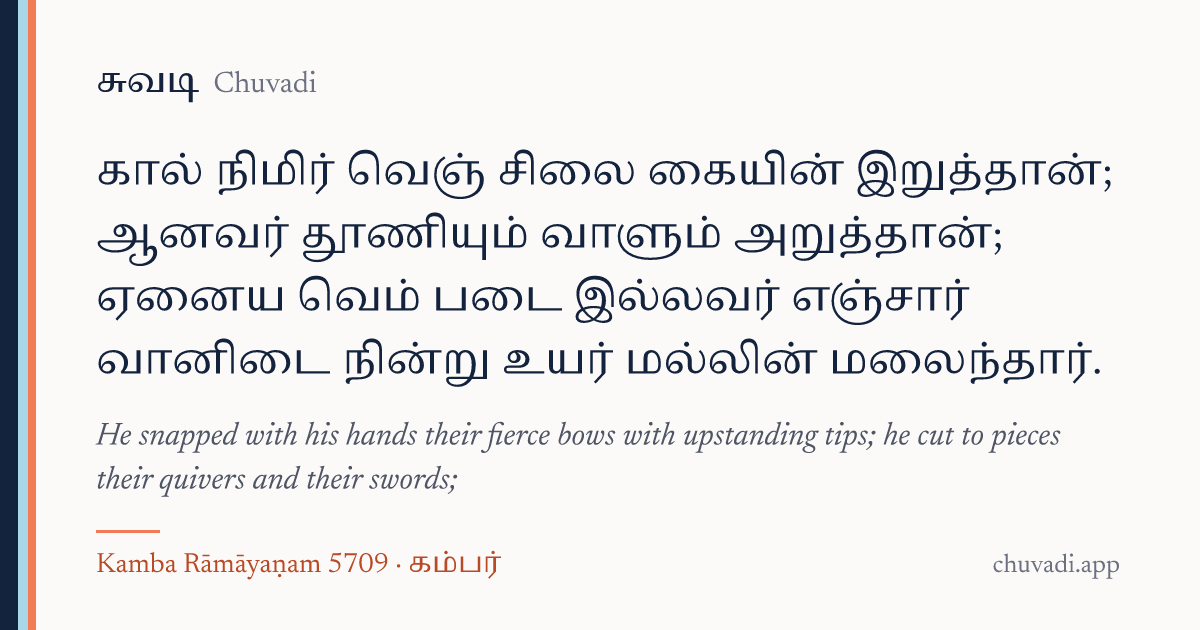
கால் நிமிர் வெஞ்சிலை கையின் இறுத்தான் - இருமுனைகளோடு ஓங்கிய கொடிய வில்லை (அனுமன்) தனது இரு கைகளால் ஒடித்து; ஆனவர் தூணியும் வாளும் அறுத்தான் - அவர்களுடைய அம்புப் புட்டில்களையும் வாள்களையும் சின்ன பின்னப்படுத்தினான்; ஏனைய வெம்படை இல்லவர் - வேறு, போருக்குரிய ஆயுதம் இல்லாதவரான அரக்கர் இருவரும்; எஞ்சார் - பின் வாங்காதவர்களாய்; வானிடை நின்று - ஆகாயத்திலிருந்து கொண்டே; உயர் மல்லின் மலைந்தார் - சிறந்த மற் போரினால் (அனுமானோடு) பொருதார்கள்.
கால் - வில்லின் நுனிகளைக் குறிக்கும். “ஒரு தனு இரு கால் வளைய ' என்ற திருவெழுகூற்றிருக்கையில் கால் வில் நுனியைக் குறித்தது காண்க. (திருஞானசம்பந்தர் முதல் திருமுறை).
ஆங்கிலம் · English translationAI
Translation
- He snapped with his hands their fierce bows with upstanding tips;
- he cut to pieces their quivers and their swords;
- left with no other fierce weapon, yet not giving way,
- they stood in the sky and fought him in high wrestling.
What the poem says
Aṉumaṉ breaks the two generals' bows with his hands and tears apart their quivers and swords. Disarmed but unwilling to retreat, they grapple with him barehanded in the sky.
Kāl here means the two curved ends of a bow, a usage the commentary also finds in a hymn of Tiruñāṉacampantar.