



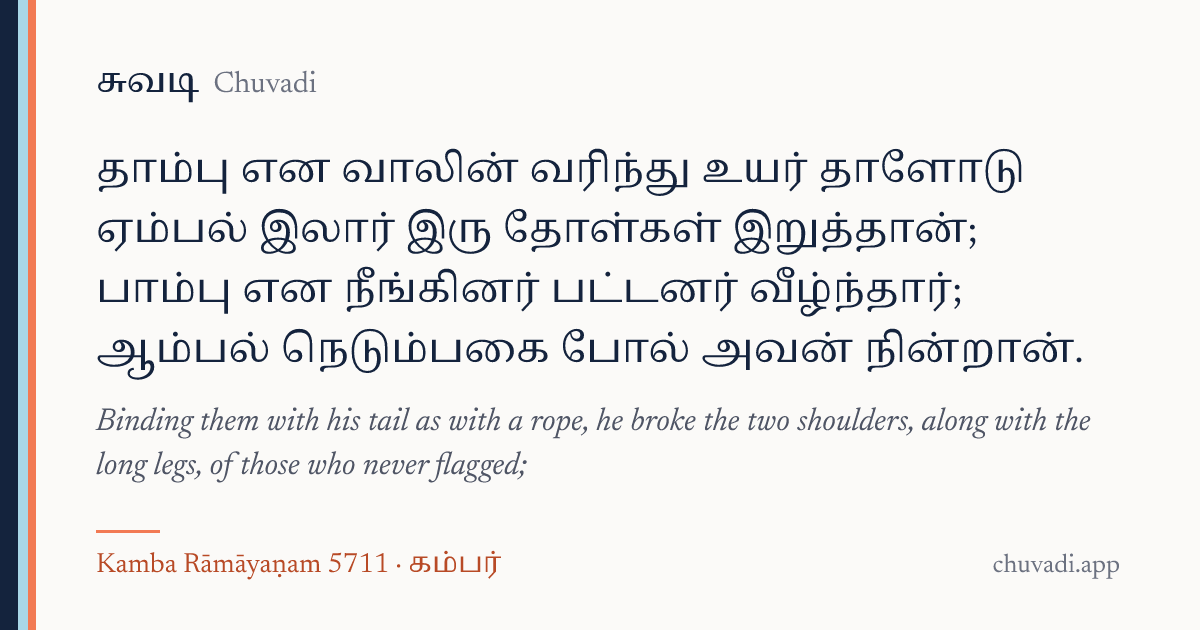
கம்பராமாயணம் 5711 · சுந்தர 10.62
பாடல் · The poem
Tap a word to see its gloss in the commentary and where else it occurs.
பாட வேறுபாடு · Project Madurai reads
பொருள் · Meaning in Tamil
ஏம்பல் இலார் - சிறிதும் சலியாது போர் செய்த அவ்வரக்கர் இருவருடைய; உயர் தாளோடு இரு தோள்கள் - நீண்ட கால்களையும் இரண்டு தோள்களையும்; வாலின் - தனது வாலினால், தாம்பு என வரிந்து - தாம்புக் கயிற்றால் கட்டுவது போலக் கட்டி; இறுத்தான் - (அனுமன்) ஒடித்தான்; பாம்பு என நீங்கினர் - இராகு கேதுக்கள் என்னும் பாம்புகள் போல் நீங்கியவர்களாய், பட்டனர் வீழ்ந்தார் - இறந்து கீழே வீழ்ந்தனர்; அவன் - அந்த அனுமன்; ஆம்பல் நெடும் பகை போல் நின்றான் - அல்லிக்கு நெடும் பகைவனான சூரியன் போன்று ஒரு வித இடையூறும் இல்லாமல் நின்றான்.
முன்பாட்டில் அரக்கர் இருவரைப் பாம்பாகவும் அனுமனை அருக்கனாகவும் (சூரியனாகவும்) செய்த கற்பனையின் வளர்ச்சி இப்பாடலில் காணப்படுகிறது. அரக்கர் தலைவர் இருவரும் பாம்புகளாகவும் அனுமன் கதிரவனாகவும் கூறப்பட்டனர். சூரியனைக் கண்ட ஆம்பல் மலர் கூம்பிச் சோரும் ஆதலால் சூரியனை ஆம்பலுக்குப் பகைவன் என்பது கவிமரபு. ஞாயிறு கண்ட ஆம்பல் அழியும் “ஓம்பு திங்களும் வந்து சுடர்கண்ட, ஆம்பலாய் மலர்க் காடொத்தழிந்ததே' (சீவக - 2330)
ஆங்கிலம் · English translationAI
Translation
- Binding them with his tail as with a rope, he broke
- the two shoulders, along with the long legs, of those who never flagged;
- like the serpents, they let go; they died and fell;
- he stood like the long-time foe of the water-lily.
What the poem says
Aṉumaṉ ties up both demons in his tail as if with a rope and breaks their arms and legs. They fall dead, released like the eclipse-serpents letting go of the sun, and Aṉumaṉ stands unharmed like the sun itself.
The sun is called the enemy of the āmpal, the night-blooming water-lily, because the flower closes when the sun appears; this is a poetic convention.