



கம்பராமாயணம் 5713 · சுந்தர 10.64
பாடல் · The poem
Tap a word to see its gloss in the commentary and where else it occurs.
பாட வேறுபாடு · Project Madurai reads
பொருள் · Meaning in Tamil
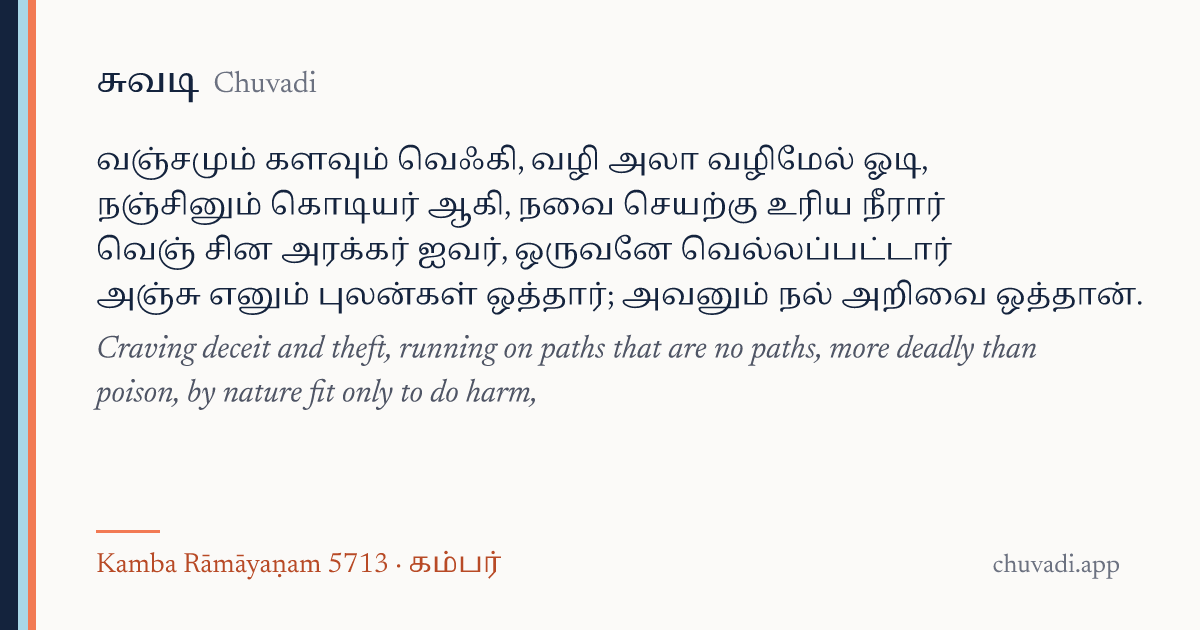
வஞ்சமும் களவும் வெஃகி - வஞ்சகத் தன்மையும் களவுத் தொழிலையும் விரும்பி; வழி அலா வழி மேல் ஓடி - நல்வழி அல்லாத தீய வழியில் ஓடித் திரிந்து; நஞ்சினும் கொடியர் ஆகி - விடத்தை விடக் கொடிய தன்மை உடையவர்களாகி; நவை செயற்கு உரிய நீரார் - பிறர்க்குத் தீமை செய்வதையே தமக்குக் குணமாகக் கொண்டவர்களாய்; வெல்லப்பட்டார் - அனுமனால் வெல்லப்பட்டவரான; வெஞ்சின அரக்கர் ஐவர் - கடுங்கோபம் கொண்ட அரக்கராகிய பஞ்ச சேனாபதிகள்; அஞ்சு எனும் புலன்கள் ஒத்தார் - ஐந்து புலன்களுக்கு ஒப்பராயினர்; ஒருவனே அவனும் - தனி வீரனாய் (ஐவரை வென்ற) அனுமனும்; நல் அறிவை ஒத்தான் - (புலன்களை வென்று) சிறக்கும் நல்ல ஞானத்தை ஒத்தவனானான்.
பஞ்சசேனாபதிகளுக்குத் தீய வழியில் செல்லும் ஐம்புலன்களும், அவர்களை வென்ற அனுமனுக்குப் புலன்களை வென்ற ஞானமும் உவமைகளாக வந்தன. இது ஒரு தத்துவ உணர்ச்சி அமைந்த உவமை. முன்னே (5615) ஒரு பாடலில் பஞ்ச சேனாபதியரை ஐம்பெரும் பூதங்களை நிகர்த்தவர் என்று குறித்துள்ளார்
ஆங்கிலம் · English translationAI
Translation
- Craving deceit and theft, running on paths that are no paths,
- more deadly than poison, by nature fit only to do harm,
- the five demons of fierce wrath were overcome by one alone;
- they were like the five senses; and he was like true wisdom.
What the poem says
The poet sums up the battle with a philosophical simile. The five generals, deceitful, thieving, straying from the right path, worse than poison and born to do harm, are like the five senses, which drag a person toward evil. Aṉumaṉ, who conquered all five single-handed, is like true wisdom, which masters the senses.
Earlier the poet compared the five to the five great elements.