



கம்பராமாயணம் 5741d · சுந்தர 11.29
பாடல் · The poem
Tap a word to see its gloss in the commentary and where else it occurs.
பொருள் · Meaning in Tamil
நேரே பட்டவர் பட - போரில் அனுமனுக்கு எதிரே தோன்றிய அரக்கவீரர்கள் அழிந்து போக, மாடே - (ஒதுக்கமான) பக்கங்களில்; நில்லா உயிரொடு தனி நின்றார் சிலர் - (அப்போரைப் பார்த்த அளவில் அச்சத்தால் தம்முடலில் நில்லாது தத்தளிக்கும் நிலையில் உள்ள உயிரோடு தனியே நின்று கொண்டிருந்தவர்களில் சிலர்; தேரே பட்டன என்றார் - தேர்களே அழிந்து போயின என்று கூறினார்கள்; சிலர் - மற்றும் சிலர்; தெறுகண் செம்முக வயிரத் தோள் பேரே பட்டன என்றார் - கோபிக்கும் கண்களையும் சிவந்த முகங்களையும் உறுதியான தோள்களையும் உடைய காலாட் படைகளே இறந்தது என்று சொன்னார்கள்; சிலர் - மற்றும் சிலர்; பரியே பெரிது பட்டன என்றார் - குதிரைகளே பெரிதும் அழிந்து போயின என்றார்கள்; சிலர் - வேறு சிலர்; காரே பட்டன நுதல் ஓடை கரியே - மேகம் போன்றனவான நெற்றிப் பட்டத்தை உடைய யானைகளே; கடிது பட்டன என்றார் - விரைவாய் அழிந்தன என்றனர்.
சிலர் தேர்களையும், சிலர் வீரர்களையும், சிலர் குதிரைகளையும், சிலர் யானைகளையும் தனித்தனி பார்த்து நின்று அவ்வவற்றின் அழிவின் மிகுதியால் பிற ஒன்றையும் பார்க்கும் திறமின்றித் தாம் கண்டவற்றையே கூறினர் என்பதாயிற்று. “தோள் கண்டார் தோளே கண்டார்” (கம்ப. 181) என்ற செய்யுளை நினைப்பூட்டுவது.
ஆங்கிலம் · English translationAI
Translation
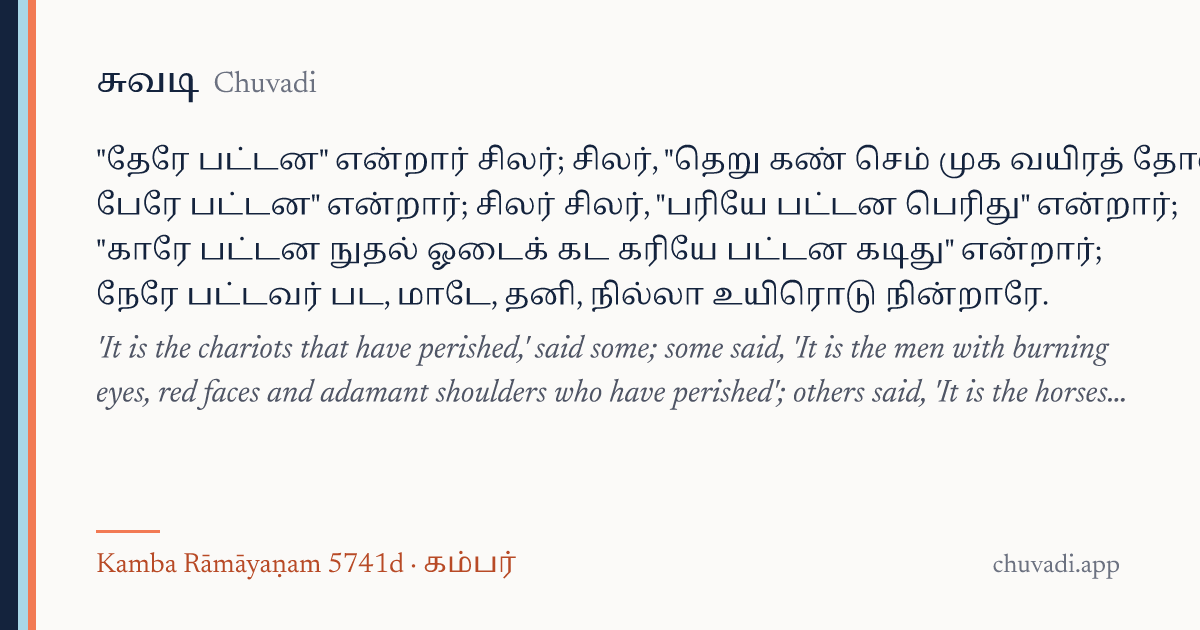
- 'It is the chariots that have perished,' said some; some said, 'It is the men
- with burning eyes, red faces and adamant shoulders who have perished'; others said, 'It is the horses that have perished most';
- 'It is the cloud-dark elephants with brow-plates, the rutting elephants, that have perished fast,' they said;
- so, as those who faced him fell, they stood apart, alone, with lives that would not stay.
What the poem says
The demons watching from the edges, so frightened their lives hardly stay in their bodies, each see only one part of the slaughter. Some say the chariots have suffered most, some the foot soldiers, some the horses, some the elephants.
Each is so overwhelmed by what is in front of him that he can take in nothing else. The commentary compares a famous early verse in which each onlooker gazing at Irāmaṉ sees only the part of him their eyes first fell on.