



கம்பராமாயணம் 5741h · சுந்தர 11.33
பாடல் · The poem
Tap a word to see its gloss in the commentary and where else it occurs.
பொருள் · Meaning in Tamil
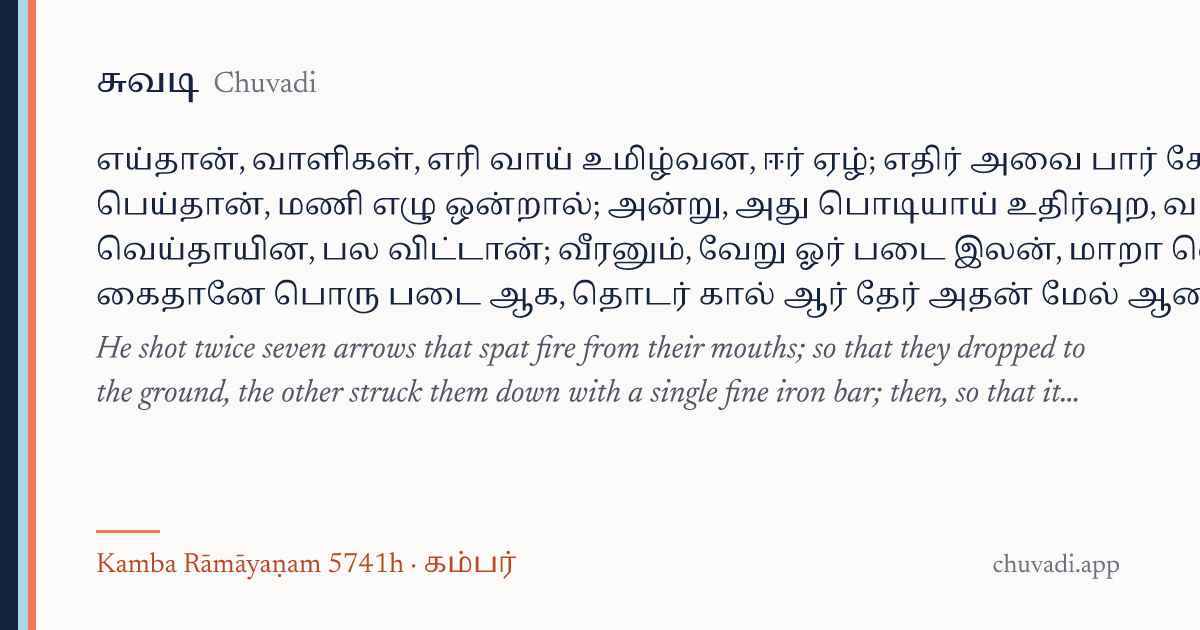
எரிவாய் உமிழ்வன - நெருப்பைத் தம்மிடமிருந்து கக்குவனவான; ஈர் ஏழ் வாளிகள் எதிர் எய்தான் - பதினான்கு அம்புகளை (அக்ககுமாரன் எதிரே (அனுமன் மீது) செலுத்தினான்; அவை பார் சேர - அவ்வம்புகள் தரையிலே விழும்படி; மணி எழு ஒன்றால் - தன் கையில் கொண்ட) அழகிய இரும்புத்தண்டு ஒன்றினால்; பெய்தான் - (அனுமன் அவற்றைப்) பயனற்றனவாக வீழ்த்தினான்; அன்று, அது பொடியாய் உதிர்வு உற - அப்பொழுது, அந்த இரும்புத்தண்டு பொடியாக உதிர்ந்து போகும்படி; வெய்து ஆயின வடிவாளி பல விட்டான் - மேலும் கொடுமையான கூரிய பல அம்புகளை (அக்ககுமாரன் (அனுமன் மீது) பிரயோகித்தான்; வீரனும் - வீரனான அனுமனும்; வேறு ஓர் படை இலன் - வேறு ஒரு ஆயுதம் தன்னிடம் இல்லாதவனாக; மாறா - (அவ்வம்புகளுக்கு) எதிராக; வெங்கைதானே பொரு படை ஆக - வலிய தன் கைகளையே போர் செய்யும் படைகளாகக் கொண்டு; தொடர்கால் ஆர் தேர் அதன் மேல் ஆனான் - தன் முன்னே தொடர்ந்து வரும் சக்கரங்கள் பொருந்திய (அக்ககுமாரனது) தேரின் மீது ஏறினான்.
கால் - சக்கரம்.
ஆங்கிலம் · English translationAI
Translation
- He shot twice seven arrows that spat fire from their mouths; so that they dropped to the ground,
- the other struck them down with a single fine iron bar; then, so that it crumbled into dust,
- he loosed many fierce sharp arrows; and the hero, having no other weapon,
- made his own fierce hands his fighting weapons, and was up on the wheeled chariot that pressed on him.
What the poem says
Akkaṉ shoots fourteen flaming arrows at Aṉumaṉ, who knocks them all to the ground with his iron bar. Akkaṉ then fires a volley that smashes the bar to powder. Left without a weapon, Aṉumaṉ uses his bare hands and leaps onto Akkaṉ's chariot.