



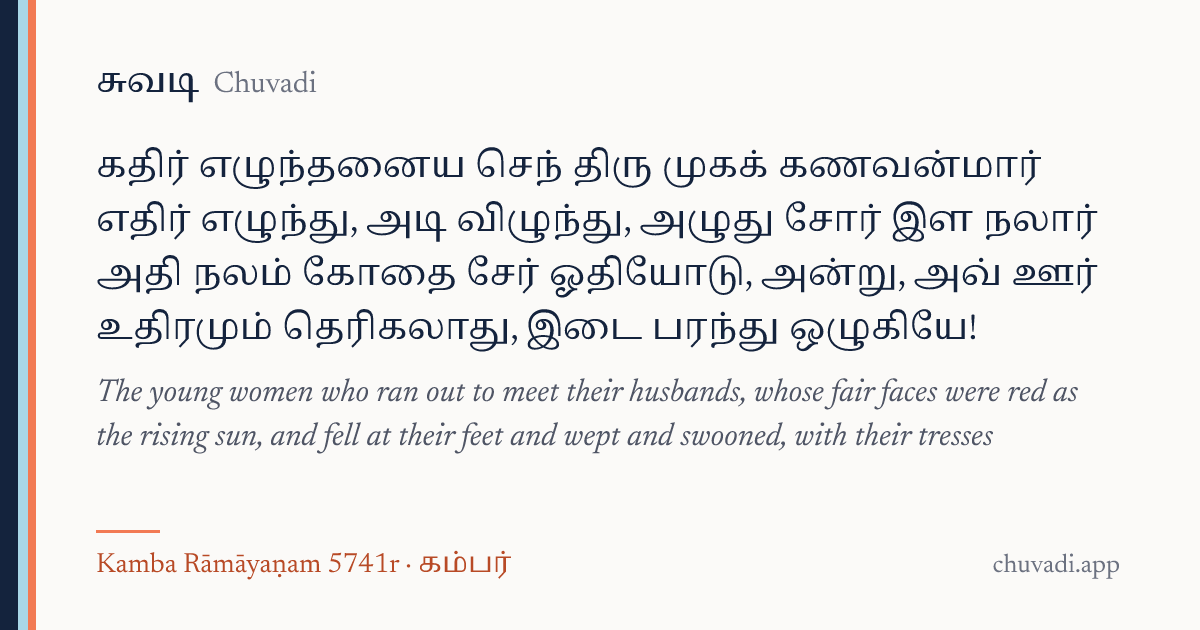
கம்பராமாயணம் 5741r · சுந்தர 11.43
பாடல் · The poem
Tap a word to see its gloss in the commentary and where else it occurs.
பொருள் · Meaning in Tamil
கதிர் எழுந்து அனைய செம்திருமுகக் கணவன்மார் - சூரியன் உதித்தது போன்ற சிவந்த அழகிய முகங்களை உடைய (இறந்த) தமது கணவன்மார்; எதிர் எழுந்து அடி விழுந்து - முன்னே எழுந்து போய் கால்களில் விழுந்து; அழுது சோர் இள நலார் - அழுது சோர்கின்ற இளம் பெண்களுடைய; அதிநலம் கோதை சேர் ஓதியோடு - மிக்க அழகுள்ள மாலையை அணிந்த கூந்தலுடனே; அன்று அவ்வூர் உதிரமும் - அப்பொழுது அந்த ஊரில், பெருகுகின்ற இரத்தமும்; பரந்து ஒழுகி - பரவிப் பெருகி; இடை தெரிகிலாது - வேற்றுமை அறிய முடியாதபடி ஆயிற்று.
இளநலார் ஓதியும் (கூந்தலும்) இரத்தமும் செந்நிறமாக இருத்தலால் வேற்றுமை தெரியாததாயிற்று. இடை - வேற்றுமை. கோதை - மாலை. ஓதி - மகளிர் முடி.
ஆங்கிலம் · English translationAI
Translation
- The young women who ran out to meet their husbands, whose fair faces were red as the rising sun,
- and fell at their feet and wept and swooned, with their tresses
- bound with garlands of great beauty: that day, in that city,
- one could not tell them apart from the blood, as it spread and flowed between.
What the poem says
The young widows run to the bodies of their husbands, whose faces were red as the rising sun, and fall weeping at their feet. Their reddish, garlanded hair spreads out on the ground among the streams of blood, so that one cannot tell hair from blood.