



கம்பராமாயணம் 5741s · சுந்தர 11.44
பாடல் · The poem
Tap a word to see its gloss in the commentary and where else it occurs.
பொருள் · Meaning in Tamil
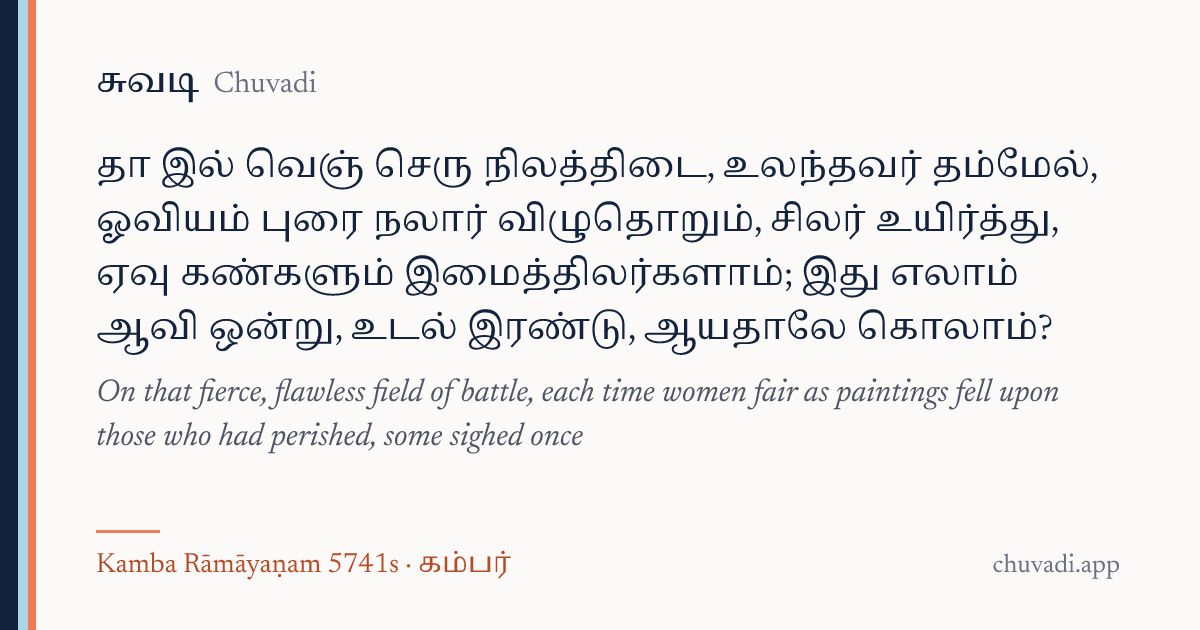
தா இல் வெம்செரு நிலத்திடை - குற்றம் அற்ற கொடிய போர்க்களத்திலே; உலந்தவர் தம் மேல் - இறந்து கிடந்த அரக்க வீரர் மீது; ஓவியம் புரை நலார் சிலர் விழுதொறும் - சித்திரப்பதுமை போன்ற அரக்கமகளிர் சிலர் விழும் போதெல்லாம்; உயிர்த்து - பெரு மூச்சுவிட்டு; ஏவுகண்களும் இமைத்திலர்கள் ஆம் - அம்பு போன்ற தம் கண்களும் இமையாதவர்களாய் மூடியிருந்தவர்களாம்; இது எலாம் - இச்செயல்கள் எல்லாம்; ஆவி ஒன்று உடல் இரண்டு ஆயதாலே கொலாம் - அக் கணவன்மாருக்கும் அம்மகளிர்க்கும் உயிர் ஒன்றும் உடல் இரண்டுமாய் ஆனதாலே போலும்.
வீரர்களுக்கும் அவர் மனைவியர்க்கும் உயிர் ஒன்றும் உடல் இரண்டுமாதலின் அவர்கள் மேல் விழுந்த மகளிர் உயிர் நீத்தனர் என்பதாம். இந்த நிலையை மூதானந்தம் எனப் புறப்பொருள் இலக்கணம் (பு. வெ. 262) குறிப்பிடும்; கணவன் மாரைப் பிரிதல் ஆற்றாத மகளிர் உடனுயிர் நீத்த செயல் அரக்கியர் பாலும் இருந்தது என்பதால் இலங்கையிலும் சீர்மை இருந்ததை உணரலாம். இராவணன் இறந்த போது உடனுயிர் நீத்த மண்டோதரி செயலும் இங்கு நினைவு கூறத்தக்கது. சிலப்பதிகாரப் பாண்டிமாதேவி, கந்த புராணத்துப் பதுமகோமளை ஆகியோரும் கணவன் மாண்டபோது உடனுயிர் நீத்தவர்கள் என்பதும் நினைவு கூறத்தக்கது.
ஆங்கிலம் · English translationAI
Translation
- On that fierce, flawless field of battle, each time women fair as paintings
- fell upon those who had perished, some sighed once
- and never again blinked their arrow-like eyes; was all this
- because they were one life in two bodies?
What the poem says
Some of the beautiful wives throw themselves on their husbands' bodies, sigh once and die, their eyes closing for ever. The poet suggests this happened because husband and wife were one soul in two bodies.
The commentary notes that Tamil poetics has a name for this theme, a wife dying with her husband, and recalls Maṇṭōtari at Irāvaṇaṉ's death, the Pāṇṭiyaṉ queen in the Cilappatikāram, and Patumakōmaḷai in the Kanta Purāṇam. Even among the demons such fidelity existed.